How To Decoupage With Fabric (Step-by-Step Beginner Guide)
Fabric decoupage permanently adheres fabric to surfaces using medium and sealant, creating durable, professional results. You’ll prep your surface by sanding and cleaning, cut fabric with extra edges, apply adhesive sparingly in small sections, and smooth out bubbles working center outward. Multiple thin coats of sealer protect your work, with drying time between each layer. Start on flat surfaces like tabletops to build confidence, and you’ll uncover how patience transforms ordinary pieces into stunning creations.
Love cozy DIY projects? 💕
Get free printable guides, exclusive tutorials & surprise craft goodies straight to your inbox.
Disclosure: This post may contain Amazon affiliate links, at no extra cost to you. Content on DiyCraftNest is created with research support from AI tools and carefully reviewed, edited, and fact-checked by the lead author, Daniel Pat, to ensure accuracy and reliability. Learn more
Key Takeaways
- Prewash fabric without softener, dry, iron thoroughly, then pre-coat with decoupage medium to prevent fraying and shrinkage.
- Apply thin, even coats of Mod Podge (1–2 mm thickness) underneath and over fabric, allowing complete drying between layers.
- Smooth fabric from center outward using a brayer or folded towel in 6–12 inch sections to eliminate air pockets.
- Sand surfaces thoroughly, start with flat pieces, and select sturdy cotton-blend or upholstery-weight fabric for best beginner results.
- Build 3–6 thin coats of sealant rather than one thick layer, sanding lightly between coats for superior durability.
What Is Fabric Decoupage?
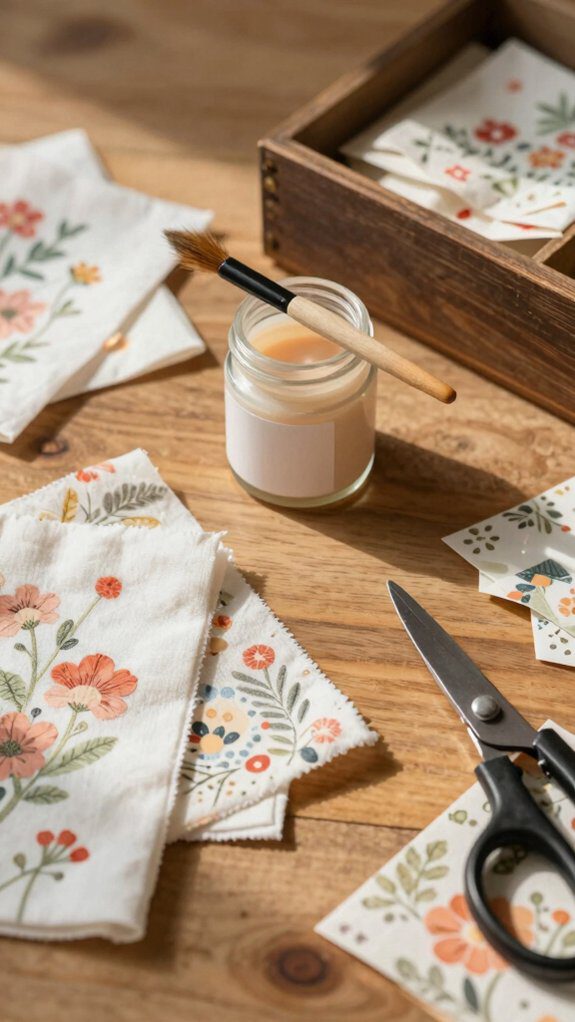
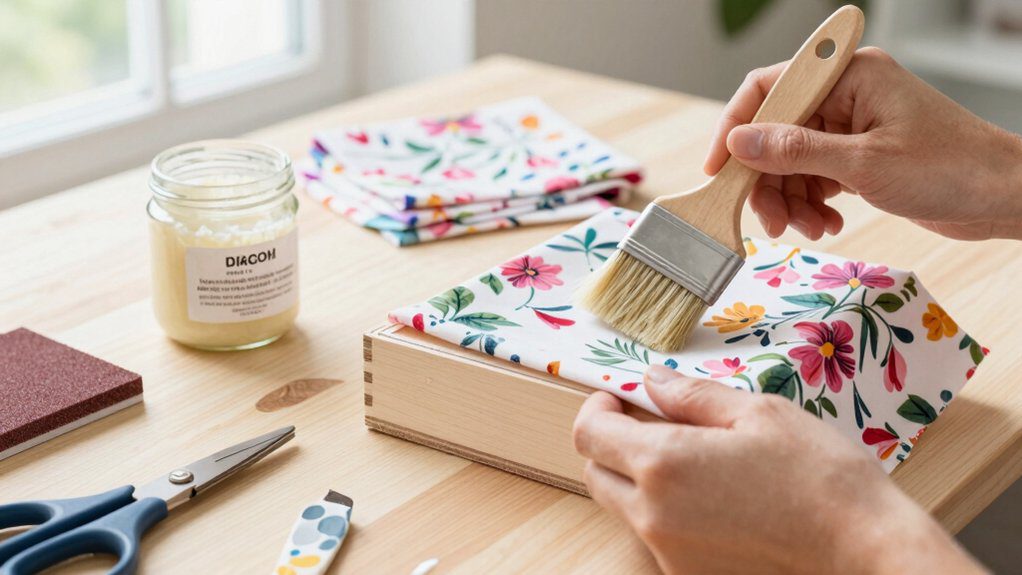
Fabric decoupage is like giving your furniture a custom makeover—you’re taking colorful fabric pieces and permanently adhering them to a rigid surface like wood or a painted chair frame, then sealing everything with multiple coats of decoupage medium or varnish until the fabric becomes truly integral to the piece.
Unlike paper decoupage, fabric offers tear resistance, slight stretch, and better concealment of surface imperfections. You’re joining a community of makers embracing textile sustainability by repurposing fabric scraps.
Cotton blends and upholstery-weight fabrics work best, providing balanced durability.
This craft transforms ordinary furniture into personalized treasures while honoring fabric history through creative reuse.
Supplies You Will Need
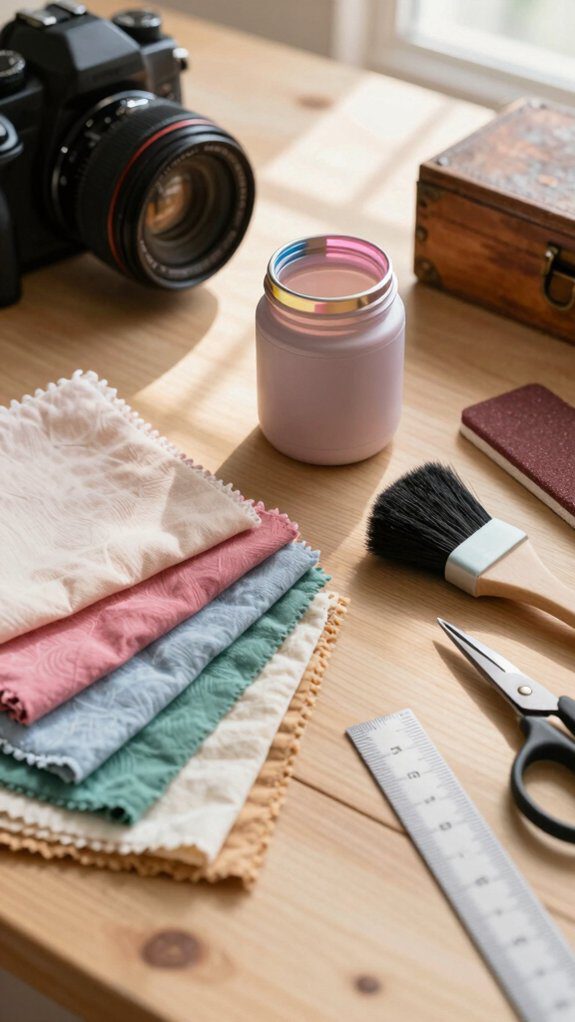
Before you start your fabric decoupage project, you’ll want to gather a few vital supplies that’ll make the whole process smooth and satisfying. At the bare minimum, you’ll need fabric pieces (cut from stable cotton or a cotton blend), Mod Podge or another water-based decoupage glue, a foam brush for applying adhesive, sharp scissors for precise cutting, and optionally a sealer to protect your finished work. Having these basics on hand means you’re ready to transform any furniture piece into something uniquely yours.
Fabric pieces
Selecting the right fabric is where your decoupage project really starts to come together. I’d recommend choosing sturdy cotton-blend or upholstery-weight fabric—about one yard for a standard chair seat. This type resists tearing and stretches slightly, making it perfect for smooth adhesion. Before cutting, prewash your fabric without softener, then dry and iron it thoroughly. This removes sizing and prevents shrinkage that could mess up your color theory and pattern matching later. When cutting, leave two to three inches of excess around furniture edges. Pre-coat your fabric piece with decoupage medium and let it dry completely. This prevents fraying and makes handling feel like working with thin leather.
Mod Podge or decoupage glue
The adhesive you choose will make or break your fabric decoupage project, so I’d definitely recommend investing in fabric-weight Mod Podge or regular Mod Podge applied with a synthetic brush.
This specific adhesive chemistry works wonderfully because it soaks into cotton blends, creating a strong bond and stiffened surface that regular glues simply can’t match.
When it comes to application techniques, you’ll brush Mod Podge underneath the fabric as glue and over the top as a sealant.
Let that first coat dry completely—usually a few hours—before adding multiple layers.
This layering approach gives you durability that’ll truly impress you.
Foam brush
Now that you’ve got your Mod Podge ready, you’ll want to grab the right tool to spread it smoothly across your fabric.
I recommend synthetic foam brushes because they hold and release water-based mediums beautifully into fabric fibers.
For brush selection, choose 1″–3″ for small areas or 3″–4″ for large panels.
Here’s my insider tip: keep two brushes handy—one for adhesive and one for topcoats—to prevent contamination.
Your maintenance routine matters too.
Clean reusable brushes immediately with warm soapy water, and replace them when edges fray or foam compresses.
Fresh brushes guarantee professional results every time.
Scissors
Sharp scissors make all the difference when you’re working with fabric in decoupage projects. I recommend keeping two pairs handy: eight- to ten-inch fabric shears for cutting large pattern pieces cleanly, and smaller precision scissors for detailed work around curves and hardware.
Scissor maintenance matters tremendously—designate one pair exclusively for fabric to prevent blade dulling from paper or adhesive. For blade selection, choose sharp, quality shears and replace X-Acto knife blades frequently.
When cutting pattern pieces, use a straightedge to maintain straight lines and leave two to three inches extra for wrapping. These tools guarantee professional, polished results.
Sealer (optional)
While you can absolutely create beautiful fabric decoupage projects without a sealer, I’d strongly recommend adding one as your final protective layer.
A good sealer transforms your work into something truly durable and long-lasting. Here’s what I suggest considering:
- Acrylic water-based sealers (satin or matte finish) offer easy cleanup and reliable UV protection
- Fabric-formulated Mod Podge protects against moisture while maintaining softness
- Polyurethane or spray lacquer provides maximum durability for high-traffic pieces
Always perform colorfast testing on hidden fabric areas first.
Apply multiple thin coats with drying time between each layer.
This approach prevents drips while building genuine protection against wear, fading, and moisture damage.
Best Surfaces for Fabric Decoupage
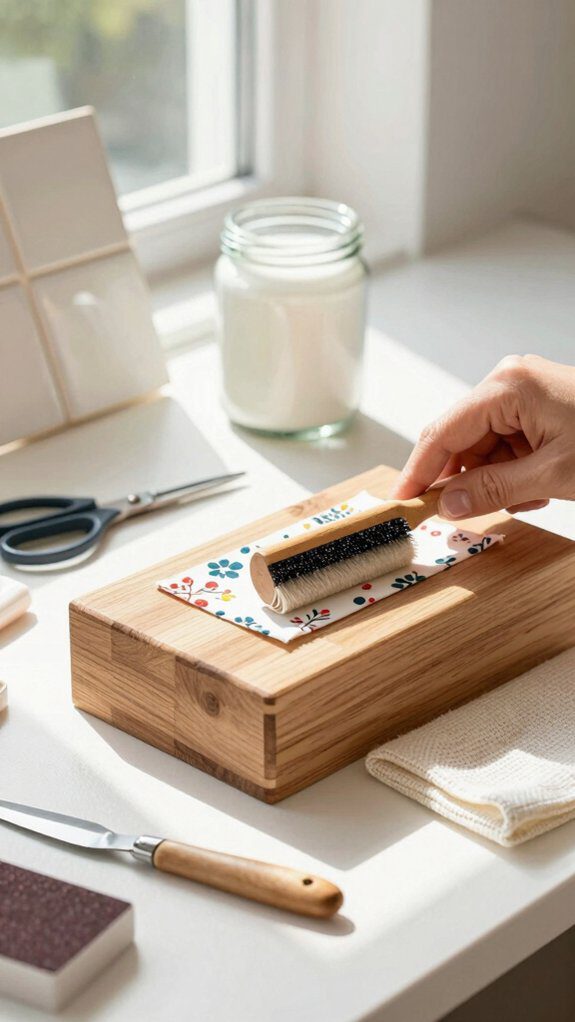
Now that you’ve gathered your supplies, it’s time to pick the right base for your fabric decoupage project—and trust me, this choice makes a huge difference in how well your finished piece holds up.
I’m going to walk you through four excellent options: wood, glass, canvas, and furniture, so you can figure out which surface works best for what you want to create.
Each one has its own strengths, and knowing what they’re will help you avoid frustrating mistakes down the road.
Wood
A sturdy tabletop, cabinet door, or chair seat makes an ideal canvas for fabric decoupage because flat, stable wood surfaces bond beautifully with Mod Podge and fabric-specific adhesives. I’d avoid heavily carved or textured wood—those create frustrating air pockets.
Here’s what works best:
- Choose smooth, rigid pieces that won’t flex or experience seasonal movement
- Sand the wood dull and apply a basecoat to boost your fabric’s colors
- Seal with multiple topcoats on high-use surfaces to prevent lifting
The wood grain actually becomes part of your design’s charm. Skipping damaged areas means better adhesion and longer-lasting results you’ll love showing off.
Glass
Glass offers a sleek, modern alternative to wood—and I’ve found it can be just as rewarding for fabric decoupage, though it demands a different approach. Glass is non-porous, so proper prep work is essential. I degrease with isopropyl alcohol, then lightly scuff with fine-grit sandpaper or use glass etching techniques to improve adhesion.
I apply fabric-specific Mod Podge Gloss, press fabric firmly, and smooth bubbles carefully. For durability, I seal with multiple acrylic coats. Consider heat bonding options for reinforcement. Keep decoupaged glassware decorative—frequent washing compromises fabric longevity. This sleek finish truly transforms ordinary glass into personalized art.
Canvas
When you’re hunting for the ideal surface to decoupage fabric onto, canvas—especially rigid stretched canvas—deserves a spot at the top of your list. I love working with canvas because it’s beginner-friendly and forgiving.
Here’s why canvas works so well:
- Flat surfaces accept fabric and adhesive evenly without wrinkling
- Primed canvas creates ideal bonding for Mod Podge or fabric-specific medium
- Gallery wrap styles offer professional-looking finished edges
Rigid stretched canvas won’t flex or bubble like softer materials. The cotton fabric penetrates beautifully with quality decoupage medium, creating lasting results.
You’ll feel confident tackling your first project knowing canvas delivers consistent, reliable outcomes every time.
Furniture
Furniture pieces offer fantastic opportunities for fabric decoupage, but choosing the right piece makes all the difference between a project that thrives and one that disappoints.
I’d recommend starting with stable, flat surfaces like tabletops and drawer fronts—these work beautifully as painted overlays.
Avoid heavily carved pieces; fabric won’t lay smoothly in deep recesses.
Prioritize items with removable parts so you can work flat and reassemble them.
For upholstery alternatives, consider seat pads and cabinet doors.
Match your fabric’s pattern scale to the piece’s size, and always test adhesion on non-wood surfaces first.
You’ve got this!
Step 1: Prepare the Surface
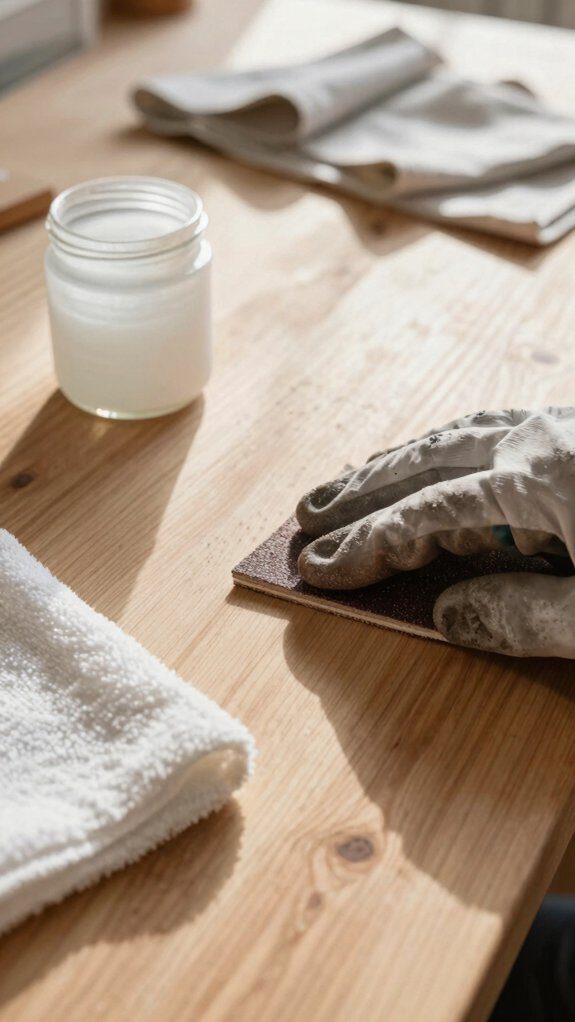
Before you tackle the fun part of adding fabric to your furniture, you’ve got to give that surface some love by cleaning and lightly sanding it.
I like to start by wiping everything down with a damp microfiber cloth to get rid of dust, oils, and any gunk that could mess with how well the adhesive bonds.
If the piece has a glossy finish or rough spots, a gentle sanding followed by a quick wipe-down will give you the perfect canvas to work with.
Clean and lightly sand if needed
Since a clean, smooth surface is absolutely essential for fabric decoupage to stick properly and look gorgeous, I’m going to walk you through this necessary prep work.
Your surface prep determines everything. Here’s what you’ll do:
- Remove debris – Vacuum thoroughly, then wipe with a damp microfiber cloth and let dry completely
- Sand glossy areas – Use 120–220 grit sandpaper to dull the shine, promoting finish adhesion without removing deep wood
- Final wipe-down – Use a tack cloth to grab all sanding dust, then let dry
This groundwork guarantees your fabric adheres beautifully and your project looks professional. Trust me, this step makes a real difference!
Step 2: Cut and Position the Fabric
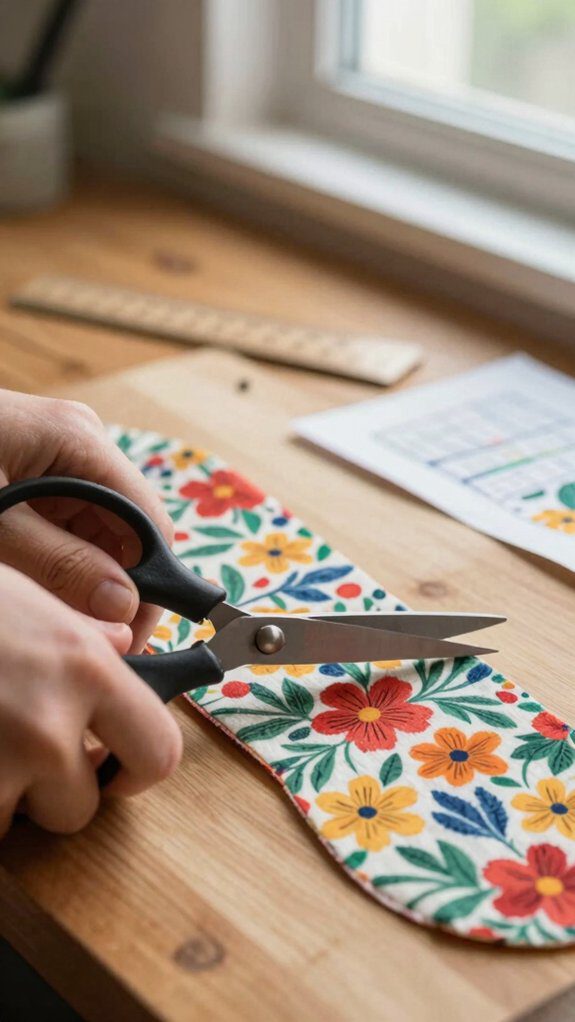
Now I’m going to show you how to get that fabric down smoothly—this is where things really come together!
The key is patience: you’ll lay your fabric over the surface, use low-tack spray or tape to test your layout, and then apply adhesive once you’re happy with how it looks.
Working from the center outward with a brayer or credit card, you’ll smooth away air bubbles and guarantee the fabric makes perfect contact with your furniture piece.
Smooth placement technique
Getting your fabric positioned just right is where the magic happens—this is your chance to guarantee everything sits perfectly before you commit to the final trim.
I smooth my fabric strategically by:
- Starting from the center and working outward in 6–12 inch sections using a brayer or folded towel
- Checking edge positioning carefully, since temperature effects can cause slight fabric shifts during drying
- Lifting gently if needed while adhesive remains tacky—fabric stretches slightly, so I can reposition without tearing
This deliberate approach prevents wrinkles and air bubbles, ensuring a professional finish we’re all proud to display.
Step 3: Apply Adhesive Evenly
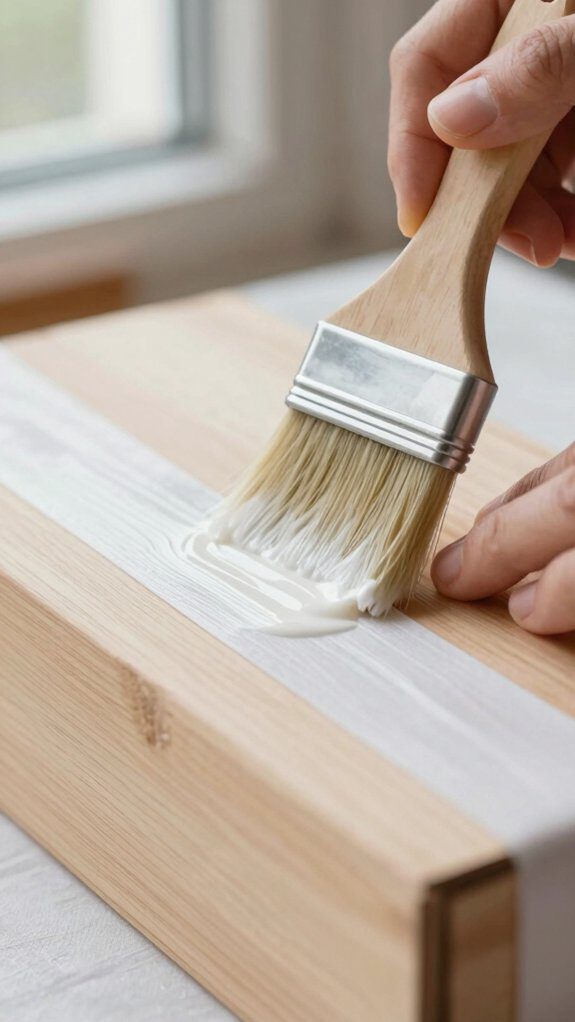
I’ve found that the trickiest part of fabric decoupage is striking the right balance with adhesive—too little and your fabric won’t stick properly, but too much creates lumpy, visible glue lines that’ll show through and compromise your finished look.
The key is applying just enough medium so the fabric bonds completely while avoiding those frustrating excess puddles that make smoothing a nightmare.
I’ll walk you through the techniques that’ll help you get it right every time.
Avoid excess glue buildup
When you’re applying adhesive to fabric, thinking thin is your best friend—and I mean really thin. Excess glue creates problems that’ll derail your project faster than you’d expect.
Here’s how I keep things under control:
- Apply 1–2 mm wet film so fabric soaks through without pooling or creating raised ridges
- Work small sections (12–18 inches) brushing outward to prevent concentrated glue buildup at seams
- For spray photo-mount, wait 10–30 seconds until tacky before laying fabric to minimize squeeze-out
Consider adhesive compatibility with your materials and make sure proper ventilation while working. With thin, intentional applications, you’ll achieve professional results without frustration.
Step 4: Smooth Out Bubbles and Wrinkles
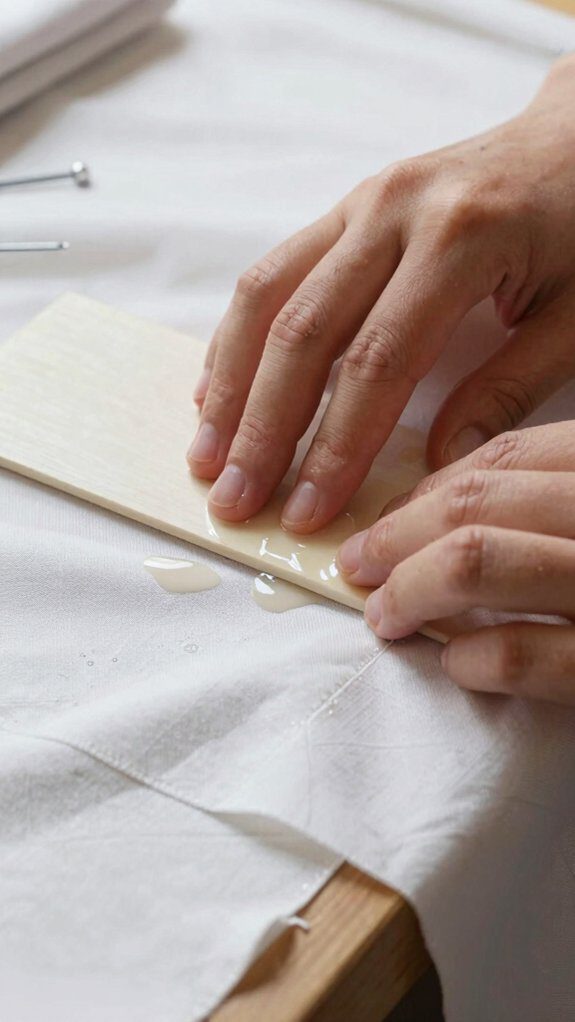
Now that you’ve got your fabric in place, here’s where the brush and press method comes in handy—I like to work in small sections using a rubber brayer or hard plastic card, rolling firmly from the center outward to push air bubbles and excess adhesive toward the edges.
If a stubborn bubble won’t budge, you can gently lift the fabric (if you’re using repositionable spray) or prick it with a pin and smooth the trapped air out with your finger or brayer before pressing it back down.
The key is patience: let your adhesive get tacky first so the fabric can shift a bit without forming new wrinkles, then do your final smoothing once everything’s in the right spot.
Brush and press method
Pressing out air bubbles and wrinkles is where your decoupage really gets polished—and it’s easier than you’d think.
I use three key techniques for perfect fabric adhesion:
- Stiff brush method: Press Mod Podge outward from center using overlapping strokes to eliminate air and lumps
- Roller technique: Follow with a rubber brayer or credit card wrapped in soft cloth, rolling firmly center to edges
- Plastic wrap patting: For delicate fabrics, use dampened plastic wrap to avoid brush marks on fabric textures
Keep working in small sections while the adhesive stays tacky.
If stubborn bubbles persist, lift gently, reposition, and re-smooth—fabric’s forgiving nature makes reworking totally doable.
Step 5: Seal the Fabric
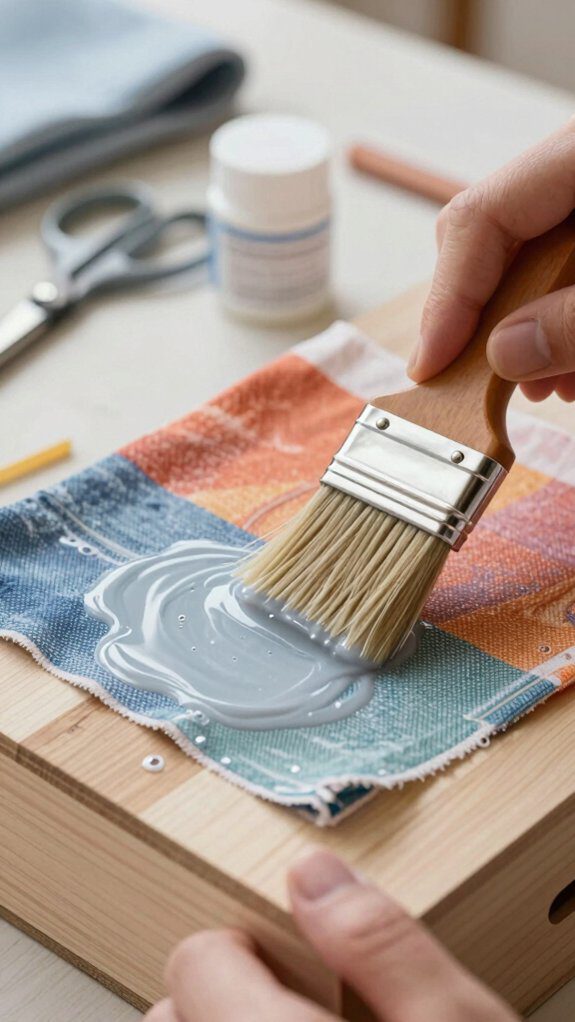
Now that your fabric pieces are smooth and wrinkle-free, I’ll show you how to protect all that hard work with the right topcoat.
You’ve got options depending on how you’ll use your project—I’ll walk you through choosing between a fabric-formulated Mod Podge for pieces that’ll get heavy use (like dining chairs) versus a gentler water-based sealer for more delicate items.
The key is applying multiple thin coats rather than one thick one, which keeps your fabric flexible while building serious durability.
Top coat application
To protect your fabric decoupage and lock everything in place, you’ll want to seal it with multiple thin coats of a water-based acrylic sealer or Mod Podge—think of this step as giving your project a protective shield that also stiffens the fabric for better durability.
Here’s how to nail your finish options and get the hand feel you want:
- Apply at least three thin coats, allowing each to dry completely between applications
- Work from center outward with even strokes using a soft brush or foam applicator
- Consider satin or matte topcoats if you prefer softer flexibility over maximum hardness
Let each coat cure fully before moving forward.
Drying and Curing Time
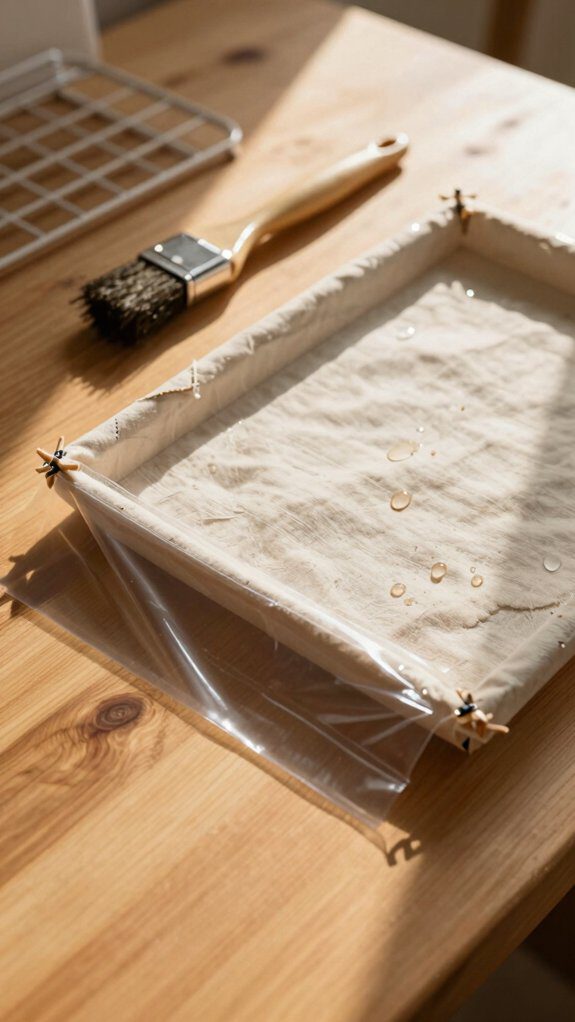
Since patience is genuinely half the battle in decoupage with fabric, understanding drying and curing times will save you from frustration (and ruined projects).
Let each medium coat dry until it feels hard—typically one to three hours—before layering again. Humidity effects matter considerably; high moisture or cool temperatures can double your drying time, so work in a warm, dry space around 65–75°F.
After building multiple layers, cure overnight before trimming. Your final topcoat needs 24–72 hours before regular use, or up to seven days for heavy wear.
If you’re using metal leafing, follow manufacturer guidelines carefully before sealing.
Tips for a Smooth Finish
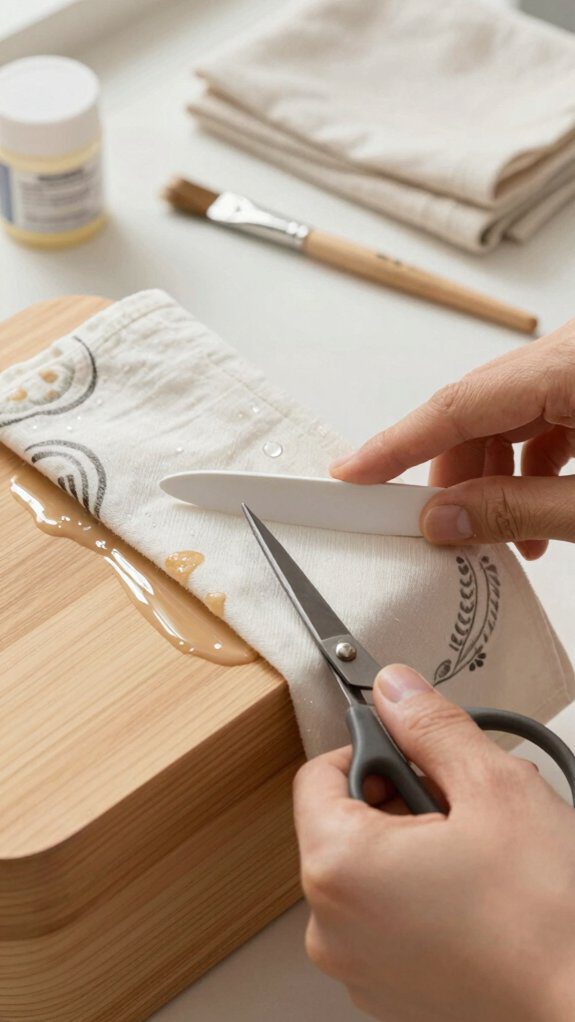
I’ve found that working in thin layers is the real secret to getting a professional-looking finish without all the frustrating wrinkles and bubbles.
You’ll want to let each layer dry completely—I mean really completely—before adding the next one, which gives the adhesive time to set properly and keeps everything flat and even.
Building up several thin coats might take a bit longer than slapping on one thick coat, but trust me, your final result will look so much better and last way longer.
Work in thin layers
When you’re building up your fabric decoupage project, here’s what I’ve learned: applying thin, even coats of medium—about 1–2 mm wet thickness—is genuinely the secret to getting that smooth, professional-looking finish you’re after.
Understanding adhesive chemistry helps you grasp why this matters. Here’s my process:
- Apply with a synthetic brush using light, even strokes to let fabric absorb glue without pooling
- Allow complete drying between coats (a few hours) before layering again
- Build 3–6 thin coats rather than one thick layer for superior results
Between coats, I sand lightly with fine-grit paper. This prevents rough texture and creates that creamy, flawless surface we’re all chasing.
Let each layer dry fully
Patience is honestly your best friend when you’re chasing that glass-smooth finish, and it all comes down to letting each coat dry completely before you move forward. I always wait until the medium feels hard to the touch—usually a few hours—before adding the next layer. This prevents tackiness and moisture trapping that ruins your work.
| Condition | Drying Time | What to Do |
|---|---|---|
| Normal room | 2–4 hours | Proceed as scheduled |
| Humid climate | 4–8 hours | Increase drying time |
| Cool temperature | 6+ hours | Use fan or warm space |
| Heavy varnish coats | 24 hours | Wait between layers |
| Final curing | 8–12 hours | Don’t trim yet |
Temperature control and humidity management matter tremendously. In humid or cool conditions, I extend drying times—sometimes doubling them—and position a fan nearby or work in a warm, dry room for consistent, bubble-free layers. Test readiness by lightly pressing an inconspicuous edge; if medium transfers or feels pliable, wait longer. Rushing creates disasters.
Common Mistakes to Avoid
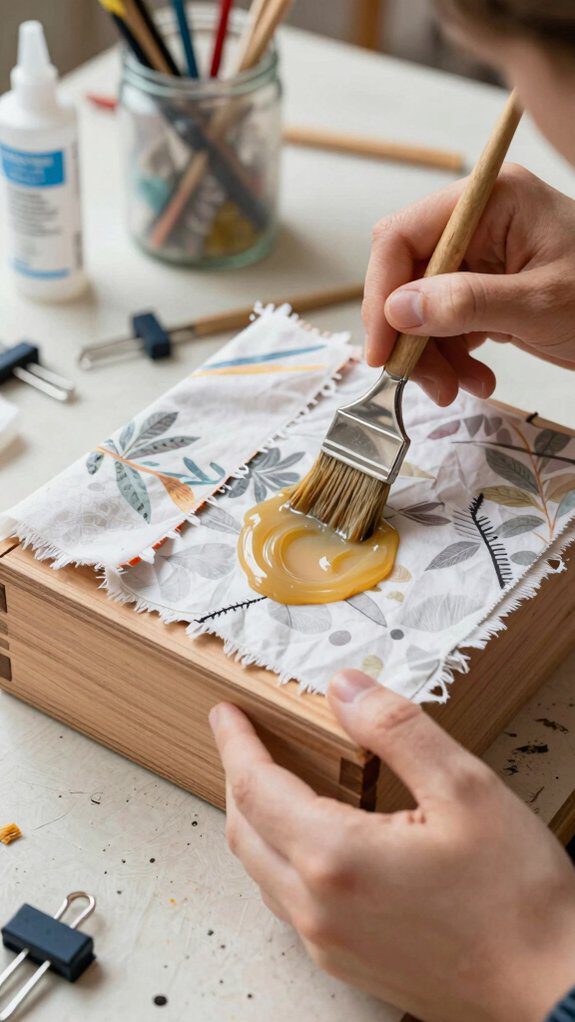
Since fabric decoupage seems straightforward, it’s easy to think you can skip the prep work and jump straight to the fun part—but that’s where most problems start. I’ve learned that avoiding common mistakes makes all the difference in your success:
- Skip surface prep, and you’ll face bubbling and lifting—sand, vacuum, and wipe thoroughly so adhesives bond properly.
- Neglect fabric selection and pattern placement on large surfaces, and small prints look lost, creating visual imbalance.
- Cut excess fabric while adhesive is wet, resulting in ragged, sticky seams instead of clean edges.
Use fabric-formulated mediums and finish with polyurethane for durability. Start with flat surfaces to build confidence!