12 Hammock Ideas for Backyards Without Trees That Still Feel Relaxing
No trees? I fixed that fast with these 12 hammock ideas for backyards without trees. I started with a freestanding metal stand, then built a DIY 4×4 frame, and even hung one under a pergola with eye bolts. I used a glue gun for Dollar Tree lights, IKEA side tables, and a carry-case stand for quick moves. My favorite surprise was a corner wall setup—it felt cozy, not cramped. Stick around, and I’ll show the rest.
Love cozy DIY projects? 💕
Get free printable guides, exclusive tutorials & surprise craft goodies straight to your inbox.
Disclosure: This post may contain Amazon affiliate links, at no extra cost to you. Content on DiyCraftNest is created with research support from AI tools and carefully reviewed, edited, and fact-checked by the lead author, Daniel Pat, to ensure accuracy and reliability. Learn more
Key Takeaways
- Use freestanding metal or wooden hammock stands to create a relaxing setup without needing trees or drilling.
- Choose portable folding or collapsible stands if you want renter-friendly, easy-to-move backyard hammocks.
- Build a DIY A-frame or wooden hammock frame with rated hardware for a sturdy, budget-friendly option.
- Install hammocks on pergolas, gazebos, decks, or wall studs using heavy-duty anchors and proper clearance.
- Add comfort features like mosquito nets, LED lights, swivel hooks, and weather-safe fabric for a cozy feel.
Freestanding Hammock Stand
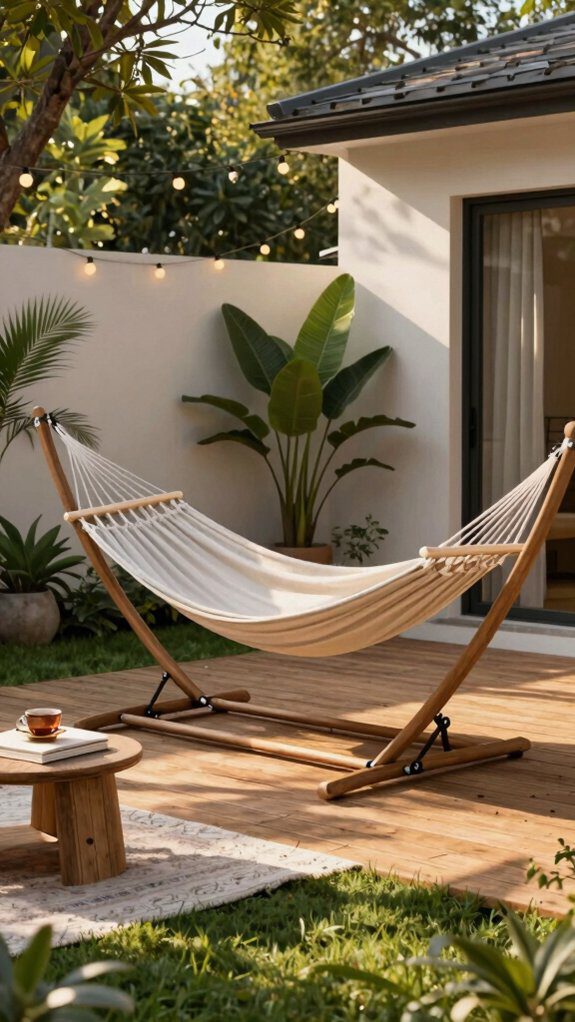
I looked for a stand made of powder-coated steel, since I wanted something that could handle rain and not turn into a rusty eyesore, and I checked the weight limit too—mine held 400 lbs and came in around 32 lbs, which made it easy to move without feeling like I was hauling a small fridge.
My tiny patio finally felt like my space. I matched it with a single hammock, used the adjustable tension hooks to get the sag right, and loved the rust resistant finish.
I added non-slip feet, then tested it with a Dollar Tree blanket and an IKEA pillow. Quick win.
DIY Wooden Hammock Frame
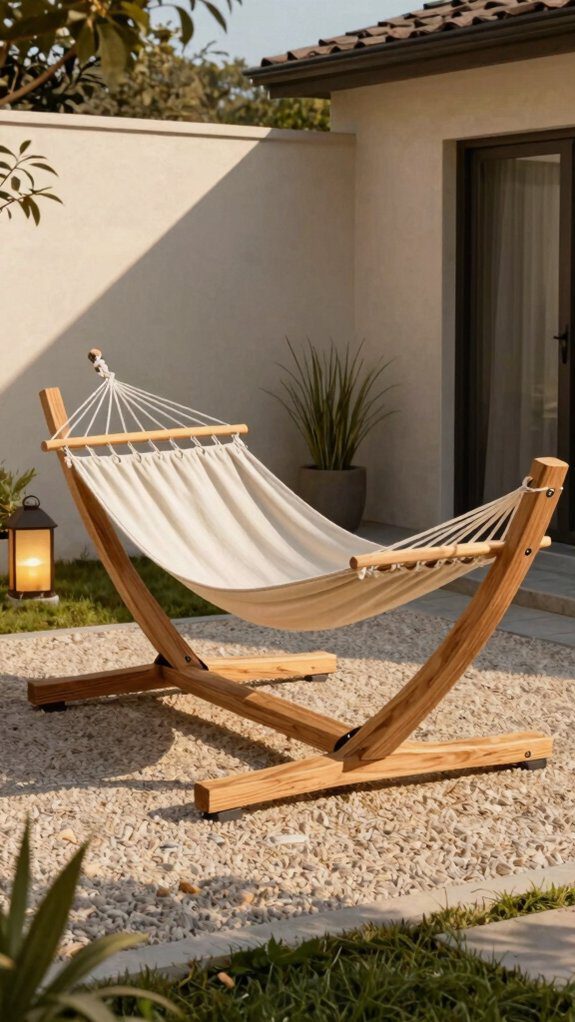
When my backyard felt a little empty and my wallet felt even emptier, I built a DIY Wooden Hammock Frame that didn’t cost a fortune and still looked solid enough to trust. I used basic lumber, a drill, a glue gun for quick fixes, and a few sturdy bolts, and honestly, the hardest part was pretending I didn’t measure twice after already cutting once.
If you want a budget-friendly build, I’ll show you how I kept it simple, strong, and ready for lazy afternoons without turning my whole weekend into a lumberyard joke.
Budget-friendly build
For a basic setup, I’d start with two 8-foot legs on each side, bolt them at the top, and add a 2×6 or 4×6 beam so the hammock hangs with a nice sag instead of a sad droop. When I built my budget hammock frame, I used pressure-treated 4x4s, a few galvanized bolts, and reclaimed lumber for trim. A little glue gun “planning” helped me mark spots fast.
| Item | Why it helps |
|---|---|
| 4×4 legs | Cheap strength |
| Bolts | Safer joints |
| Stain | Longer life |
| Spikes | Less wobble |
My $150 build felt solid, neighborly, and easy to share.
Metal Hammock Stand Setup
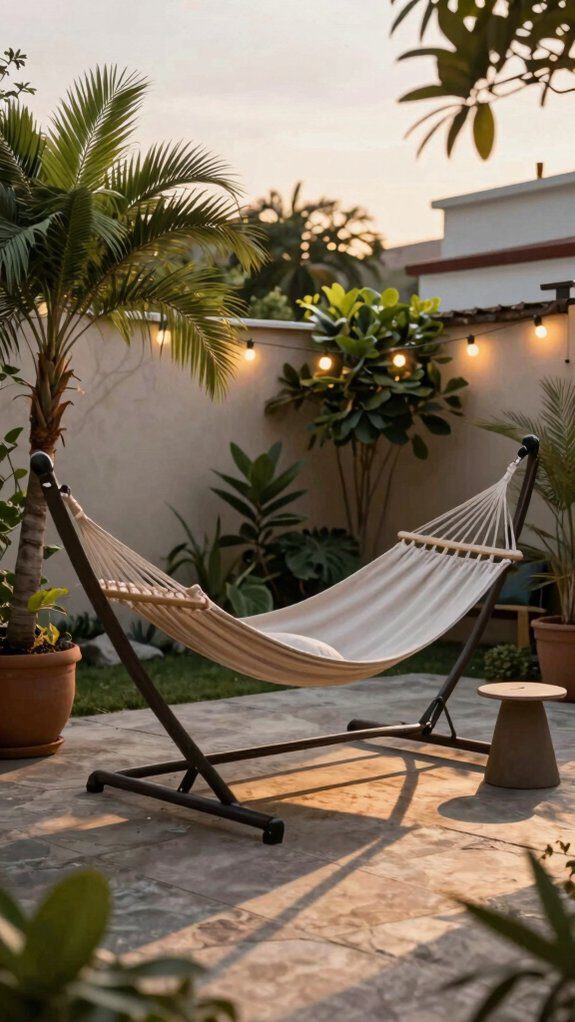
A wobbly hammock can turn a cozy backyard dream into a full-on trust exercise, so I like to start with a sturdy metal hammock stand setup that feels solid from the first swing.
I choose one rated for 400 lbs, then park it on concrete or packed gravel with rubber feet. If I’m using anchor plates, I bolt them down; that extra grip calms my nerves. I do weight testing before I fully relax. Assembly’s easier with a wrench and the manual, not vibes. For double hammocks, I match the spread, then tweak the hooks for that sweet 30° sag.
Pergola Hammock Installation
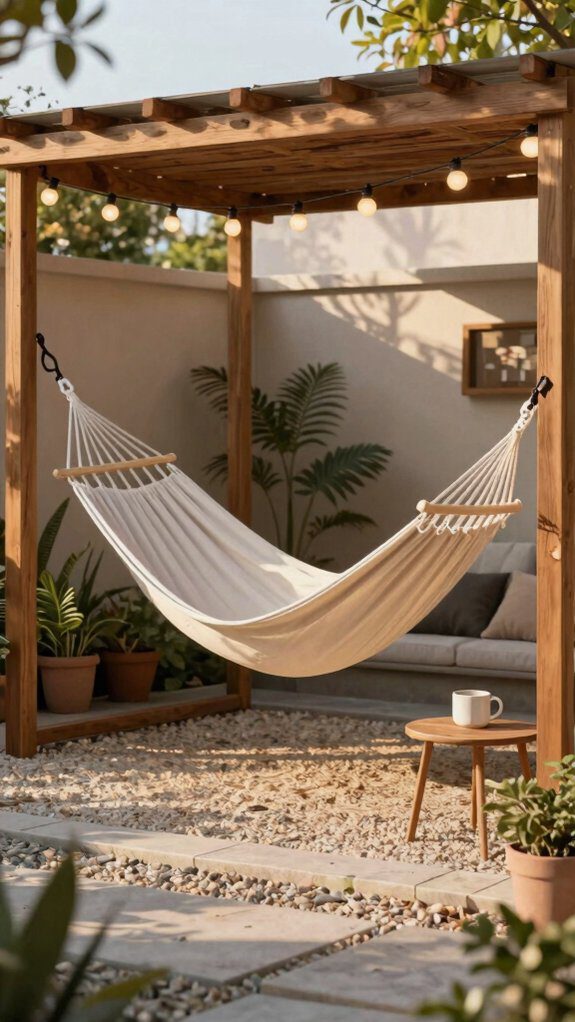
When I wanted a pergola hammock installation that wouldn’t turn into a backyard disaster, I started by checking the built-in support beams first—because surface boards can look sturdy right up until they absolutely aren’t.
I used a drill, heavy-duty eye bolts, and a tape measure, then learned the hard way that a hammock needs real beam support, not wishful thinking and a prayer.
Once I found the solid spots, the whole setup felt rock-steady, and honestly, that tiny win made my porch coffee taste fancier.
Built-in support beams
I started by checking the pergola’s strongest crossbeams, not the pretty slats that only look tough. I wanted a hammock spot that felt like ours, so I thought about structural engineering and even the beam aesthetics before I drilled. I used 3/8-inch galvanized eye bolts, washers, and lag shields, then set them into the beam centers.
For my freestanding pergola, I kept the hooks 10 feet apart and liked the soft sag. A sistered 2×8 under weak beams helped, and marine hardware kept rust away. One annual check saves a wobbly surprise.
Wall-Mounted Hammock Hooks
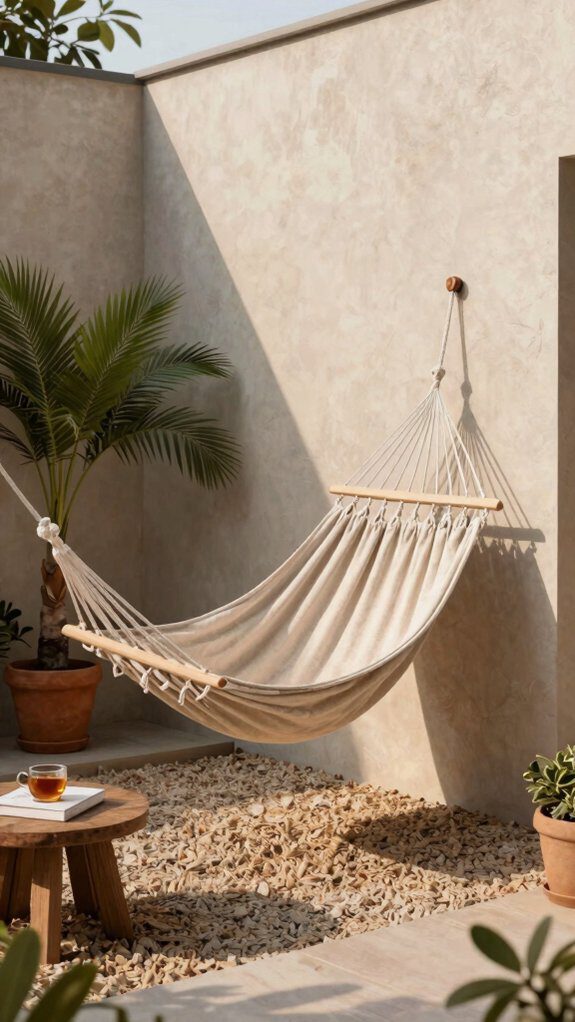
My backyard once had the saddest problem: no trees, no easy hammock, just a lot of wishful thinking and one very stubborn chair. So I tried wall-mounted hammock hooks with heavy duty anchors and corrosion resistant hardware, and honestly, it felt like giving my wall a secret superpower.
I found studs, drilled pilot holes, and set 400-plus-pound hooks with lag bolts. For brick, sleeve anchors worked better. I kept my rope angle near 30 degrees, and the sag felt right fast.
If you rent, a fold-away bracket can save the day. Mine cost less than a deluxe chair and finally made me stay outside.
Deck Post Hammock Setup
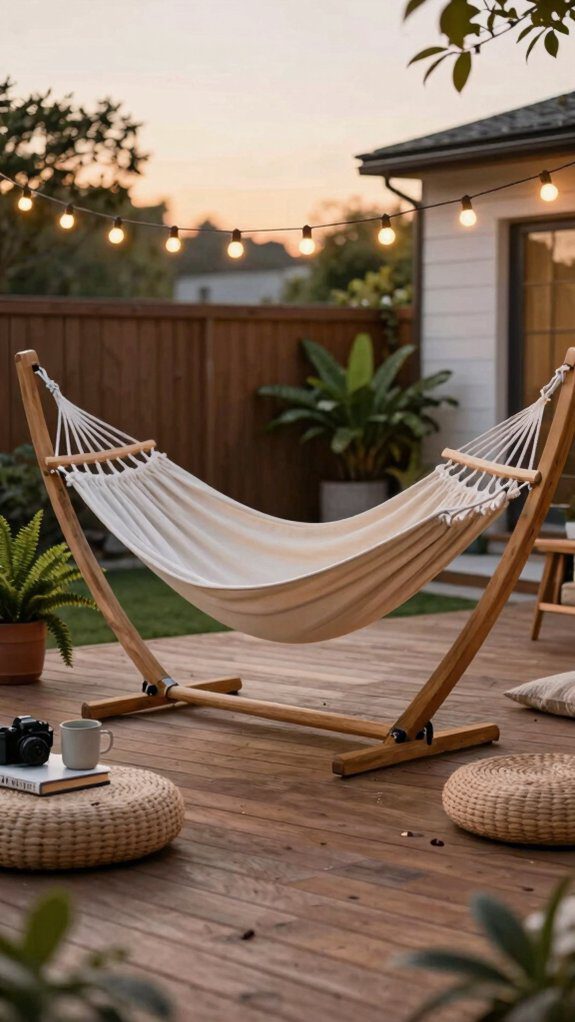
- I matched the spacing to my hammock’s length.
- I kept the sag low and comfy.
- I added marine-grade webbing for adjustable tension.
I set the ends 20 inches below the top, checked for 6 feet of clearance, and smiled when the seat felt steady.
It finally felt like my space too.
Portable Folding Hammock
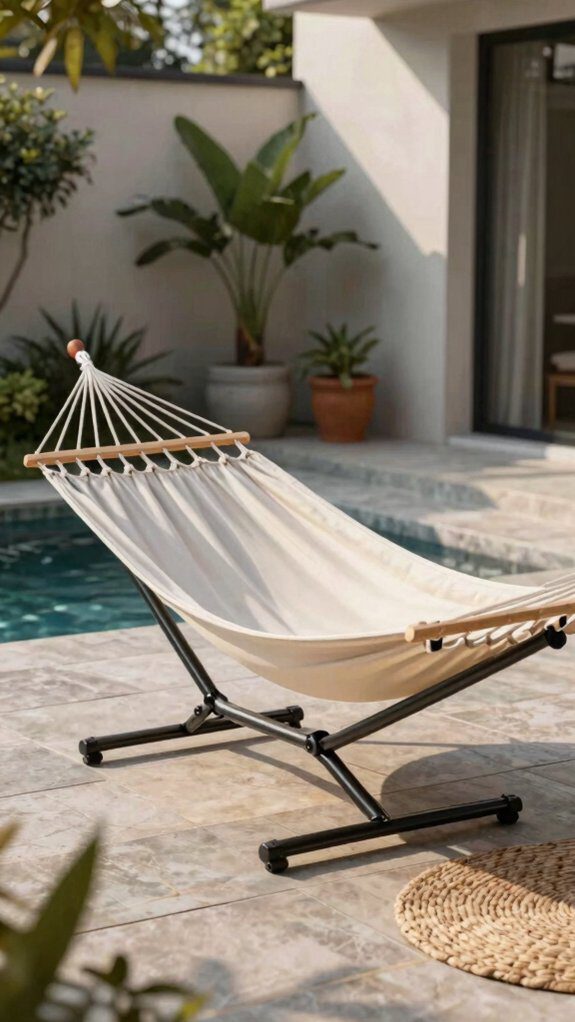
What sold me first was how easy it was to move. My portable folding hammock weighs about 28 lbs, folds into a carry case, and turns my patio into a portable lounger in minutes—no tree hunt, no drama.
I picked one rated for 400 lbs with weather-resistant fabric and powder-coated steel. It felt sturdy, even after my clumsy test with a glue gun, some IKEA-frame shelves nearby, and a Dollar Tree lantern that almost tipped over. I love the tool-free setup.
I add hammock accessories like a mosquito net or LED clip at night. On soft grass, trunk straps keep it steady.
Hammock with A-Frame Structure
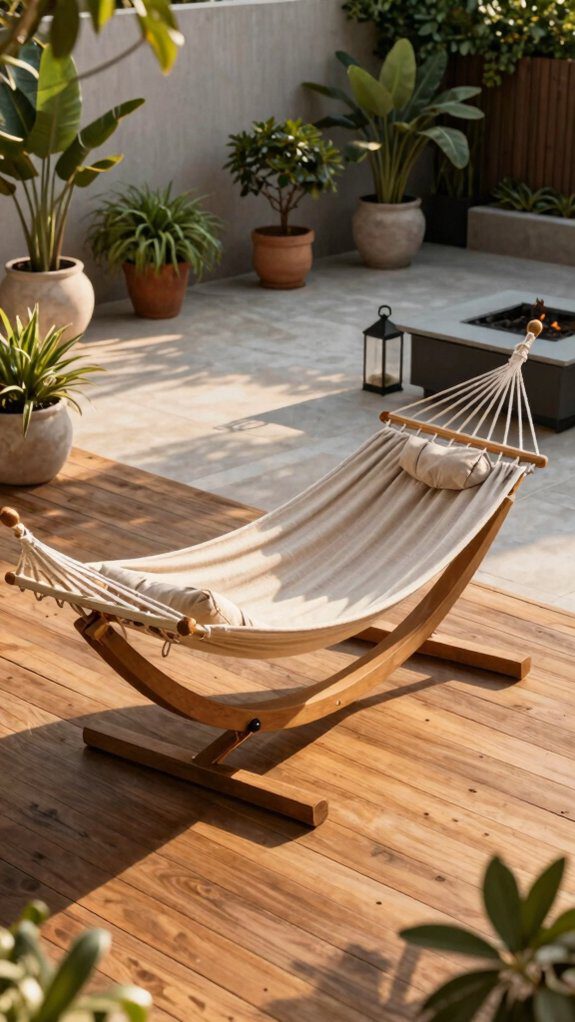
My backyard had no trees and a very stubborn need for a nap spot, so I built a hammock with A-Frame structure and loved how steady it felt from day one.
Using pressure-treated lumber, a few galvanized bolts, and my trusty drill, I made a solid setup that didn’t wobble or act dramatic every time I climbed in. If you want a stable support design that feels safe, looks clean, and doesn’t cost a fortune, this one’s worth a look—my coffee mug even stayed put.
Stable support design
A little backyard peace can turn into a wobble-fest fast when there aren’t any trees, and that’s exactly why I started looking hard at a hammock with A-Frame structure. I like how the triangular sides spread the load distribution, so it feels steady instead of spooky.
- I check level ground first.
- I use rated straps, eye-bolts, and carabiners.
- I add anchoring methods like sandbags or stakes.
My cedar frame stayed firm after I built it with 4×4 posts and a glue gun-tagged gear bin nearby. The best part? It cost less than I feared, and my patio finally feels like my spot.
Corner Wall Hammock Setup
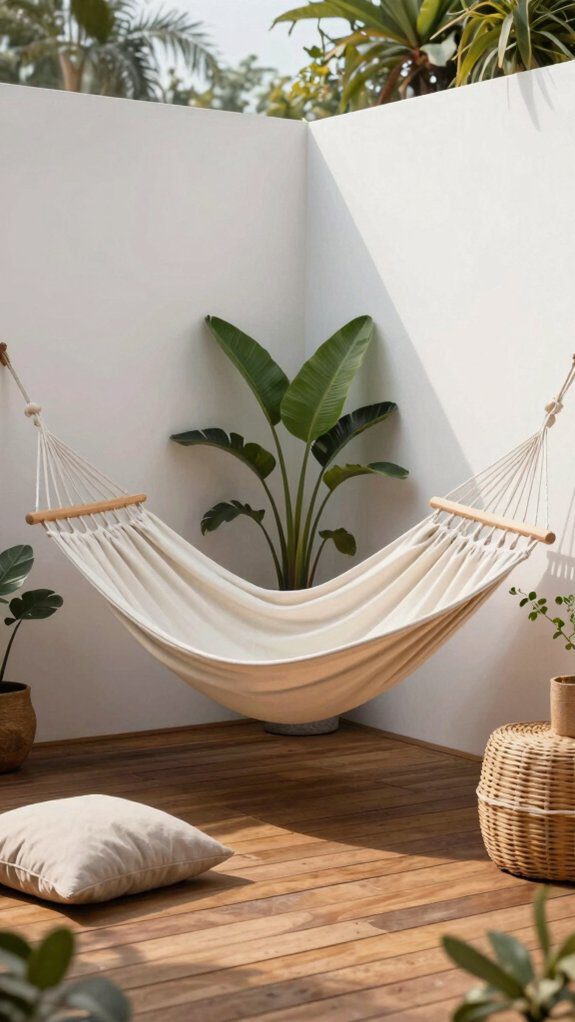
I kept it simple with a compact chair hammock that fit the space without swallowing the whole patio, and that made the setup feel way less cramped. I mounted heavy-duty brackets on two outside walls for corner cocooning, using 3/8-inch eye bolts, backing plates, and a stud finder. My angled suspension felt snug, not scary.
| Step | Material | Feeling |
|---|---|---|
| Mark spots | pencil | hopeful |
| Drill | masonry bit | nervous |
| Hang | chair hammock | proud |
I added Dollar Tree lights, a faux palm, and an IKEA frame shelf nearby. Tiny retreat, big grin.
Gazebo Hammock Hanging
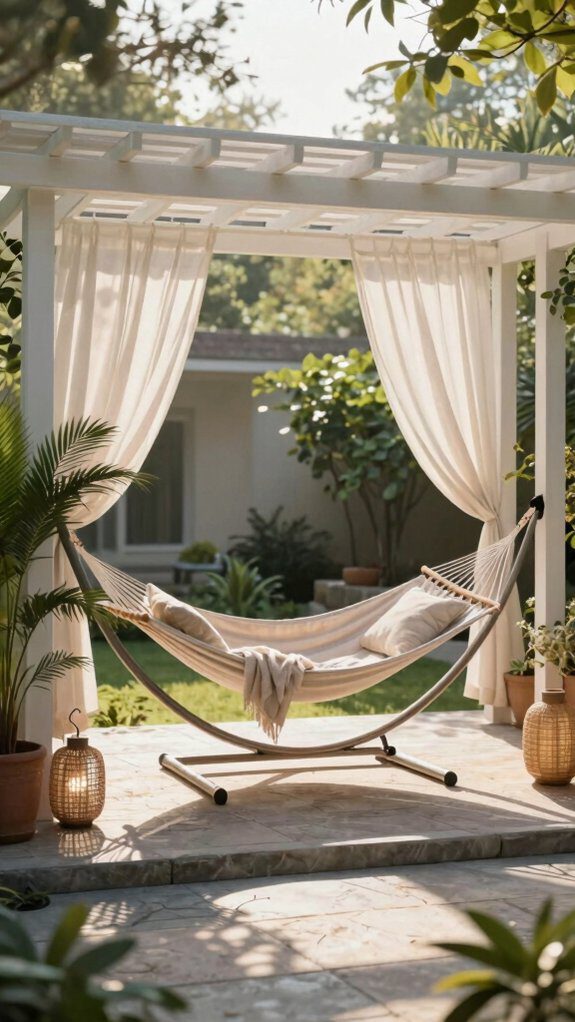
That cramped corner hammock setup got me thinking bigger, because a gazebo can turn into a legit hangout zone if you hang it the right way. I used a gazebo hammock with a 4×6 treated beam and a heavy-duty kit, and it felt steady fast.
- Measure 6–8 feet between posts.
- Use stainless eye bolts or a stand.
- Add ambient lighting and mosquito netting.
I once mixed Dollar Tree hooks with a glue gun plan for markers—bad idea, funny mess. Better to bolt into reinforced rafters, then test a hammock swing slowly. With potted plants, it finally felt like my little retreat.
Indoor-Outdoor Hammock Option
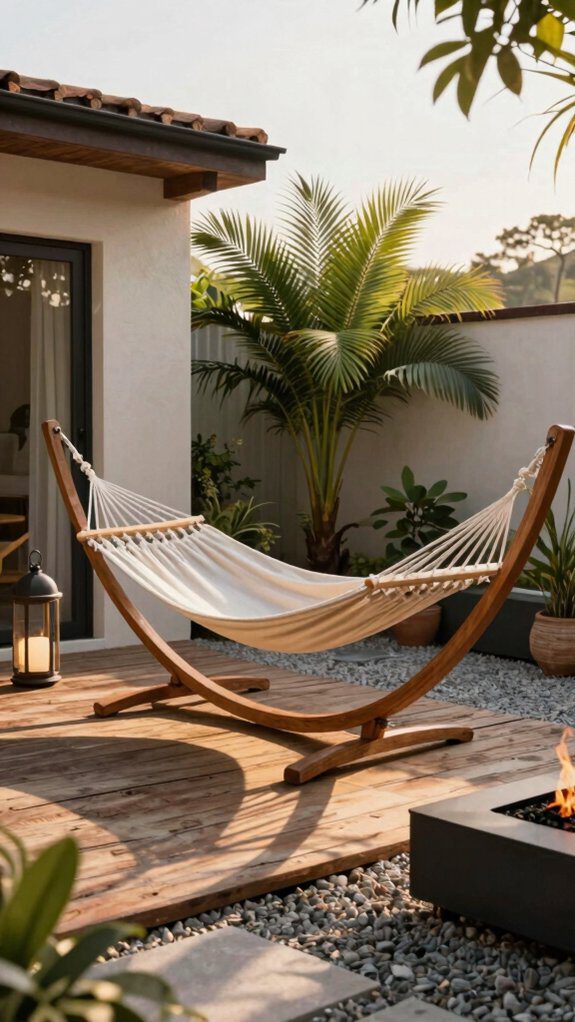
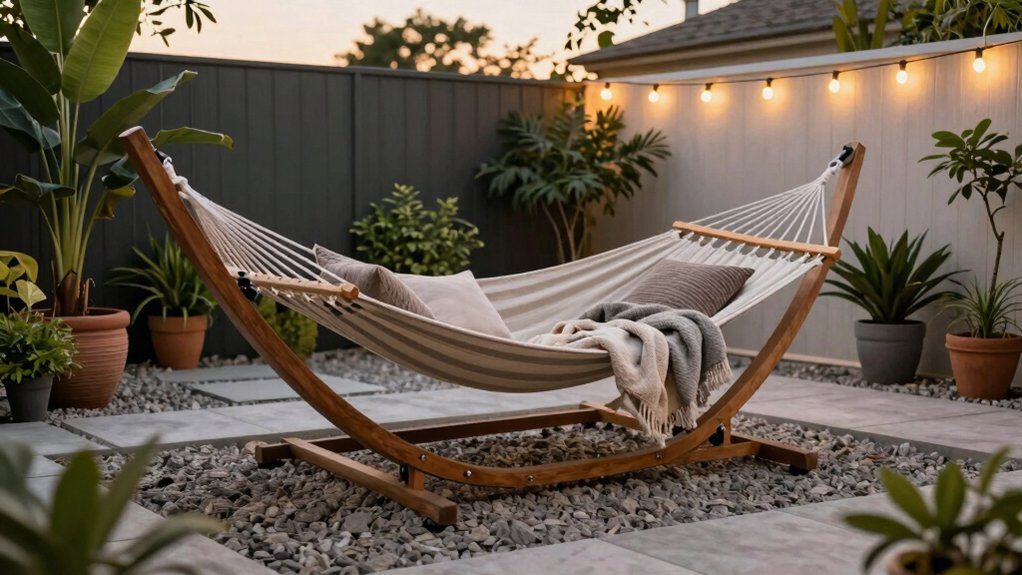
I love an indoor-outdoor hammock option when I want flexible placement, because I can roll a portable stand from my living room to the patio without drilling a single hole.
I’ve used a weather-safe fabric hammock on a freestanding curved stand, then added a tiny side table and Dollar Tree LED lights so the spot feels cozy at night too.
It’s a simple renter-friendly win, and honestly, moving my “nap zone” around the house feels a little like cheating the system.
Flexible placement
For the simplest version, I use a curved wooden or metal stand rated for single or double hammocks, then place it on a flat, level spot like deck boards, patio pavers, or even hardwood floors with protective pads under the feet.
When my backyard felt lonely, this flexible placement saved it. I like adjustable spacing, and a rotating base helps me face the breeze or the TV.
- I move the stand from patio to living room.
- I add Dollar Tree lights and an IKEA side table.
- I use weather-safe fabric so it lasts.
Honestly, it feels like my little club.
Hammock Chair Stand Alternative
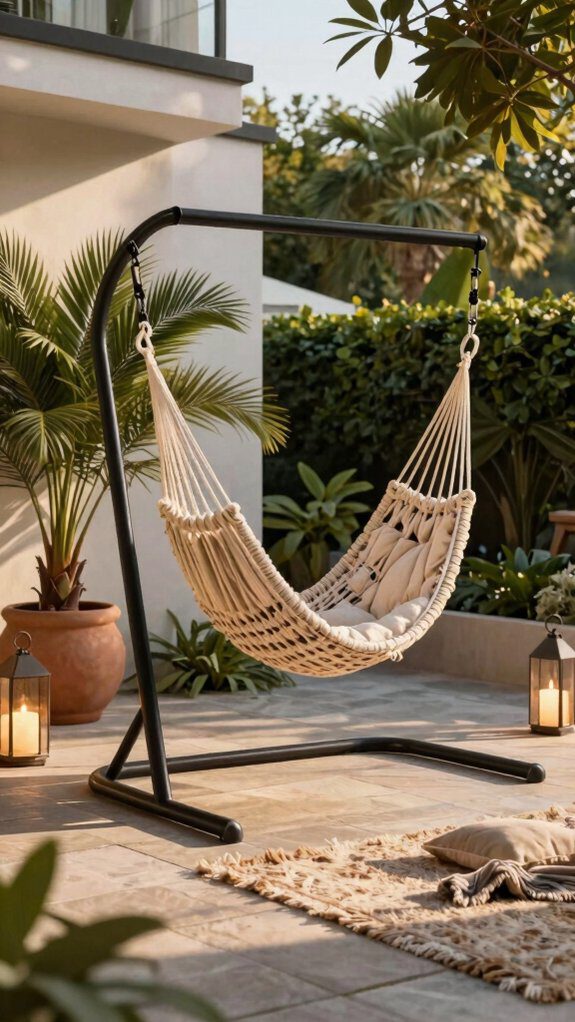
I’ve tried both the curved wooden kind and the powder-coated steel kind, and honestly, the vibe changes fast: wood looks cozy and boho, while metal feels clean and modern.
When my patio had zero trees, I used a freestanding hammock chair stand rated for 400 lb, and it held my hanging pod like a champ. I set it on patio pavers, left 3 feet around it, and the 360° swivel hook made getting in easier than my old rope swing.
For renters, I love a collapsible stand with a carry case. Mine packed up fast, weighed about 32 lb, and fit standard loops.