23 DIY Container Gardening Ideas for Small Spaces
When starting container gardening in a small space, pick pots at least 12 inches deep with drainage holes to keep roots happy and prevent water buildup. Use a quality potting mix with peat moss and perlite for good drainage and nutrients. Choose compact plants or herbs that get the right sun and water. Try vertical trellises or wall-mounted pockets to save room. Rotate plants seasonally and pair companions to boost growth. Keep watering and feeding balanced for vibrant results. Ready to investigate more clever tips and ideas?
Love cozy DIY projects? 💕
Get free printable guides, exclusive tutorials & surprise craft goodies straight to your inbox.
Disclosure: This post may contain Amazon affiliate links, at no extra cost to you. Content on DiyCraftNest is created with research support from AI tools and carefully reviewed, edited, and fact-checked by the lead author, Daniel Pat, to ensure accuracy and reliability. Learn more
Key Takeaways
- Use containers at least 12 inches deep with quality potting mix to ensure healthy root growth and proper drainage in small spaces.
- Incorporate vertical trellises and hanging baskets to maximize space and add visual interest with climbing plants and compact varieties.
- Group companion plants with similar sunlight and watering needs in mixed container arrangements for better growth and pest control.
- Repurpose food-safe buckets with drilled drainage holes as budget-friendly containers for herbs, vegetables, and flowers in small gardens.
- Rotate seasonal plants and combine dwarf or bush varieties to maintain productivity and aesthetics throughout the year in limited areas.
Select Proper Container Size
When you’re starting your container garden, picking the right size container is one of the most important steps you can take.
I always look for containers with enough container depth—at least 12 inches for most veggies—to give roots room to grow strong. For herbs or leafy greens, smaller pots around 6 to 8 inches deep work just fine.
Also, think about plant spacing; wider containers, about 12 to 18 inches across, help when you’re planting multiple plants together so they don’t crowd each other.
Choosing the right size really boosts your plants’ health and your garden’s success!
Ensure Drainage Holes
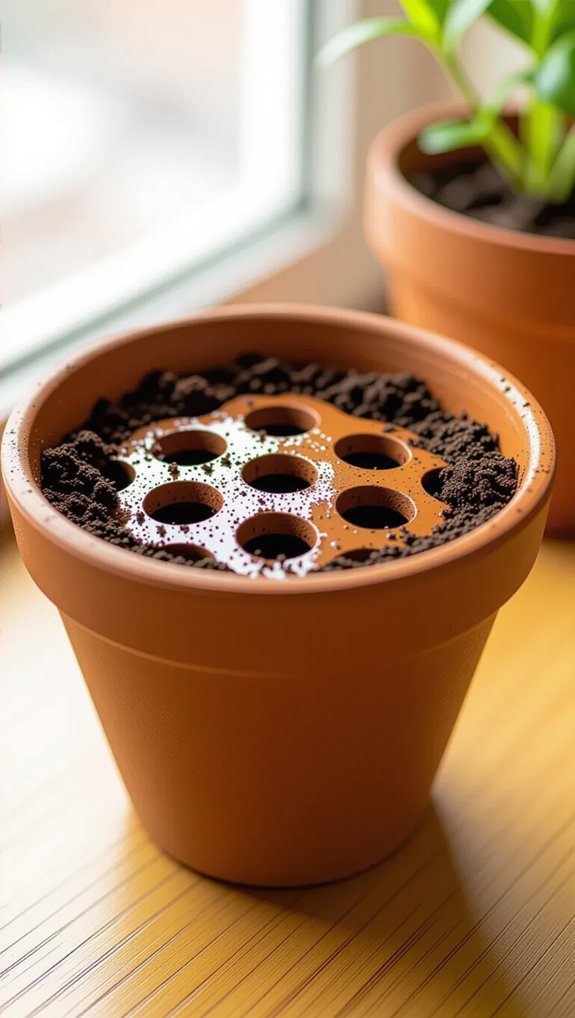
Picking the right container size sets a strong foundation, but making sure your containers have proper drainage keeps your plants happy and healthy. Drainage holes prevent waterlogging and root rot, critical for container maintenance. If your container lacks holes, add a gravel layer or raise it slightly for drainage solutions. Regularly check holes to avoid blockages and keep water flowing freely.
| Drainage Holes | Gravel Layer | Heightening |
|---|---|---|
| Prevent root rot | Improves water flow | Stops water buildup |
| Allows air in | Easy DIY fix | Promotes healthy roots |
| Requires checking | Prevents soggy soil | Boosts plant health |
Use Quality Potting Mix
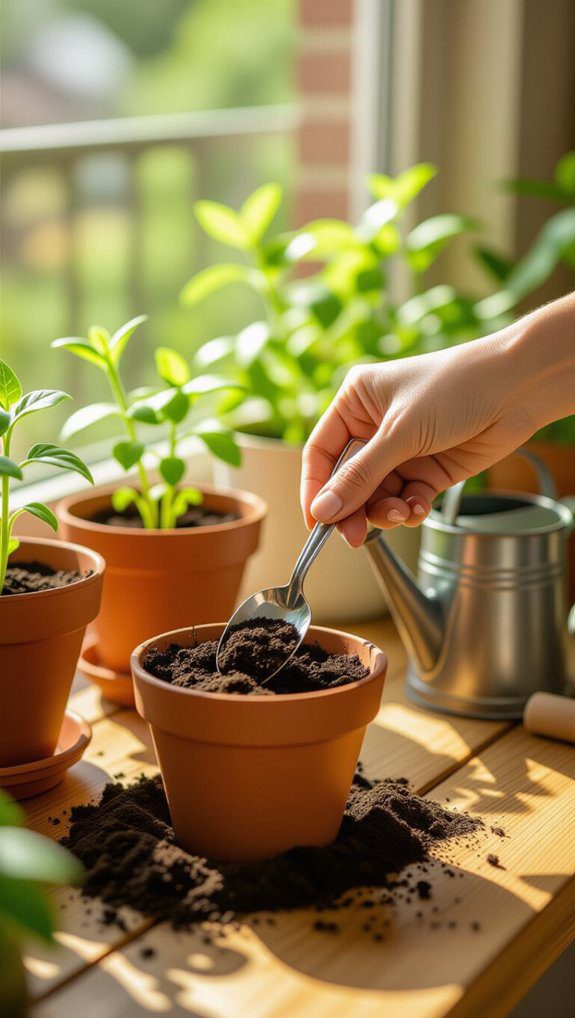
Although it might seem tempting to use regular garden soil, I’ve learned that choosing a quality potting mix makes all the difference in container gardening.
The potting mix benefits go beyond just filling your pot—it guarantees good drainage and aeration, which stops root rot and helps plants thrive.
Look for potting mix ingredients like peat moss, perlite, and vermiculite; these keep moisture balanced and nutrients available.
I always fill my containers an inch below the rim to prevent overflow when watering.
Trust me, using the right mix feels like giving your plants a cozy, healthy home.
Choose Suitable Plants
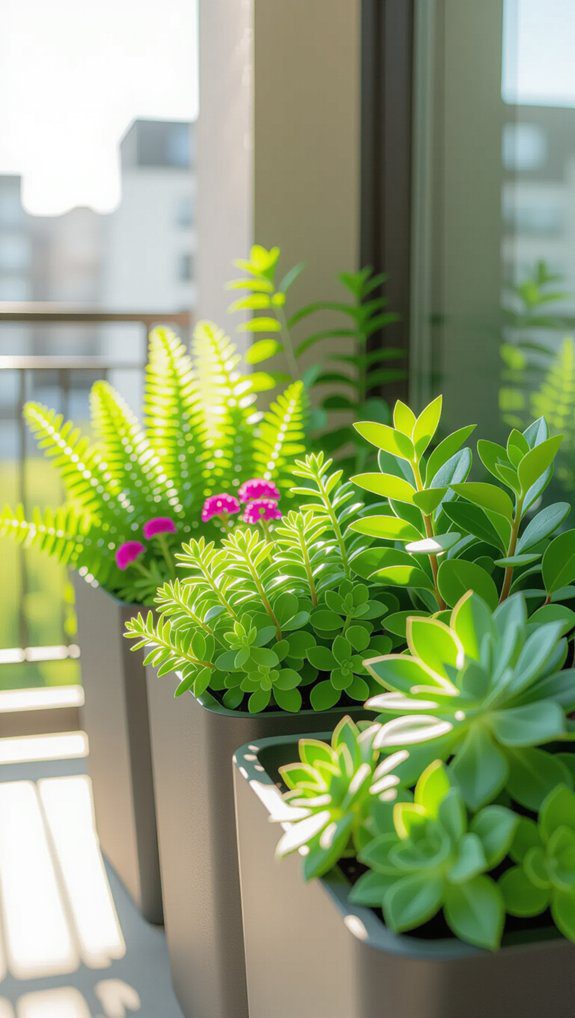
Since container space is limited, I always start by choosing plants that stay compact and won’t take over the pot.
I look for plant compatibility, selecting those with similar sunlight and watering needs to keep everything thriving together.
Seasonal selection matters too—herbs like basil and thyme shine in warm months, while leafy greens like spinach enjoy cooler weather.
I love adding dwarf cherry tomatoes or bush beans for fresh veggies, and marigolds for color and pest control.
This way, my small container garden feels balanced, productive, and welcoming—perfect for anyone wanting to grow happily in tight spaces.
Vertical Growing System
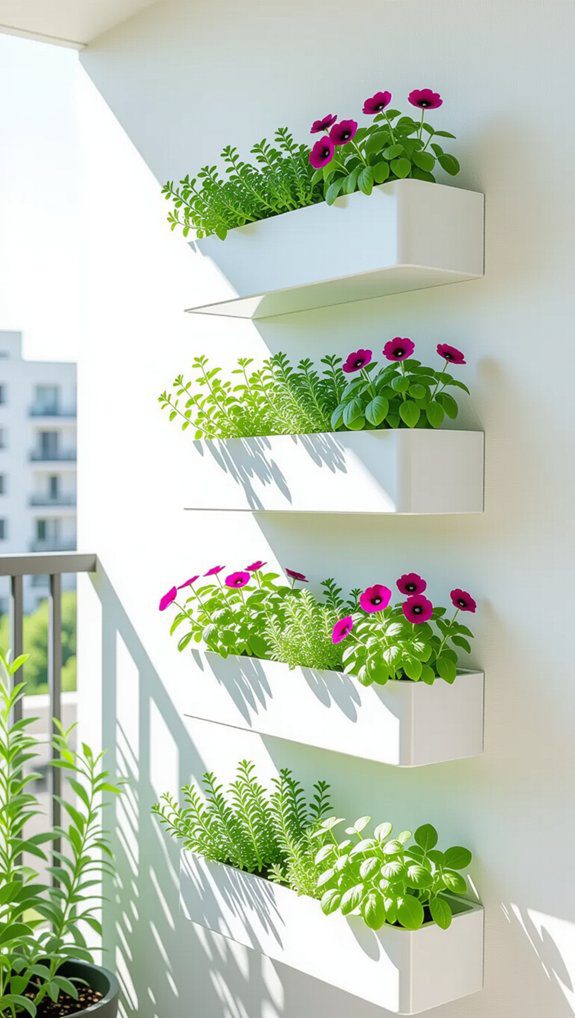
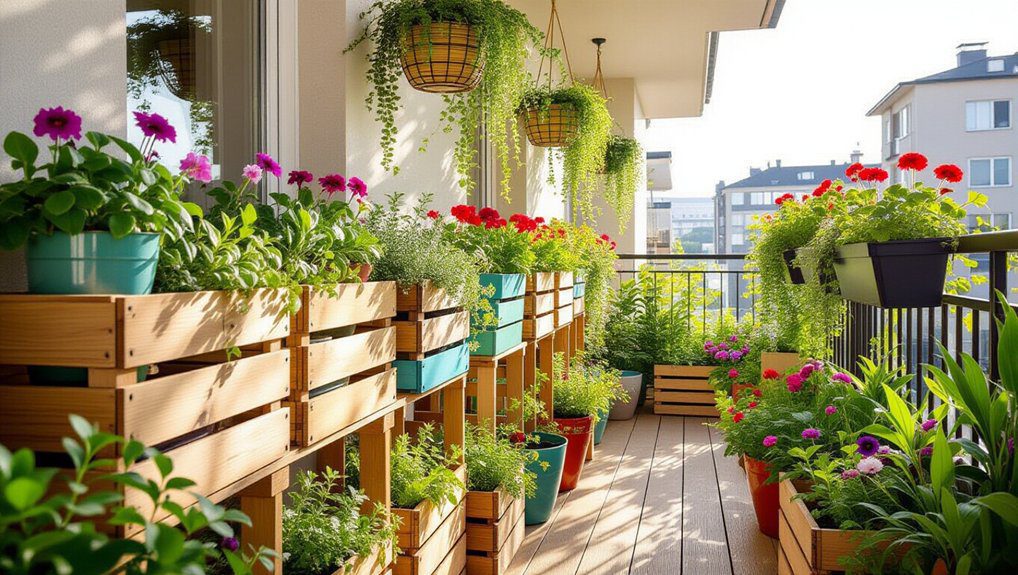
When space gets tight, I turn to a vertical growing system to stretch my garden upward instead of outward. It’s one of my favorite space optimization techniques because it lets me use walls, trellises, or shelves to grow more plants without needing extra floor space.
The vertical gardening benefits are clear—better sunlight, improved air circulation, and healthier plants. I love using lightweight containers with well-draining soil, which keeps everything stable and happy.
Whether it’s peas climbing a trellis or herbs in wall-mounted pots, this system makes small spaces feel like a lush, green community.
Herb Container Garden
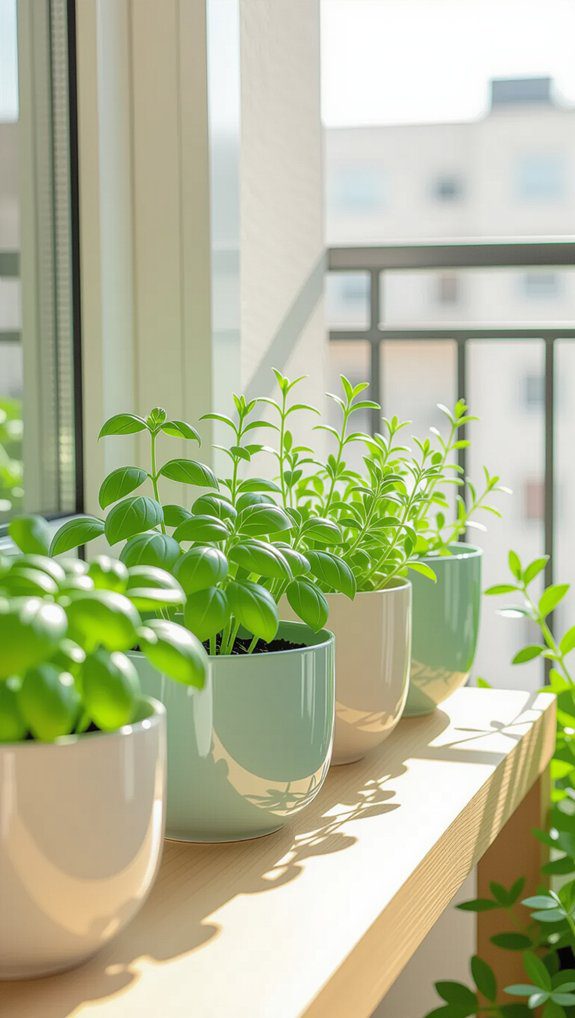
After making the most of vertical space, I find that adding an herb container garden brings fresh flavors right to my fingertips, even in the smallest spots. Using herb selection tips like choosing basil, parsley, and thyme, I pick pots at least 12 inches deep with good drainage. Container spacing strategies matter too—I group companion herbs together for better growth and pest control. Here’s a quick guide:
| Herb | Pot Size (inches) | Sunlight (hours) |
|---|---|---|
| Basil | 12 | 6-8 |
| Parsley | 12 | 6-8 |
| Thyme | 12 | 6-8 |
| Mint | 14 | 6-8 |
| Oregano | 12 | 6-8 |
Happy planting!
Tomato Patio Planter
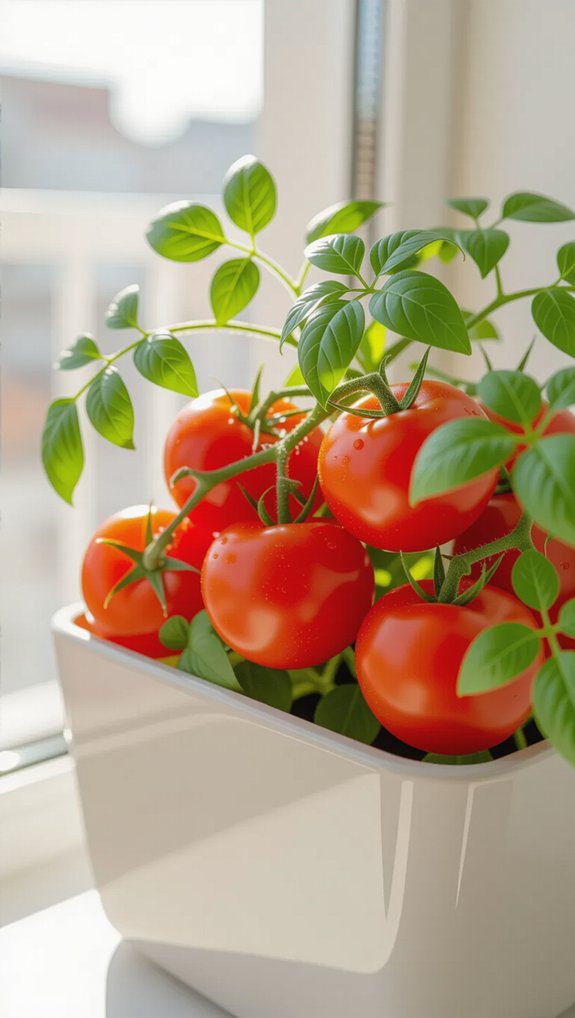
Growing tomatoes in containers can be a rewarding way to enjoy fresh, juicy fruits right on your patio or balcony.
For a successful tomato patio planter, I recommend choosing determinate tomato varieties like ‘Patio Princess’ or ‘Tiny Tim’—they’re perfect for small spaces because they stay compact.
Use a container at least 12-18 inches deep with well-draining, nutrient-rich soil.
Pay attention to container placement; your planter needs 6-8 hours of sunlight daily to thrive.
Keep the soil consistently moist since container plants dry out faster.
With care, your patio will soon be bursting with homegrown tomatoes you and your friends can share!
Lettuce Window Box
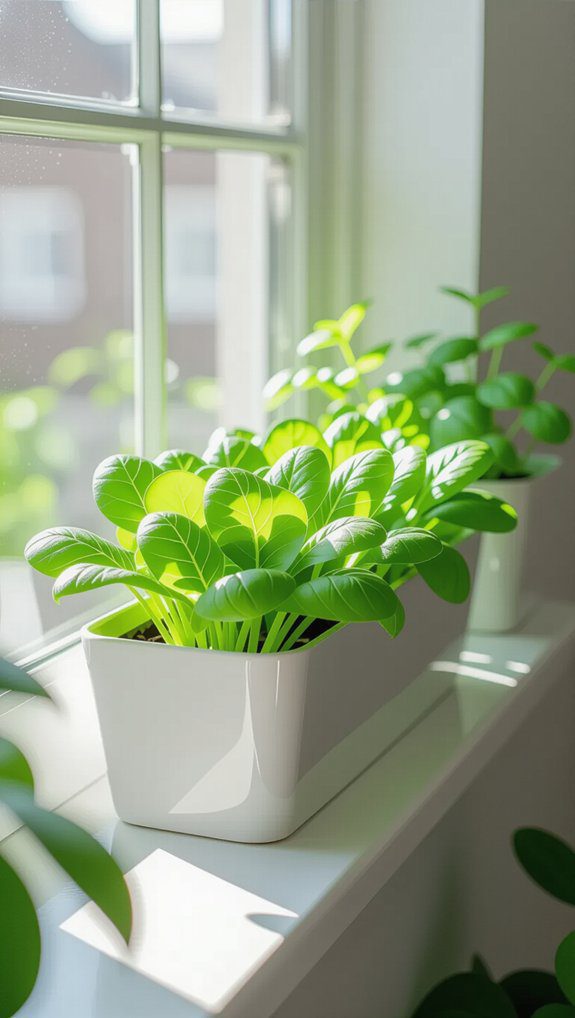
A well-planned lettuce window box can bring fresh, crisp greens right to your kitchen windowsill, making snacking and salads easier than ever.
Start by choosing lettuce varieties that grow well in shallow containers. Make sure your box is 6 to 12 inches deep and fill it with nutrient-rich potting mix.
Remember, ideal spacing is key—plant seeds or seedlings about 4 to 6 inches apart to keep airflow healthy and prevent crowding.
Place your box where it gets 6 to 8 hours of sunlight daily, water consistently, and enjoy tender, homegrown lettuce every day!
Pepper Container Setup
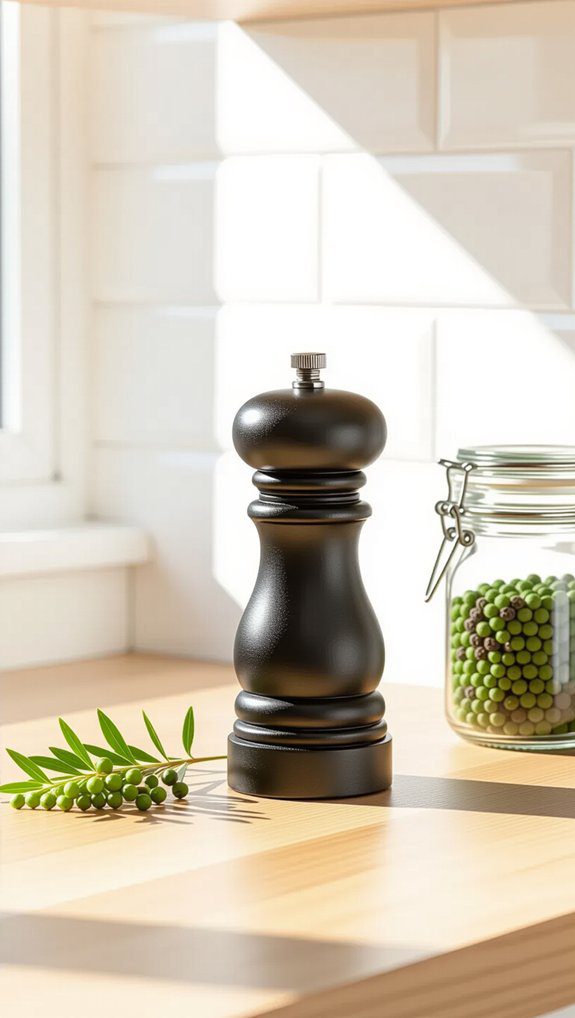
Peppers are fantastic plants to grow in containers because they don’t need a huge space to thrive, and they reward you with colorful, tasty fruits.
For the best pepper container setup, I choose a pot at least 12 inches deep with drainage holes. I fill it with potting mix that has perlite for good drainage, which peppers love.
I pick pepper varieties like ‘Mini Bell’ or ‘Jalapeño’ since they do well in small spaces.
Container placement is key: I make sure my peppers get 6-8 hours of direct sunlight daily. Keeping soil moist, not soggy, helps them flourish.
Strawberry Hanging Basket
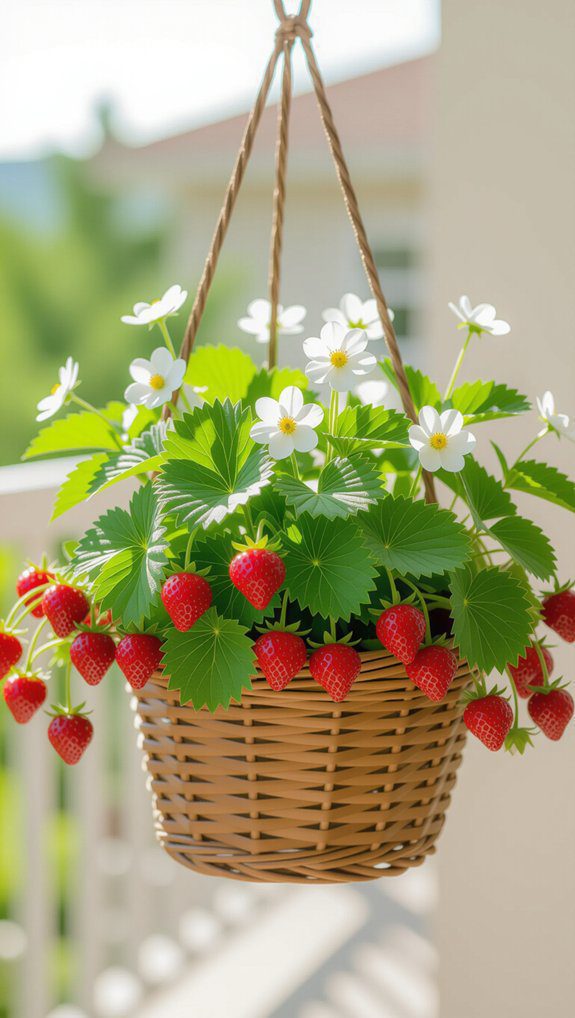
If you enjoyed setting up your peppers in containers, you’re going to love how strawberry hanging baskets can brighten up your space and your snack options.
For great strawberry care, focus on these:
- Container selection matters—choose a basket with good drainage and at least 12 inches deep to support roots.
- Pick compact varieties like ‘Alpine’ that thrive in containers and yield sweet fruit.
- Keep the soil moist by watering when the top inch feels dry, and fertilize every 4-6 weeks.
These simple steps create a cozy garden nook where fresh strawberries flourish right above you!
Succulent Pot Design
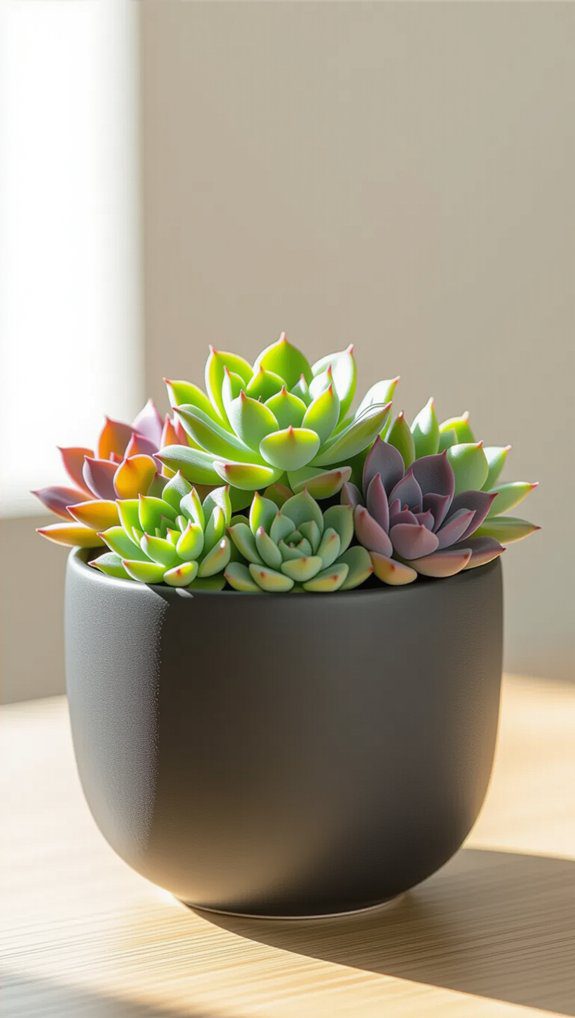
Wondering how to create a succulent pot that truly stands out? Start by selecting succulent varieties with similar water and sunlight needs to keep your arrangement healthy and harmonious.
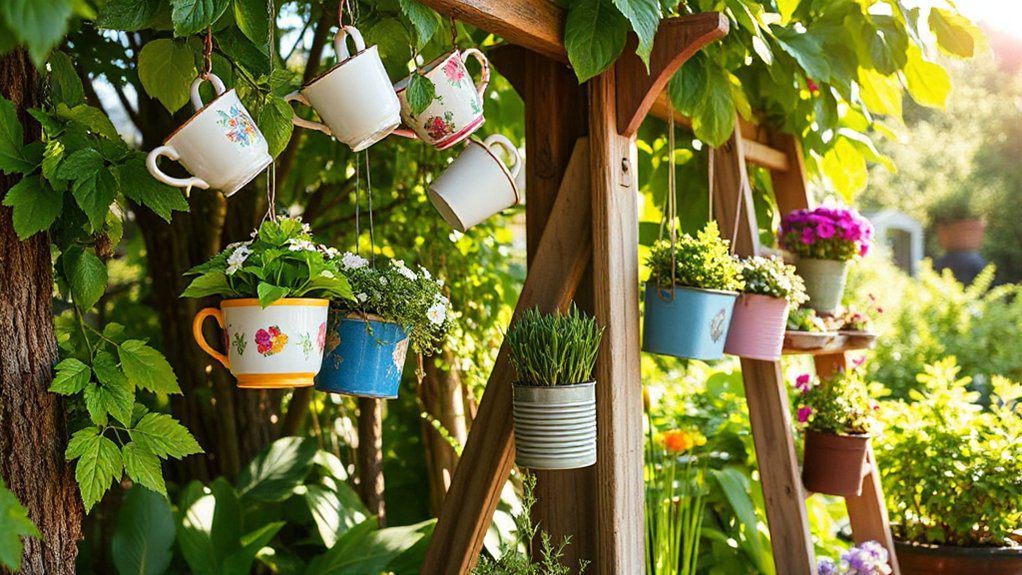
Choose pots with drainage holes—terracotta or ceramic are perfect for preventing soggy roots. I love repurposing vintage teacups or wooden crates for a charming touch.
When potting, use well-draining soil and layer decorative pebbles or colored sand on top to add personality.
Position your pot where it gets bright, indirect light for 6-8 hours daily. With these potting techniques, your succulent design will feel like a cozy, green community.
Microgreens Tray
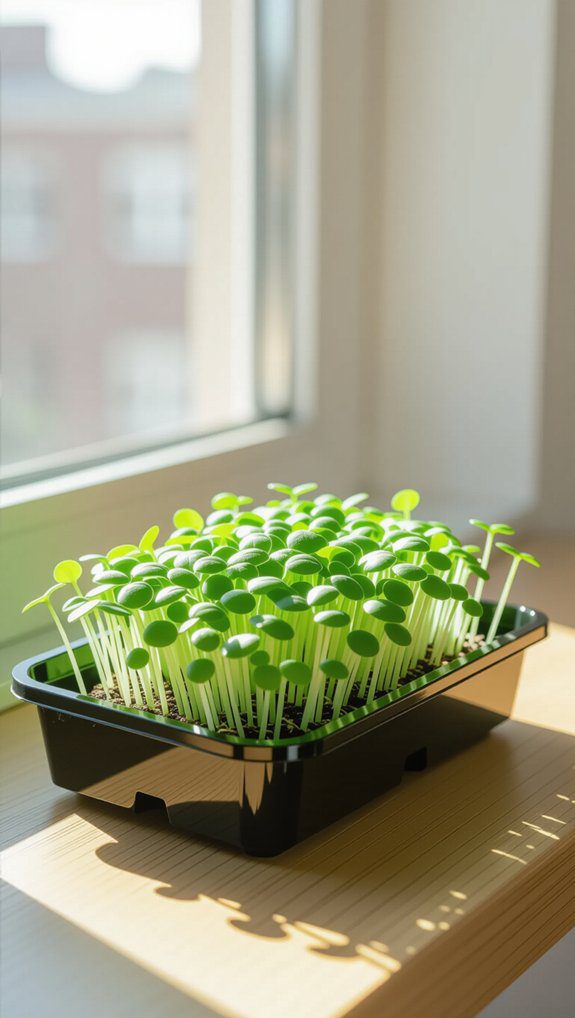
Growing microgreens in a shallow tray is one of the simplest and most rewarding ways to add fresh, vibrant greens to your kitchen.
These tiny dynamos offer amazing microgreens benefits like packed nutrients and quick harvests. Here’s how I get started:
- Choose a tray 1-2 inches deep with well-draining potting mix to keep roots happy.
- Pick microgreens varieties such as basil, radish, or sunflower—they sprout in just 7-14 days!
- Place your tray where it gets 4-6 hours of indirect sunlight, and mist regularly to stay moist.
Give it a try; it’s a fun way to connect with your food!
Root Vegetable Deep Pot
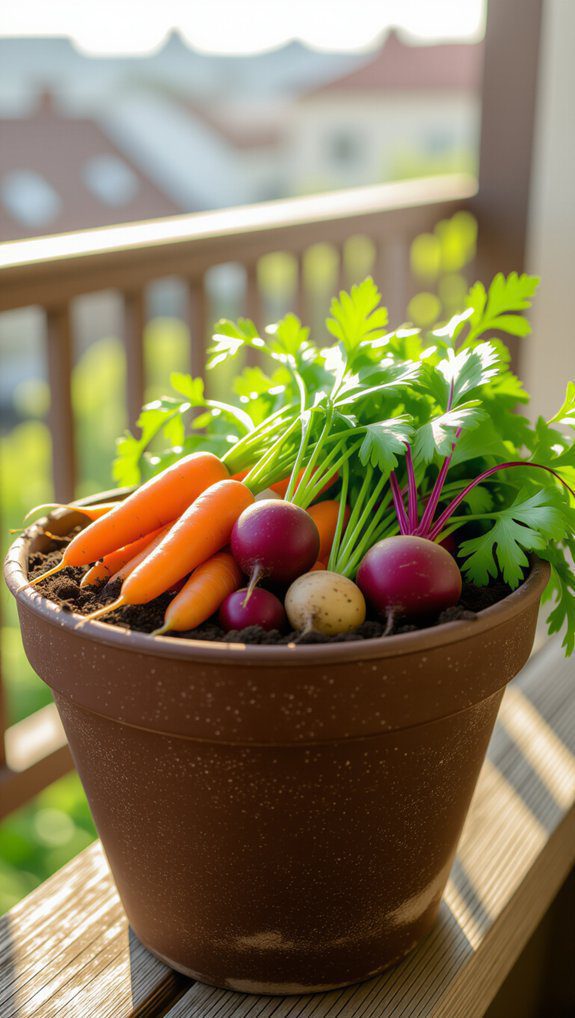
While microgreens grow quickly in shallow trays, root vegetables need a bit more room to stretch their roots deep and strong.
For healthy carrots or beets, I use pots with at least 12 inches of root depth. Choosing the right pot materials is key—lightweight plastic or sturdy ceramic with drainage holes works best to keep soil from getting soggy.
I fill mine with a mix of peat moss and perlite to guarantee good drainage and air flow to the roots. Wider pots let me plant companions together, saving space while giving roots plenty of room to grow happily.
Climbing Plant Trellis
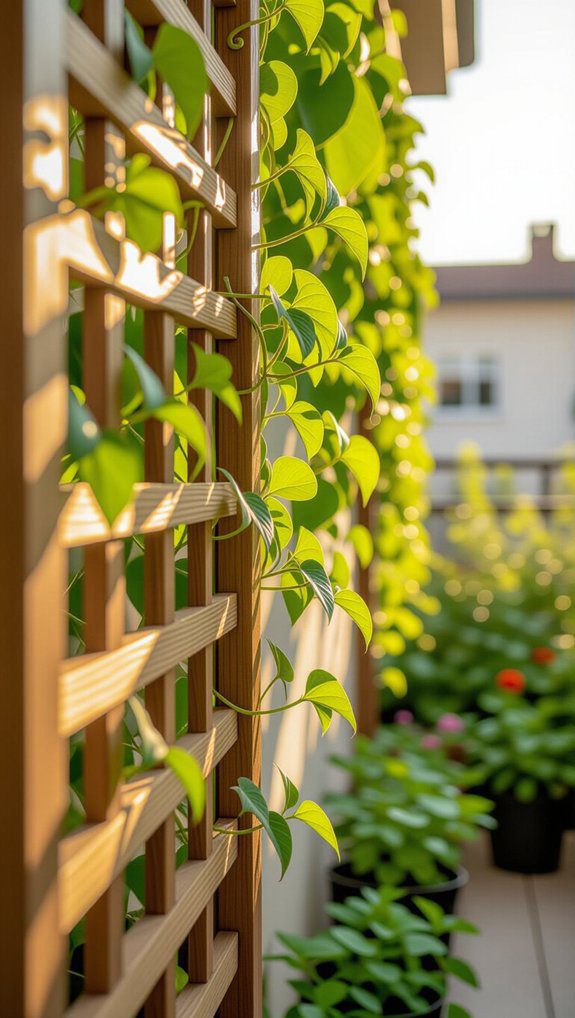
A climbing plant trellis is one of the best ways to add vertical interest and save space in your container garden.
I love using various trellis materials like wood, metal, or even repurposed items to support my plants.
Here are my top tips:
- Choose sturdy trellis materials that can handle mature plants’ weight.
- Securely anchor your trellis to keep it stable.
- Regularly practice plant training by tying vines gently as they grow.
This not only optimizes space but also creates a beautiful focal point while helping your plants thrive with better air circulation.
Mixed Flower Container
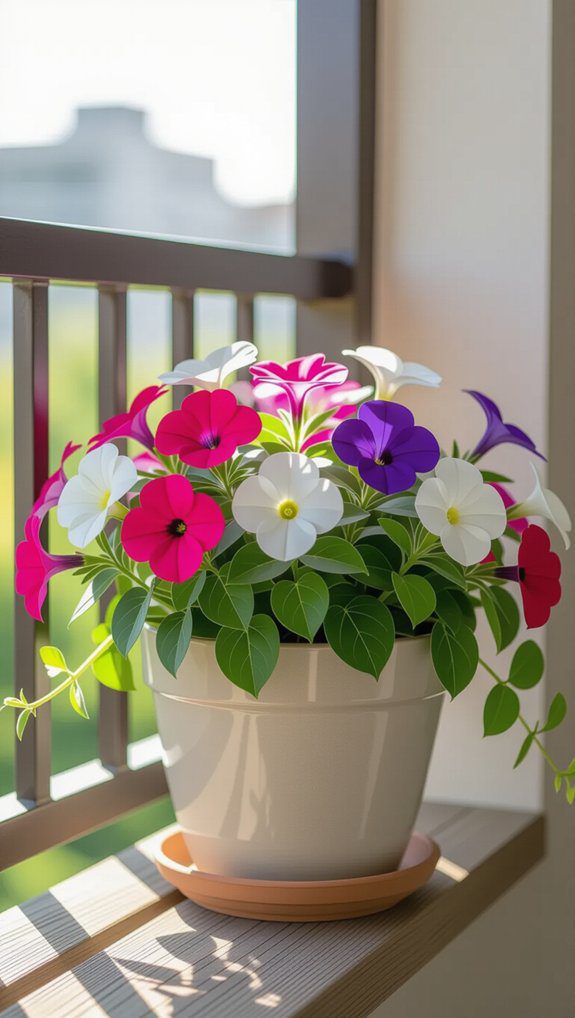
Since mixing different flowers in one container can create such a vibrant and eye-catching display, I always recommend carefully choosing plants that not only complement each other in color and texture but also share similar sunlight and water needs.
For a lively mixed flower container, I like combining sun-loving marigolds with trailing lobelia and medium-height petunias for perfect flower combinations that offer great color balance.
Using a pot with good drainage and rich potting mix helps them thrive together. Don’t forget regular deadheading and feeding every few weeks to keep blooms coming and your container looking fresh and joyful!
Compact Vegetable Mix
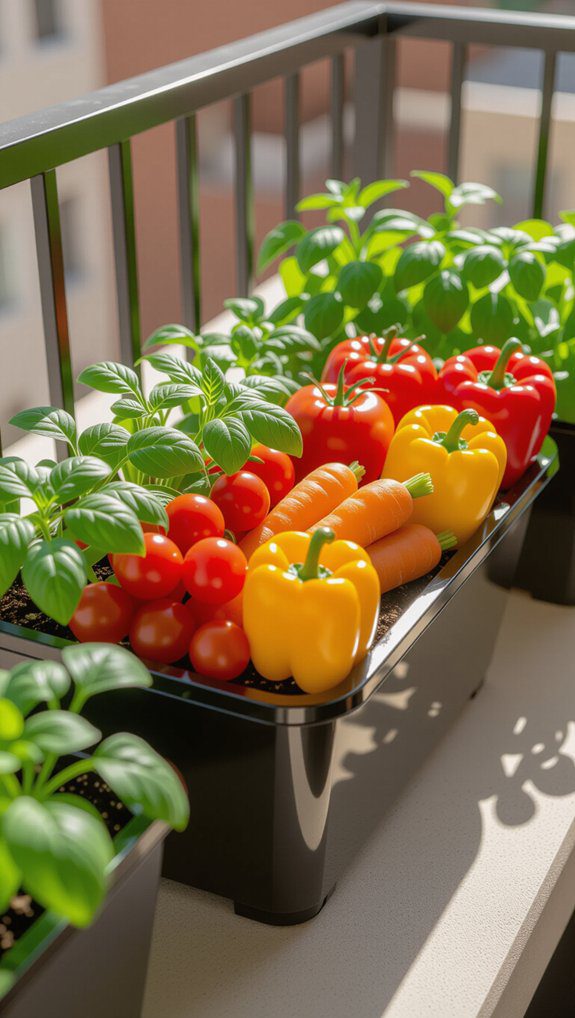
Mixing flowers in a container can brighten up any space, but why stop there?
Creating a compact vegetable mix lets you grow your own fresh seasonal crops in limited space.
Try these tips for success:
- Choose container varieties labeled “dwarf” or “mini” to fit small spots—radishes, baby carrots, and leafy greens like spinach thrive here.
- Use containers at least 12 inches deep to give roots room to grow and absorb nutrients.
- Add companion herbs like basil or parsley to boost flavor and keep pests away.
With regular harvesting, you’ll enjoy a continuous, delicious bounty all season!
Recycled Bucket Garden
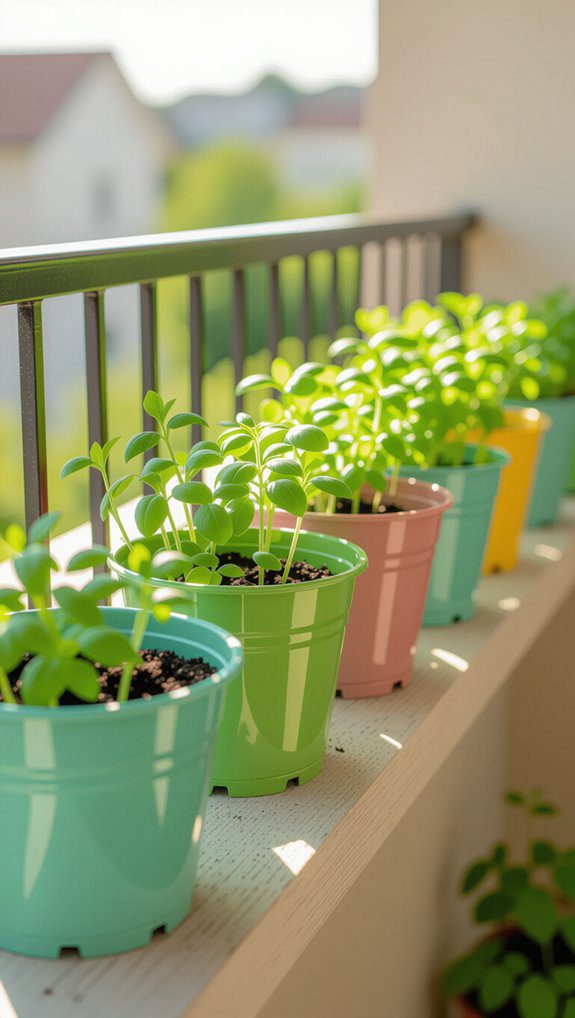
Although you mightn’t think of old buckets as garden treasures, they actually make fantastic, budget-friendly containers for growing herbs and veggies.
I always choose food-safe buckets and drill drainage holes to keep roots healthy. Using different sizes helps—smaller buckets suit herbs while bigger ones fit tomatoes perfectly.
To personalize my garden, I add colorful bucket decoration and handwrite herb labels on popsicle sticks; it’s a simple way to brighten the space and stay organized.
Once you try this, you’ll see how recycled bucket gardens turn small spots into lively, eco-friendly havens we all love sharing.
Tiered Plant Stand
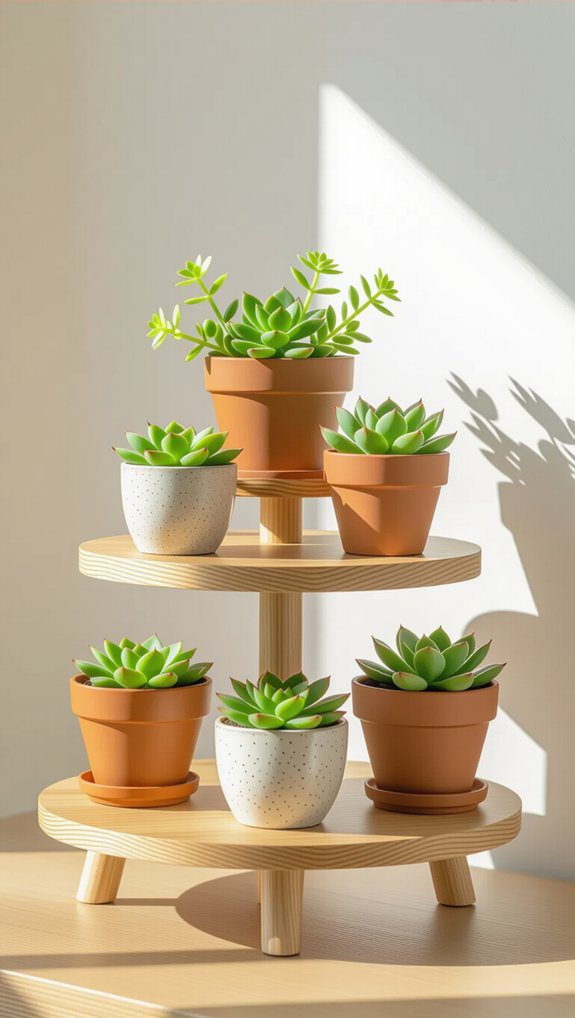
A tiered plant stand is a brilliant way to make the most of limited space while giving your garden a charming, organized look.
I love how the tiered design benefits include maximizing vertical space and improving air circulation, which keeps plants healthier.
When planning your plant arrangement strategies, try these tips:
- Place taller plants on the top tier for better sunlight.
- Use wood or recycled pallets to match your style and budget.
- Check moisture levels often—top tiers dry faster and may need more watering.
This setup creates a cozy, vibrant green corner you’ll be proud of!
Balcony Rail Planter
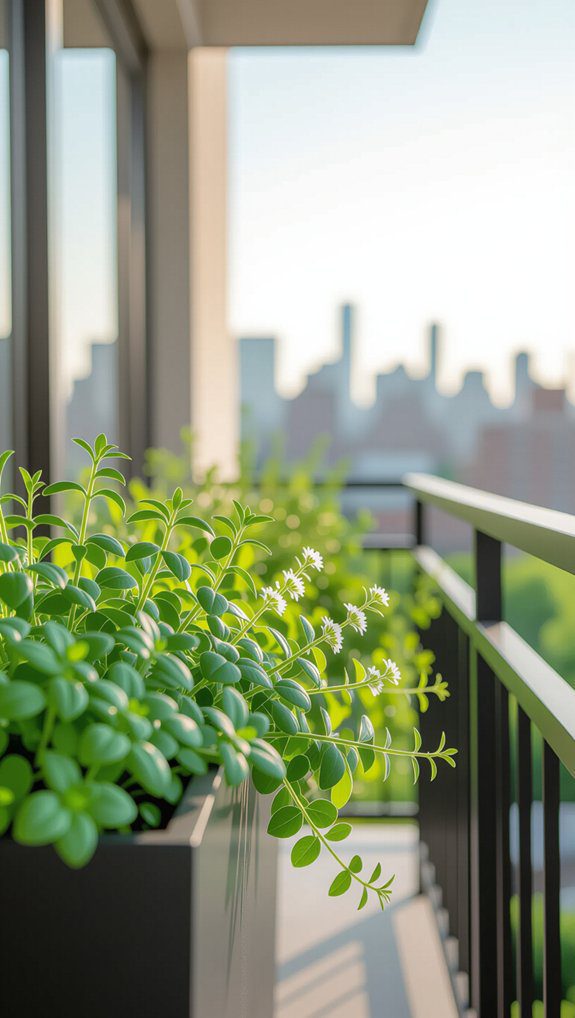
Since space can be tight on balconies, attaching planters directly to the railing is one of my favorite ways to grow plants without cluttering your floor area.
Balcony rail planters save space and improve balcony aesthetics by adding greenery right at eye level.
When choosing planter materials, I prefer lightweight options like plastic or resin with adjustable brackets that fit standard rail widths securely.
Pick compact plants like trailing herbs or cherry tomatoes, and verify proper drainage with built-in holes or trays to keep roots healthy.
Don’t forget to check soil moisture daily—these planters dry out fast in sun and wind.
Wall-Mounted Pouch System
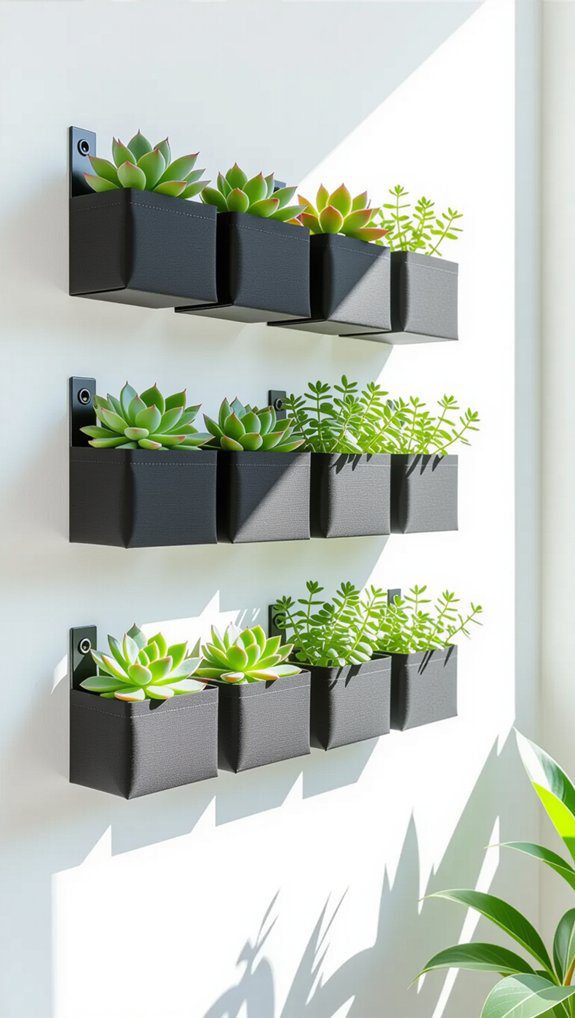
When you want to make the most of limited space, a wall-mounted pouch system offers a smart and stylish solution for growing your favorite herbs and small plants.
This pocket planting method improves vertical aesthetics, turning plain walls into lively green canvases. Here’s why I love it:
- It fits perfectly on balconies or fences, saving floor space.
- Each fabric pocket can hold different plants—think herbs, strawberries, or trailing flowers.
- Regular watering is key since pockets dry quickly, but better air circulation helps keep plants healthy.
Join me in transforming small spaces into lush gardens!
Companion Planting Combo
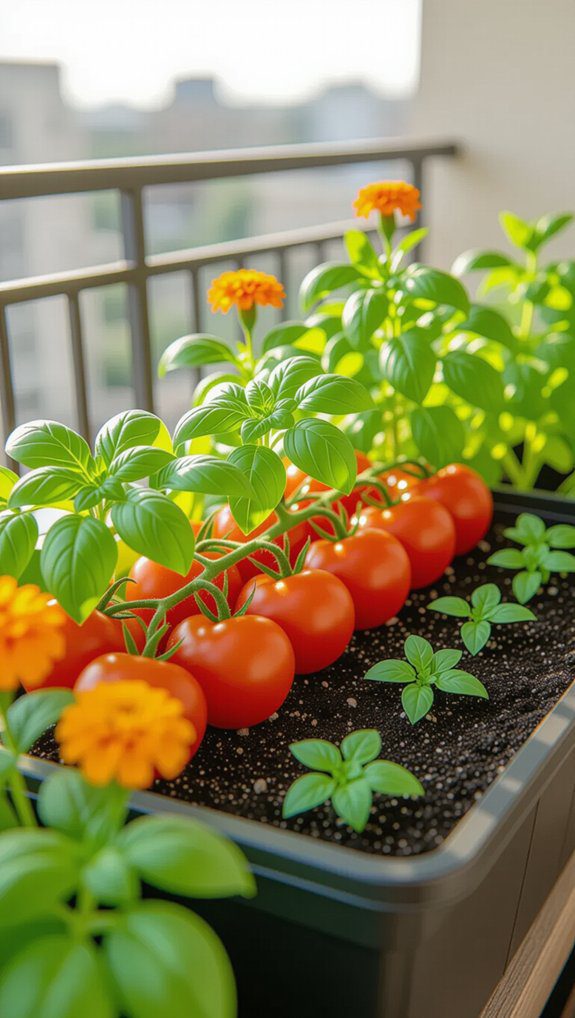
One of the most rewarding ways to boost your container garden’s health and productivity is by pairing plants that naturally help each other grow, a technique called companion planting. Using herb combinations and natural pest deterrents, you can create vibrant, thriving mini ecosystems. Here’s a simple guide to get you started:
| Plant 1 | Plant 2 | Benefit |
|---|---|---|
| Basil | Tomato | Flavor & pest control |
| Marigold | Various | Repels nematodes |
| Carrot | Onion | Pest deterrent combo |
| Rosemary | Pepper | Aromatic barrier |
| Corn | Beans | Support & nitrogen |
Try these combos and watch your garden flourish!
Seasonal Color Rotation
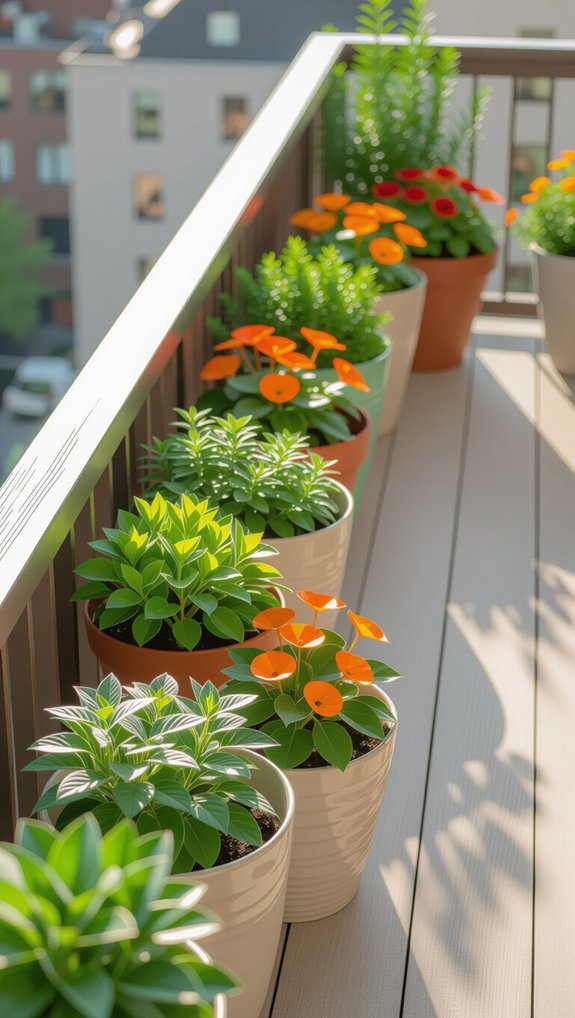
Although container gardens can brighten up any space year-round, switching out plants with the seasons keeps your garden fresh and exciting.
I love rotating colors and textures to match seasonal themes and plant combinations that celebrate each time of year. Here’s how I do it:
- Spring: I plant tulips and pansies in bright ceramic pots to evoke lively palettes.
- Fall: Chrysanthemums and ornamental kale in terracotta pots highlight warm autumnal colors.
- Winter: Evergreen shrubs add structure and greenery when other plants rest.
Changing plants regularly not only keeps things vibrant but also helps my garden thrive.
Watering and Feeding Guide
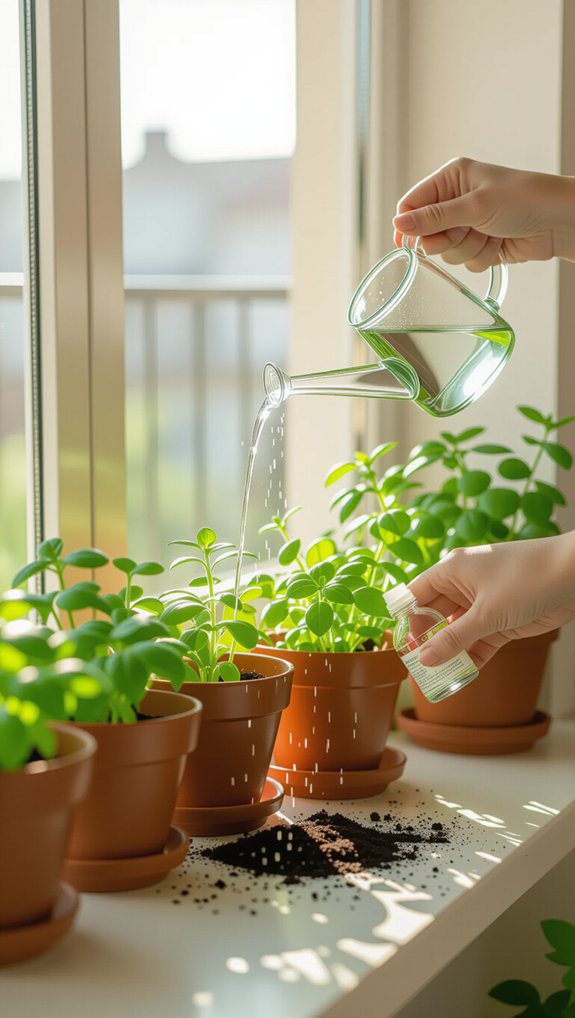
Keeping your container garden looking its best means paying close attention to watering and feeding—it’s like giving your plants the care they need to stay happy and healthy. Moisture monitoring is key since containers dry out fast, especially on warm days. Water directly into the soil to avoid mold, and remember deep watering for raised beds helps roots grow strong. For nutrient balance, feed your plants with water-soluble fertilizer every 2-4 weeks.
| Task | Tip |
|---|---|
| Watering | Check soil daily; water deeply |
| Feeding | Use balanced fertilizer biweekly |
| Soil Enrichment | Add compost or well-rotted manure |