21 Creative Sewing Ideas for Beginners and Everyday Use
I’ve rounded up 21 easy, useful sewing projects you can finish fast: think sturdy tote bags, zipper pouches, pillow covers with envelope closures, scrunchies, fabric coasters, aprons, book covers, reusable makeup pads, pet bandanas, and storage baskets. I’ll give clear, step-by-step tips—choose 100% cotton or canvas for durability, practice straight seams, use scraps for small items, and add pockets or appliqués to personalize. Try one project tonight and you’ll pick up skills quickly; keep going to learn more.
Love cozy DIY projects? 💕
Get free printable guides, exclusive tutorials & surprise craft goodies straight to your inbox.
Disclosure: This post may contain Amazon affiliate links, at no extra cost to you. Content on DiyCraftNest is created with research support from AI tools and carefully reviewed, edited, and fact-checked by the lead author, Daniel Pat, to ensure accuracy and reliability. Learn more
Key Takeaways
- Start with quick, practical projects like tote bags, pillow covers, scrunchies, and zipper pouches to build straight-seam confidence.
- Focus on eco-friendly items—reusable grocery bags, cloth napkins, and makeup remover pads—to practice skills and reduce waste.
- Choose projects requiring minimal tools and straight seams, such as aprons, elastic-waist skirts, and table runners.
- Personalize with pockets, appliqués, monograms, or patchwork to learn new techniques while making unique gifts.
- Use fabric scraps for coasters, fabric book covers, and storage baskets to practice piecing and color coordination affordably.
Simple Tote Bags
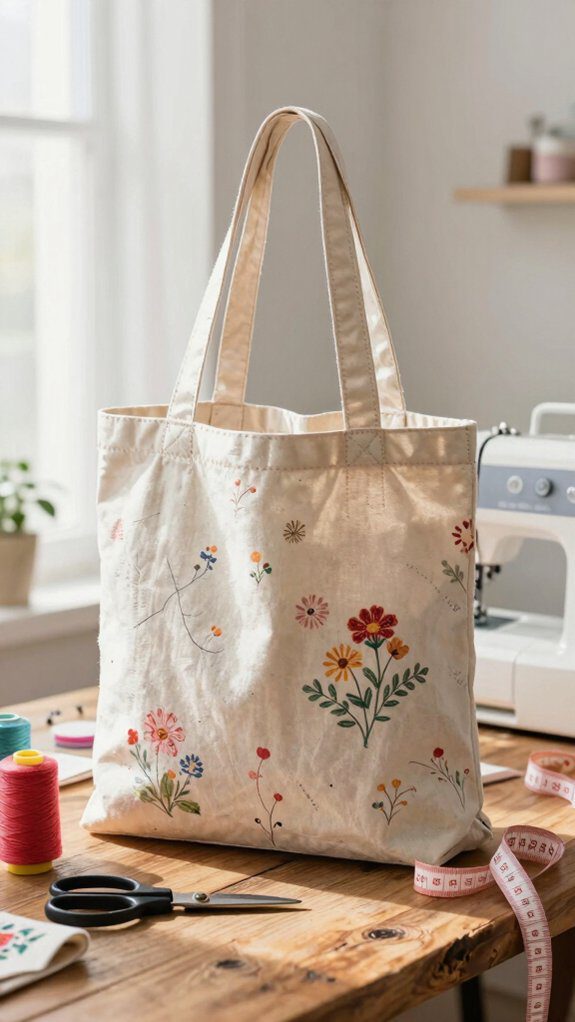
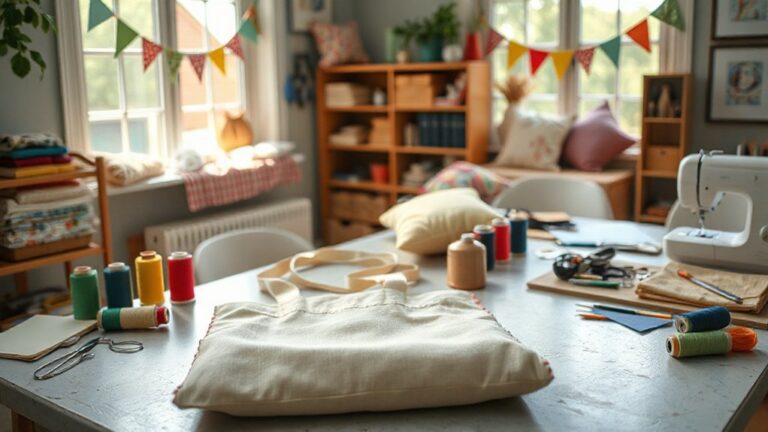
One simple tote bag can teach you a lot about sewing without overwhelming you, and I’ll walk you through the basics so you’ll feel confident from start to finish. I start by choosing sturdy 100% cotton—that’s a key fabric selection tip because it’s durable and easy to sew, and it holds shape for groceries or books. The basic pattern is just two rectangles and two handle strips, so your seams stay straight and stress-free. For tote bag customization, I add a pocket or simple applique; those small choices make a bag feel like ours. I’ll show seam order, handle placement, and quick finishing tricks so you’ll complete a useful, giftable tote in under an hour.
Pillow Covers with Envelope Closure
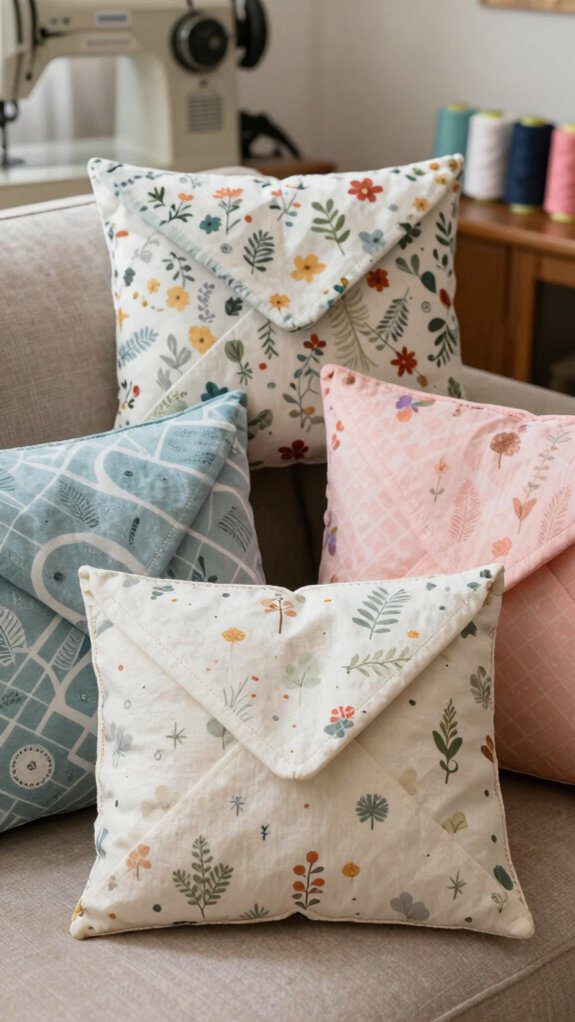
If you’re new to sewing but want a quick, satisfying project, try making a pillow cover with an envelope closure—I’ll walk you through it step by step so you won’t get overwhelmed. I love this beginner-friendly sew because it uses only straight lines, teaches careful measuring, and removes zipper stress. Start by checking pillow insert measurements and choose fabrics with fabric selection tips in mind—durable cotton for daily use or linen for a relaxed look.
| Step | Tip | Why |
|---|---|---|
| Measure | Add 1–2″ seam allowance | Guarantees snug fit |
| Cut | Match pattern direction | Looks professional |
| Sew | Overlap back pieces | Easy removal |
I guide you gently, so you feel capable and part of a creative community.
Scrunchies and Hair Accessories
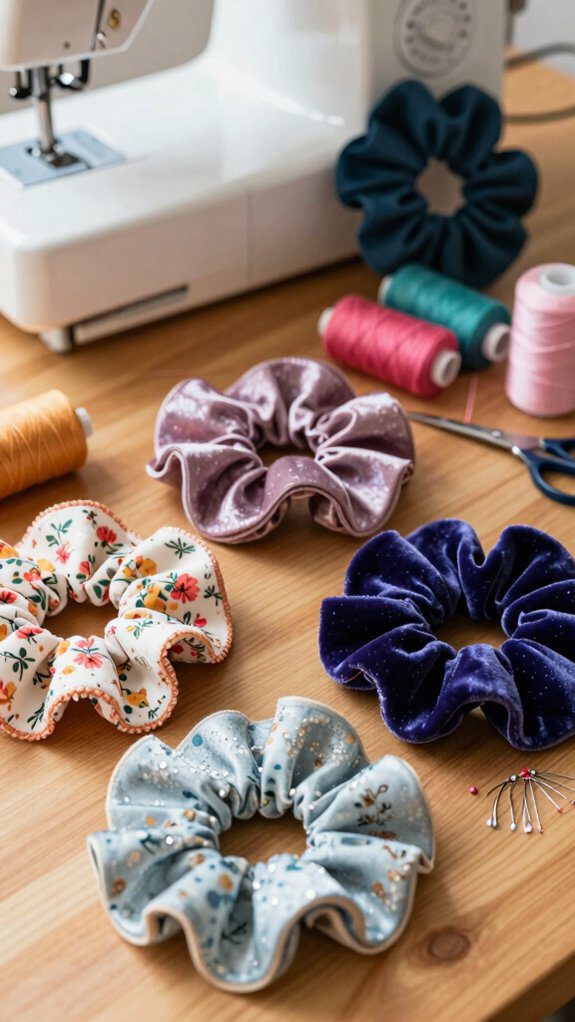
Scrunchies are a perfect starter project for beginners, and I’ll show you how they’re quick to make, fun to customize, and kind to your hair. I’ve found they use tiny fabric pieces, just straight seams and elastic, so you’ll finish one in minutes and feel proud. Choose cotton for everyday wear or satin for gentle hold; compare textures to match your mood and outfit.
- Try three scrunchie styles: classic, twisted, and bow-tied to suit different looks.
- Use fabric scraps for an eco-friendly approach and mix patterns for belonging with friends who sew.
- Investigate simple embellishment techniques like tiny bows, beads, or contrasting stitching to personalize each piece.
These steps build sewing confidence and useful skills.
Fabric Coasters
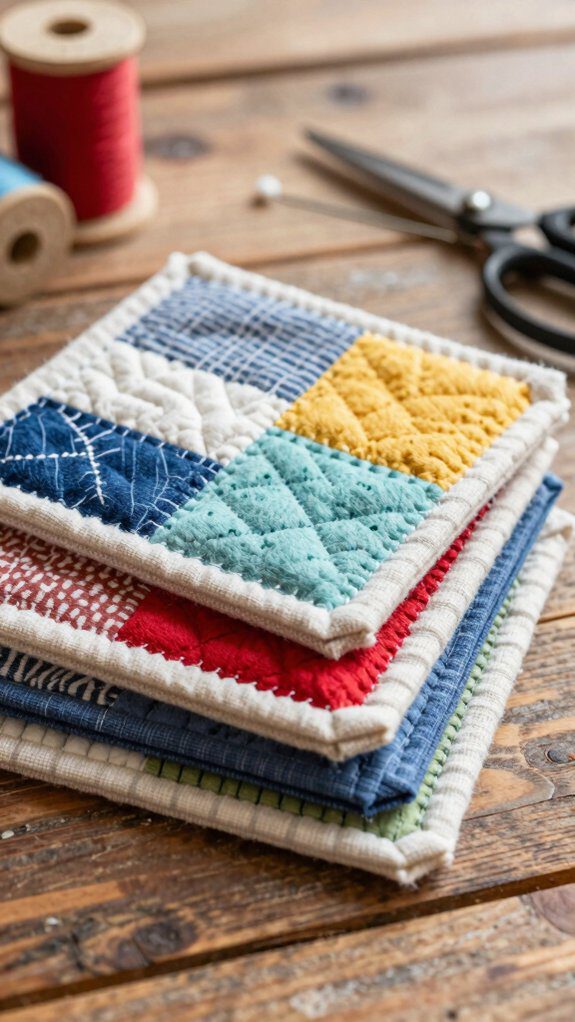
I love using fabric scraps to make quick coasters, because they’re fast, useful, and perfect for practicing straight seams and turning corners. You can mix cotton prints or plain scraps with a small square of batting, sew a neat sandwich, and press the edges for a polished look without spending much. Try different sizes and patterns to see what absorbs best and fits your cups, and you’ll finish several in an afternoon.
Quick scrap projects
While I’m still getting the hang of sewing, making fabric coasters has become my go-to quick project because they’re simple, useful, and a great way to use leftover scraps. I love that coasters are beginner-friendly: basic squares or circles, a layer of batting for absorbency, and simple topstitching. You can mix coordinated prints or go eclectic, and even try fabric dyeing techniques on plain scraps for unique looks.
- Use mismatched scraps to practice color combos and contrast.
- Try upcycling clothing—cut old shirts for soft, meaningful fabric.
- Make a few in an afternoon for gifts or daily use.
They’re budget-friendly, speedy, and give me confidence while reducing waste.
Apron Sewing Projects
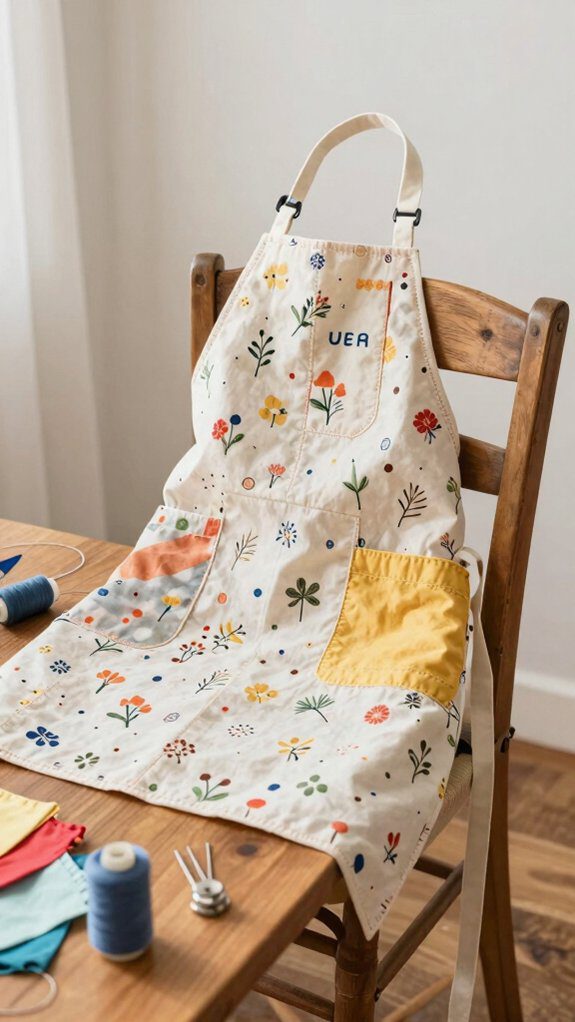
Three simple pieces of fabric can turn into a useful, personalized apron you’ll be proud to wear or give as a gift. I love apron sewing projects because they’re perfect for beginners: straight seams, minimal fitting, and a single yard of fabric often does the trick. Start by choosing fabrics—think sturdy cotton for durability or fun prints for personality—and weigh apron fabric choices by feel and washability.
I guide you through apron customization techniques like adding a roomy pocket, contrasting ties, or a monogram for gifts. Cut carefully, sew straight lines, and press seams as you go. These steps build confidence, and sharing finished aprons creates connection. Try variations and swap fabrics to keep the process joyful and communal.
Reusable Grocery Bags
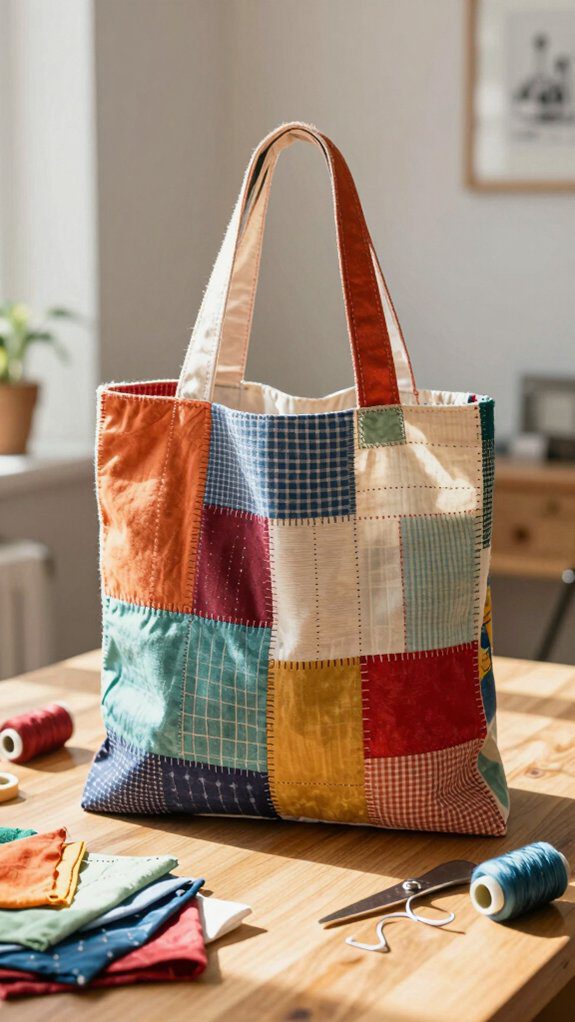
Because reusable grocery bags cut down on single-use plastic and hold up to heavy groceries, I love showing beginners how to make them, step by step. I explain the sustainability benefits and practical choices so you feel confident joining our sewing circle. Start simple: straight seams, sturdy handles, and a roomy base—perfect for learning.
- Choose 100% cotton or canvas for durability; compare weights so the bag won’t sag under cans.
- Use simple rectangular patterns and topstitch handles securely; practice on scrap fabric first.
- Personalize with fun prints or contrast straps so your bag feels like yours and fits your shopping needs.
I walk you through fabric selection, cutting, and sewing order with clear shifts and encouraging tips.
Zipper Pouches
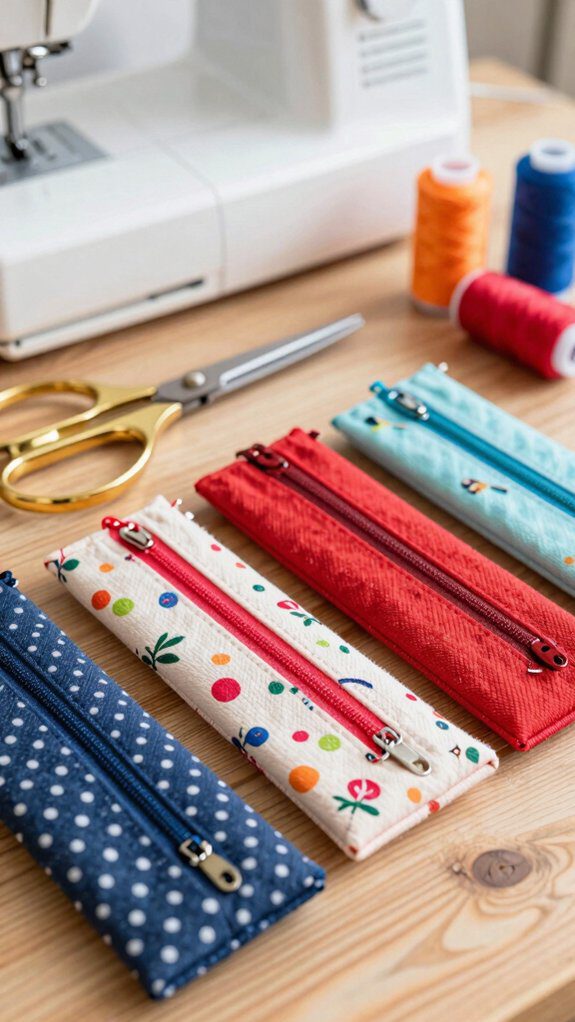
Zipper pouches are one of my favorite quick projects, and you’ll love how useful they are for organizing cosmetics, school supplies, or craft bits. I make them often because zipper pouch designs are endlessly flexible: flat pouches for pens, boxed-bottom ones for brushes, or tiny coin-sized versions. For beginners, I recommend medium-weight cotton—it’s forgiving and the zipper pouch materials are easy to handle compared to slippery synthetics. Most of these pouches take about an hour, and I follow simple step-by-step tutorials or short videos to stay confident. I’ll tell you to cut scraps to size, pin carefully, sew slowly along the zipper, and press seams open. You’ll feel proud finishing one, and soon you’ll be swapping ideas with friends.
Table Runners
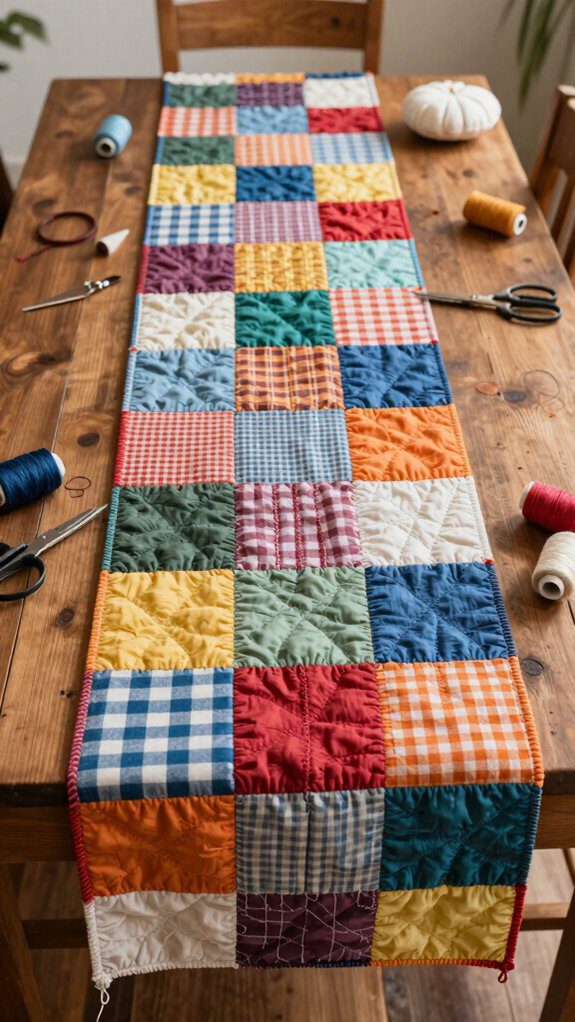
I love making table runners because they’re an easy way to change your room for each season, and you can use simple patterns or fabric scraps to get a big effect. Start with 1–2 yards of fabric and choose seasonal prints or patchwork—spring florals, autumn plaids, or holiday reds—and you can adjust the length to fit your table in minutes. Use straight seams and basic hemming to finish, and I’ll show you step-by-step how to pick fabrics, measure, and sew so your runner looks polished and seasonal.
Seasonal home decor
When the seasons change, I love pulling out fabric scraps to sew a quick table runner that brightens the room and fits the holiday—think warm plaids for fall, evergreen prints for winter, and pastel florals for spring. I use fat quarters and a simple patchwork layout, so beginners can practice straight stitching and still make something beautiful. Choosing seasonal motifs and festive colors helps the runner feel intentional, whether it’s for Thanksgiving or a spring brunch. I follow easy online patterns, personalize with trims, and enjoy gifting them.
- Start with coordinating scraps and cut uniform squares.
- Sew rows together, press seams, add batting and backing.
- Edge with bias tape for a clean, durable finish.
Cloth Napkins
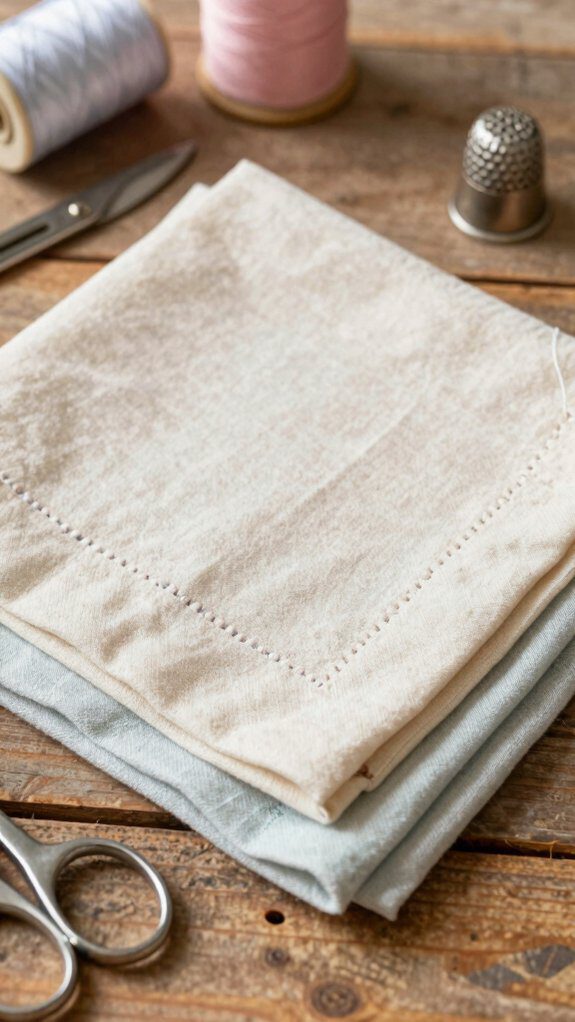
Looking for a small, satisfying project to get you sewing? I love making cloth napkins because they’re eco-friendly, washable, and simple to stitch. Start with 100% cotton—one yard makes several napkins—cut squares, hem edges with straight stitching, and practice neat napkin folding to dress your table. You can personalize sets by fabric dyeing or mixing prints to match seasons and guests, which feels creative and welcoming. For beginners, the steps are clear: measure, cut, press seams, and sew straight lines; that repetition builds confidence fast. Compare them to disposable napkins—more durable, prettier, and kinder to the planet. Invite friends over, swap tips, and enjoy a cozy meal with handmade touches everyone will notice.
Simple Skirts with Elastic Waist
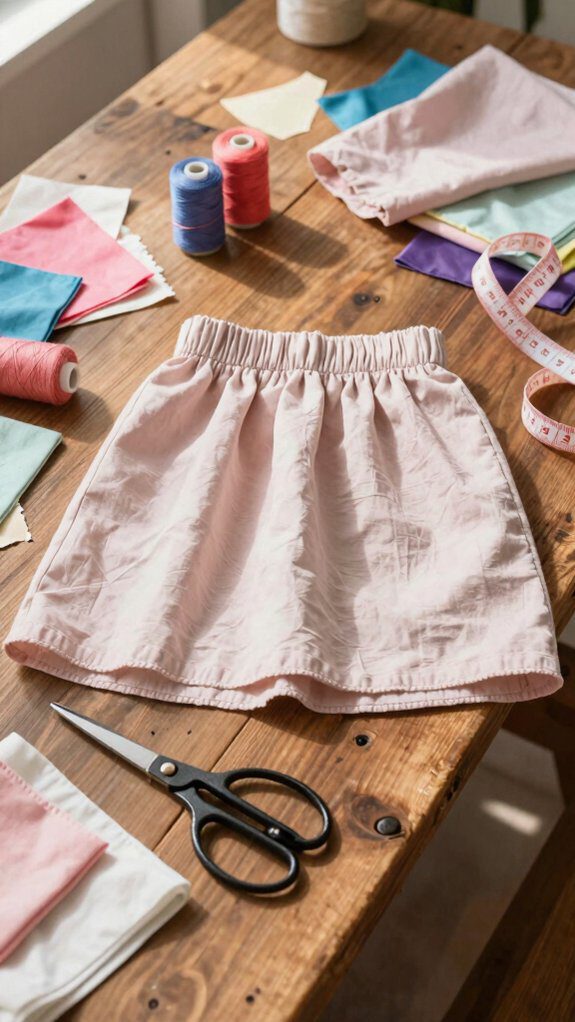
I love recommending elastic-waist skirts as one of the first garments you should try, because they’re simple to make and teach the basics of straight seams, hems, and elastic casings. You won’t need elaborate patterns or exact measurements—elastic lets the skirt fit a range of body shapes, so you can focus on practicing stitches and trying different fabrics like a lightweight cotton. With just a few supplies and under an hour, you can go from fabric to finished skirt and then experiment with length, prints, or pockets to make it your own.
Beginner-friendly garments
Because you can make one with just a few straight seams and an elastic band, I often recommend a simple skirt with an elastic waist as your first garment project. I love showing newcomers how forgiving this pattern is: 100% cotton or cotton blends are easy to handle and comfy to wear, and the elastic waistband removes tricky fitting. Use fabric patterning techniques to personalize color and scale, and follow beginner sewing tips like pressing seams and measuring twice. You’ll finish in a few hours and feel proud.
- Choose medium-weight cotton for stability and comfort.
- Try different lengths and pattern repeats to express yourself.
- Start with a single seam option, then add pockets when you’re ready.
We’re in this together, learning step by step.
Baby Bibs and Burp Cloths
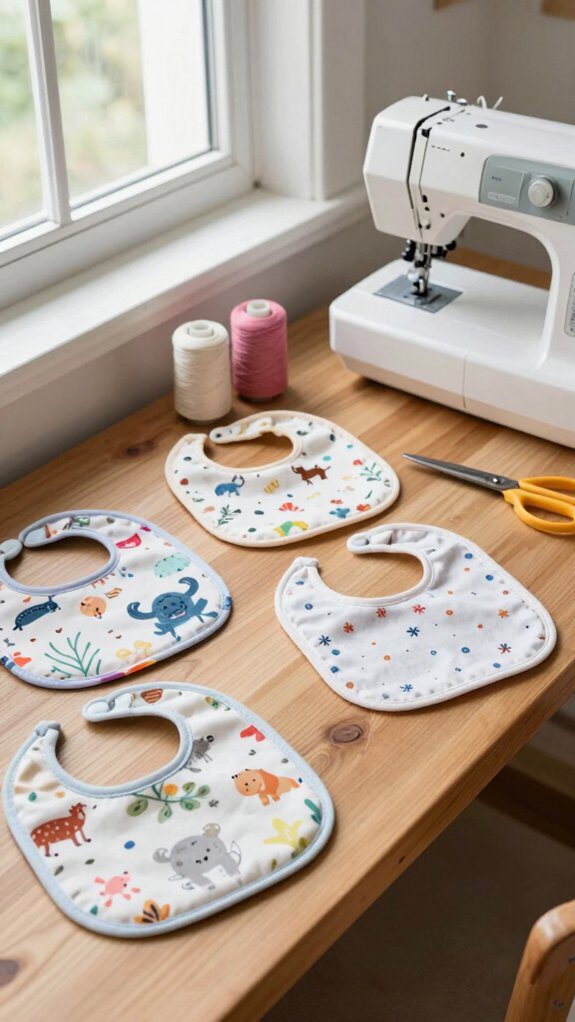
If you’re new to sewing, baby bibs and burp cloths are perfect starter projects because they’re quick, forgiving, and let you play with fun fabrics; I’ll walk you through why they’re so beginner-friendly and how to get great results without fuss. I love making sets as baby shower gifts, mixing playful fabric combinations so each piece feels personal. Bibs usually need just two pieces, a simple curve, and a Velcro or snap closure—straight seams and fast results. Burp cloths can be one layer of soft flannel or terry cloth for absorbency and comfort. Start with small cuts, press seams well, and topstitch edges for durability. You’ll join a welcoming community fast, and enjoy practical, affordable sewing.
Fabric Wall Art
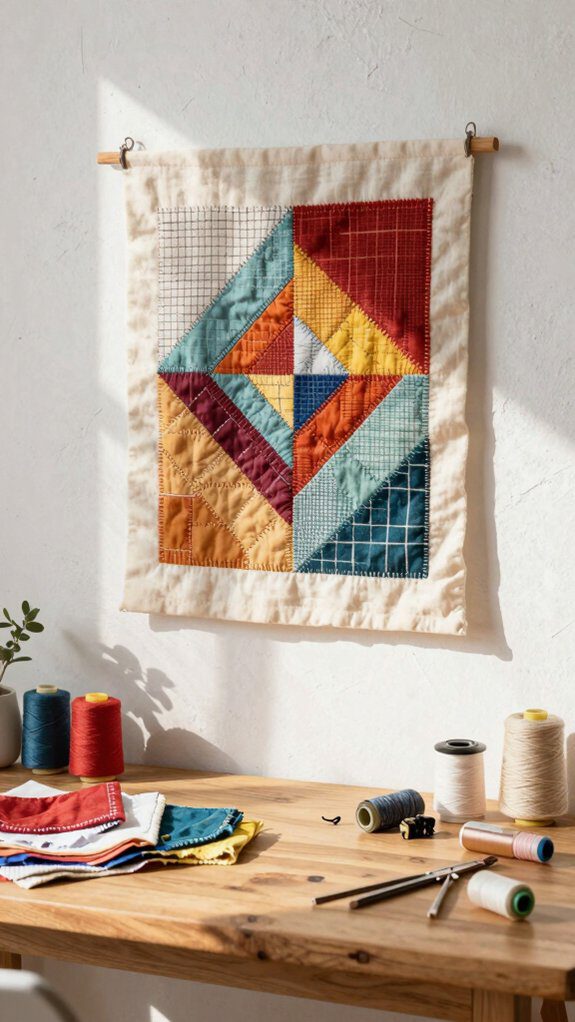
I love showing you how minimal sewing decor like simple fabric-covered canvases or stretched fabric panels can change a room without hours of work. Start with a small frame, a favorite fabric scrap, and basic stitches or even fabric glue, and you’ll have a clean, modern piece that’s quick to make and easy to swap out. These projects save fabric scraps, add texture, and let you mix embroidery or appliqué later if you want to dress them up.
Minimal sewing decor
A few simple fabric pieces can transform a blank wall into something cozy and personal, and I’ll show you how to get started with minimal sewing decor like fabric wall art. I love using scrap fabric and simple stitches to create pieces that fit our shared spaces, and you’ll feel welcome crafting alongside me. Think about fabric color combinations first; they set the mood and make coordinating easy.
- Use embroidery hoops to stretch scraps for quick, framed art.
- Try small appliqué shapes or delicate embroidery as embellishment techniques.
- Mix stenciled designs with plain fabrics for contrast and texture.
These projects are budget-friendly, sustainable, and quick. I’ll guide you step by step so your wall feels like home.
Headbands and Turbans
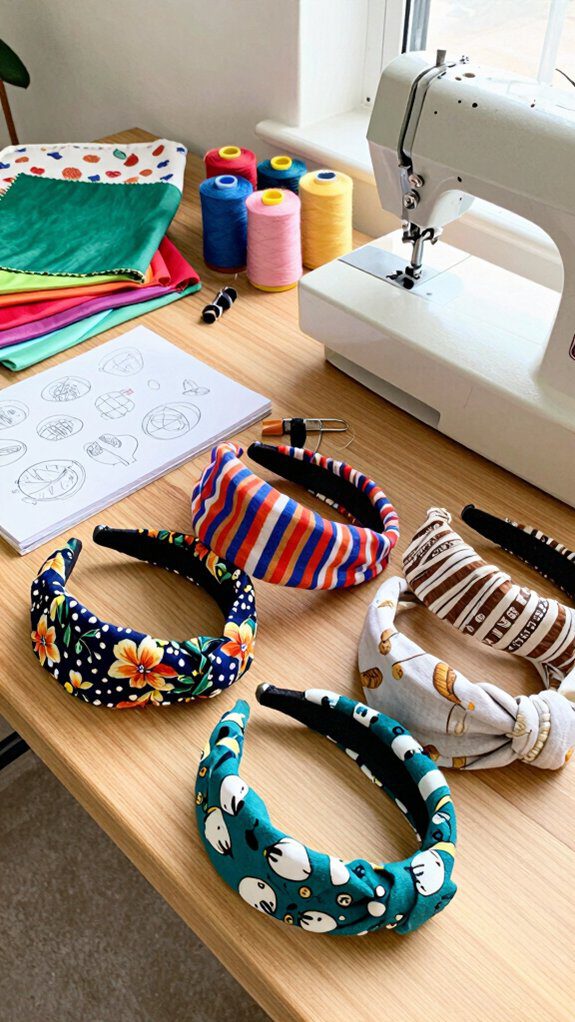
When you’re ready to make something fast, useful, and stylish, headbands and turbans are perfect beginner projects that won’t frustrate you—most headbands take just two or three straight seams and a little pressing. I love showing friends simple headband styles and turban variations that use scraps, so we feel creative together. Start by choosing stretchy knit or cotton, cut to size, and follow a clear tutorial with step-by-step photos. For turbans, pick a bold print or soft jersey and adjust the pattern for adults or kids. I usually make one sample to test fit, then tweak length or twist placement. These accessories sew quickly, make thoughtful gifts, and invite you into a welcoming sewing community.
Patchwork Cushion Covers
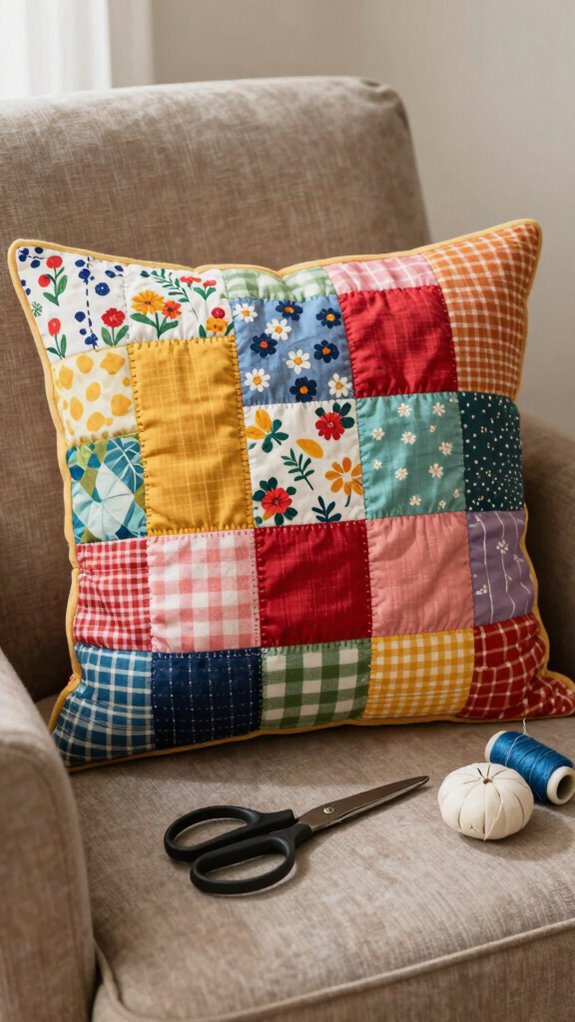
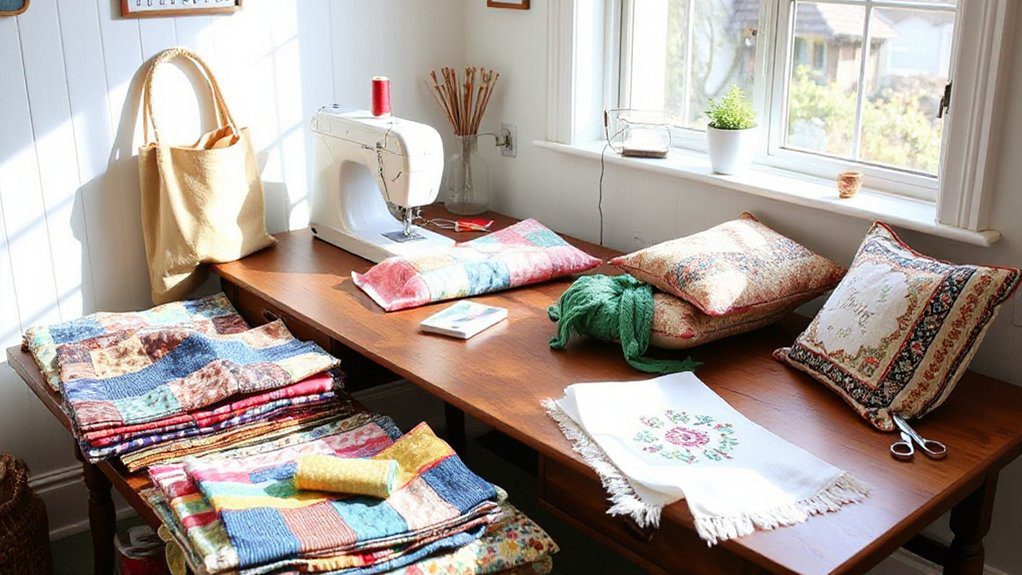
Because patchwork lets you mix colors and textures, it’s a great place to start if you want something useful that also shows off your style. I love making cushion covers from scraps or fat quarters, and you will too — they build confidence with simple straight seams and clear results. Start by cutting uniform squares or rectangles so seams line up, and think about fabric color combinations before you stitch. I use sewing machine tips like stitch length adjustments and accurate seam allowances to keep things neat.
- Choose a palette and arrange squares until it feels right.
- Sew rows with consistent seams, then join rows carefully.
- Add buttons, appliqué, or piping for a personal touch.
These covers welcome you into shared creativity.
Drawstring Gift Bags
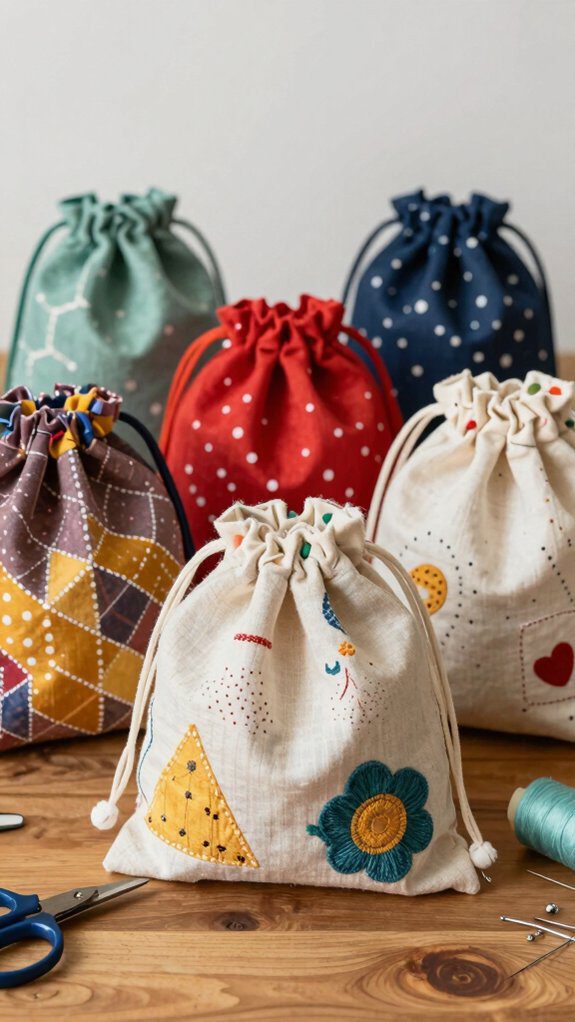
I love using drawstring gift bags as an eco-friendly wrapping option because they cut down on paper waste and can be reused for years. Choose cotton or a cotton blend so the bag’s easy to sew, press, and wash, and make a few sizes so you can compare what fits best for bottles, books, or small trinkets. For a personal touch, mix patterned fabric with a plain lining, add a simple stitched label, and tie the cord in a neat bow for a presentable, sustainable gift.
Eco-friendly wrapping
A simple drawstring gift bag is one of my favorite eco-friendly swaps for wrapping paper, and it’s perfect if you’re new to sewing. I love that using sustainable materials like fabric scraps or old linens turns waste into useful, beautiful gift covers. You and I can make matched sizes quickly with straight seams, and the result feels personal.
- Make several sizes from vintage shirts or quilting scraps for versatile gift customization.
- Use a narrow hem and a simple casing for the cord; practice on scrap fabric first.
- Store bags flat in a drawer so they’re ready next season and skip single-use paper.
Join me—this small change builds community, saves resources, and adds thoughtful charm to every gift.
Placemats with Binding
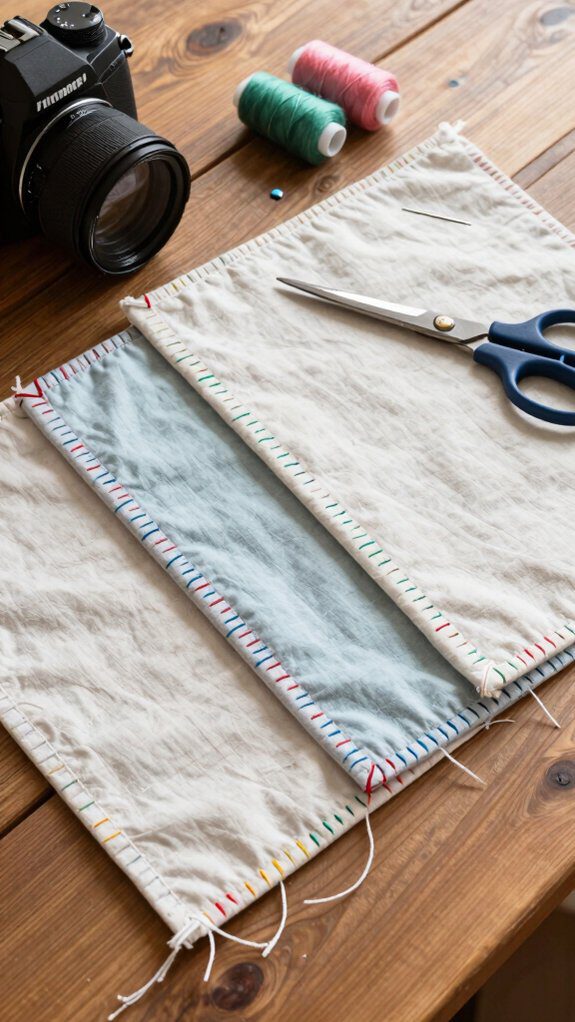
When I make placemats with binding, I like to start by choosing sturdy 100% cotton—it’s easy to handle, presses nicely, and gives a crisp, polished look that lasts. I pick coordinating fabrics so my binding techniques stand out; I cut strips about 2.5 inches wide and press them into bias or straight binding depending on the curve or corner. First I layer top fabric, batting, and backing, then quilt simple straight lines to secure the layers and add texture. I attach the binding by sewing it to the front, folding it over, and stitching close to the edge for a neat finish. Finished placemat designs feel personal, practical, and make welcoming gifts for friends and family.
Pajama Shorts
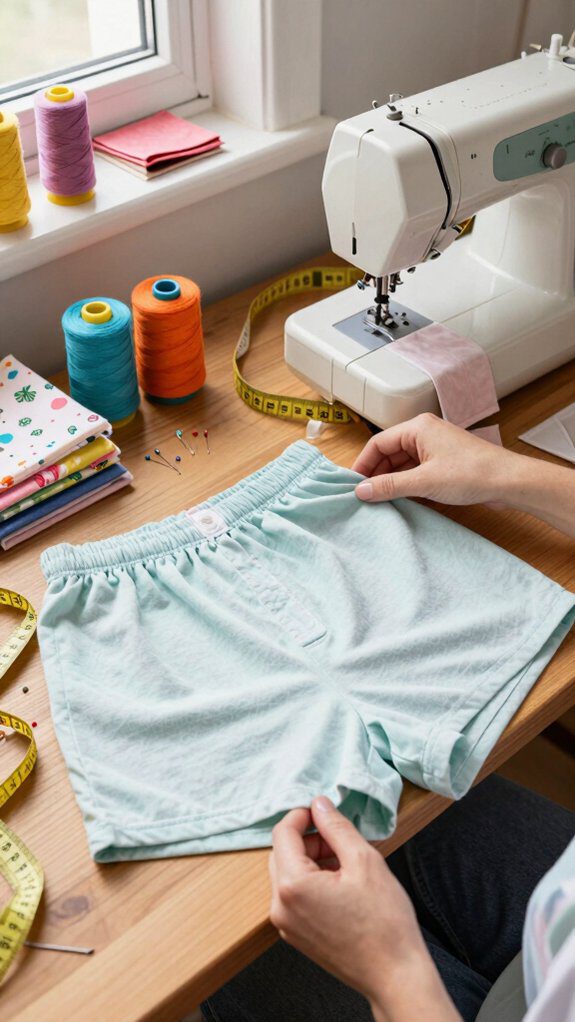
I love how pajama shorts make comfortable home wear that’s quick and satisfying to sew, so let’s talk about why they’re a great beginner project. Choose soft cotton or a cotton blend for breathable comfort and easy stitching, and use a pattern with an adjustable waistband so you can customize the fit and practice inserting elastic. You’ll get useful practice on straight seams and hems while creating fun prints or colors that make lounging at home feel a little more special.
Comfortable home wear
Since you’re just getting started, I’ll walk you through making pajama shorts that are comfy, quick, and forgiving to sew. I love this project because it teaches basic crafting techniques like hemming, sewing curves, and adding elastic, while letting us play with fabric selection—100% cotton or blends work best for breathability and easy care. You’ll finish fast, often within an hour, and adjustments are simple for different sizes.
- Pick soft cotton prints or blends for comfort and easy sewing.
- Use a simple pattern, add elastic at the waist, and practice neat hems.
- Try different lengths or pockets to personalize quickly.
Join me—these shorts build skills and confidence, and they make cozy gifts.
Book Covers from Fabric
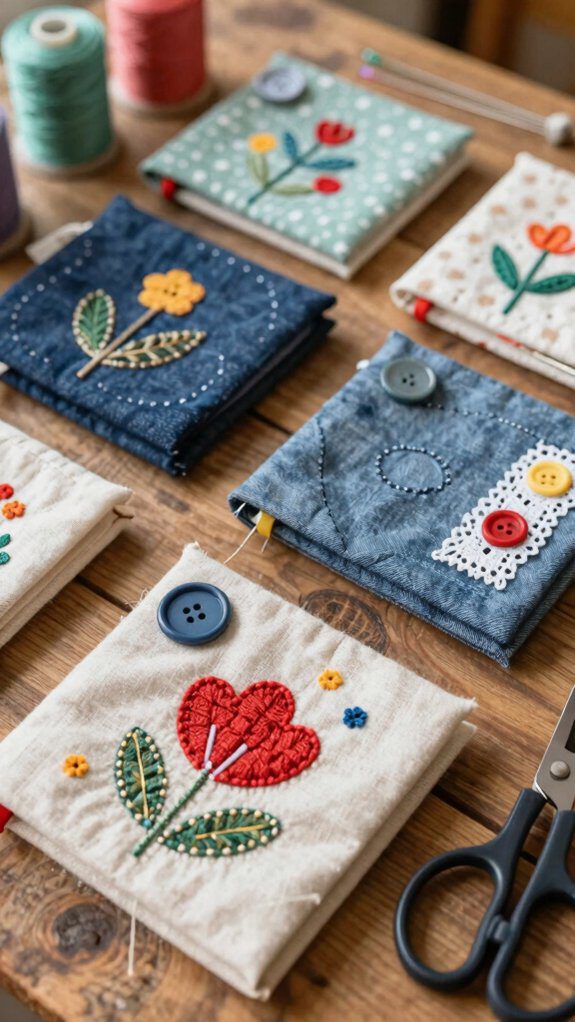
You can make a fabric book cover in no time and give a plain notebook or Kindle a whole new look. I like to start with cotton because it’s easy to work with and lends itself to custom fabric designs; you can choose patterns that reflect who you are and make friends ask where you found it. For beginners, a no-sew version uses larger pieces and simple folds, and I’ll show you how to match pockets or elastic closures for pens and loose notes. Measure your book, leave extra for seams, and cut for adjustable book dimensions so one cover can fit several sizes. Using scraps makes this eco-friendly, personal, and satisfying — a quick project that feels like belonging to a creative community.
Reusable Makeup Remover Pads
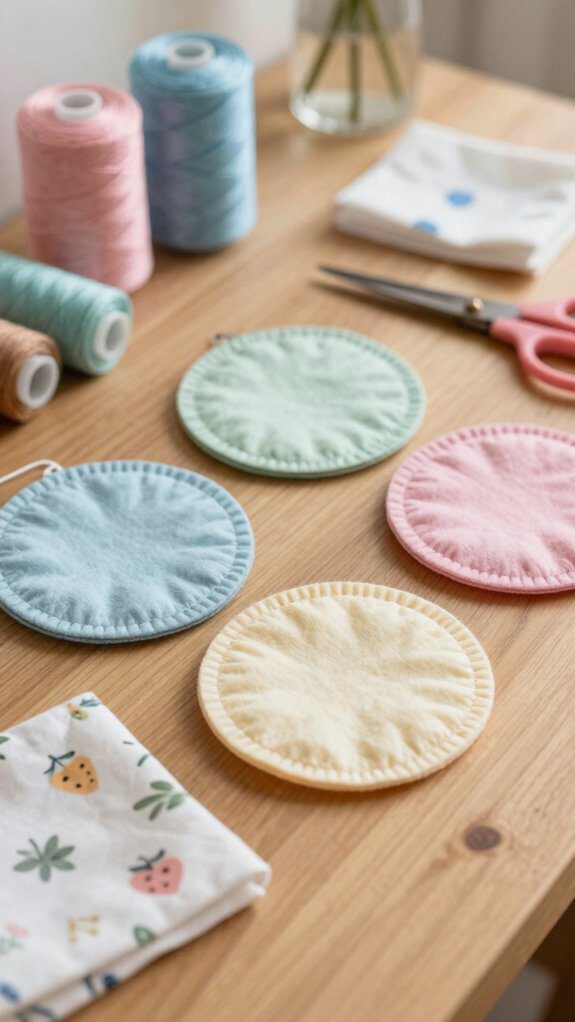
If you like making fabric book covers, you’ll enjoy this next little project that uses scraps in a different way: reusable makeup remover pads. I love sewing these because they blend sustainable beauty with practical crafting, and they help us feel like part of a caring community. I use soft cotton or flannel, cut 4-inch circles, and sandwich a thin cotton batting for extra absorbency. Sew two pieces together, trim, and you’ve got a washable, long-lasting alternative to disposable pads.
- Choose bright scraps so your set feels personal and friendly.
- Wash in a mesh bag to keep them together and extend life.
- Use with your favorite cleanser; they’re gentle and effective.
They’re eco friendly materials in action and save money.
Pet Bandanas
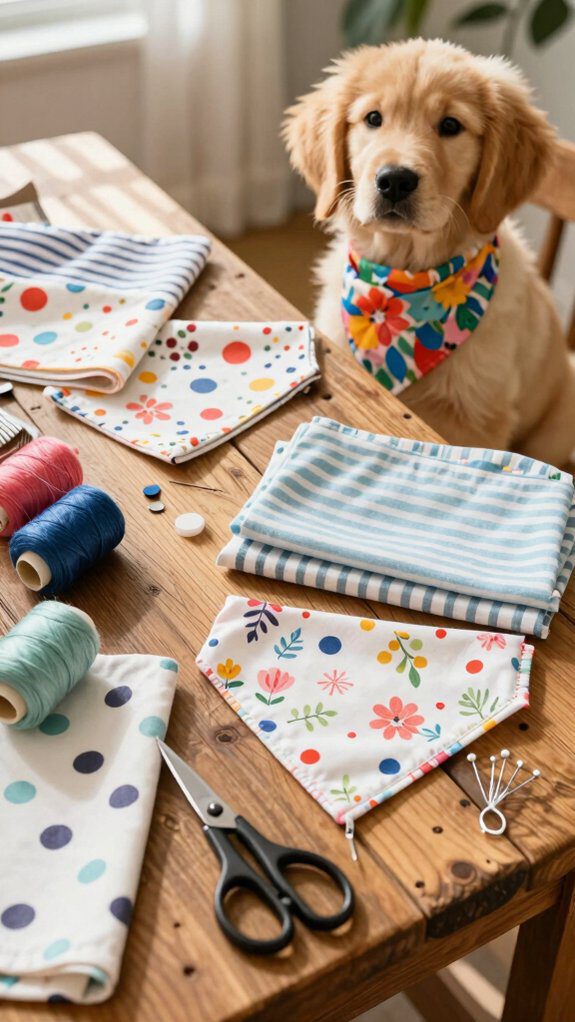
I love starting with small-size sewing wins, and pet bandanas are the perfect quick project to build confidence while making something cute and useful. You can cut a simple triangle or square from a scrap of 100% cotton, hem the edges, and adjust the size to fit your pet’s neck—it’s faster than you think and great practice for straight seams. Add a printed fabric or a tiny embellishment to show personality, and you’ll have a practical accessory that absorbs drool and brightens walks.
Small-size sewing wins
Three simple cuts and a few neat stitches can give any furry friend a fresh, stylish look—and I love how fast pet bandanas come together. I’ll walk you through small-size sewing wins that build confidence: you’ll use sewing machine basics, learn fabric selection tips, and finish a useful gift in under an hour. I pick 100% cotton for comfort and vibrant prints, and I show friendly, step-by-step tricks to cut a triangle, hem edges, and topstitch for durability.
- Cut a small triangle from cotton, fold and press generous seams for clean edges.
- Sew slowly with a straight stitch; shorter stitch length helps control curves.
- Personalize with simple embroidery or fabric paint for a cozy, shared vibe.
You’ll feel proud and part of a creative community.
Fabric Storage Baskets
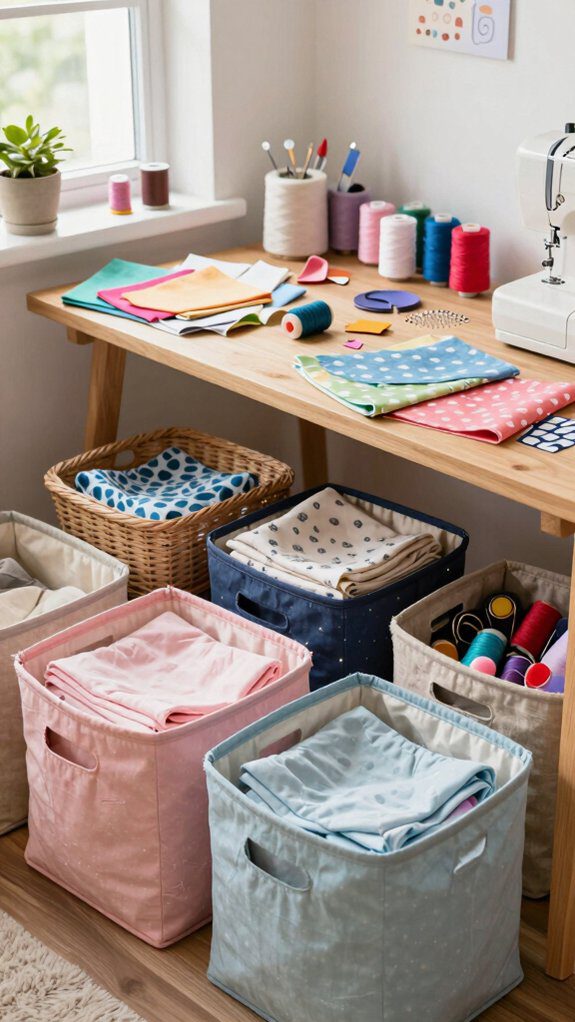
One of my favorite quick projects to recommend is a fabric storage basket, because it’s useful, forgiving to sew, and lets you show off fun prints. I’ll walk you through why I love them: they’re perfect for fabric basket organization in kids’ rooms, craft corners, or living spaces, and they tame clutter while adding charm. Use cotton for softness or canvas for structure; both are easy for beginners. Most patterns use straight stitching, simple folds, and basic boxing of corners, so you’ll finish quickly and feel proud. Try creative fabric choices—mix a bold print with a solid lining for contrast. Make different sizes for shelves or floor use, and label baskets so everyone in your home feels included.