Clay Art Ideas Step by Step Beginner Clay Bowls
I’ll help you make an easy air-dry clay bowl step by step using stuff you already have. First, knead the clay 5–10 minutes to prevent cracks, popping any air bubbles and adding a few drops of water if it’s crumbly. Roll a 5mm slab, press an upside-down bowl to cut a neat circle, then drape it over the bowl lined with plastic wrap. Let it dry 24–72 hours, paint citrus or watermelon, and seal carefully—there’s more ahead.
Love cozy DIY projects? 💕
Get free printable guides, exclusive tutorials & surprise craft goodies straight to your inbox.
Disclosure: This post may contain Amazon affiliate links, at no extra cost to you. Content on DiyCraftNest is created with research support from AI tools and carefully reviewed, edited, and fact-checked by the lead author, Daniel Pat, to ensure accuracy and reliability. Learn more
Key Takeaways
- Choose air-dry clay; knead 5–10 minutes, remove air bubbles, and add a little water if it feels dry.
- Roll an even 5mm slab, then press an upside-down bowl into the clay to cut a clean circle.
- Line the mold with plastic wrap, drape the clay over it, and press from center outward to form smooth sides.
- Add beginner-friendly texture using a pencil eraser for dots or crumpled foil for a pebbled surface.
- Dry 24–72 hours on a raised flat surface, then paint thin coats and seal; air-dry clay isn’t food-safe unless labeled.
Choose Air-Dry Clay for Simple Bowls
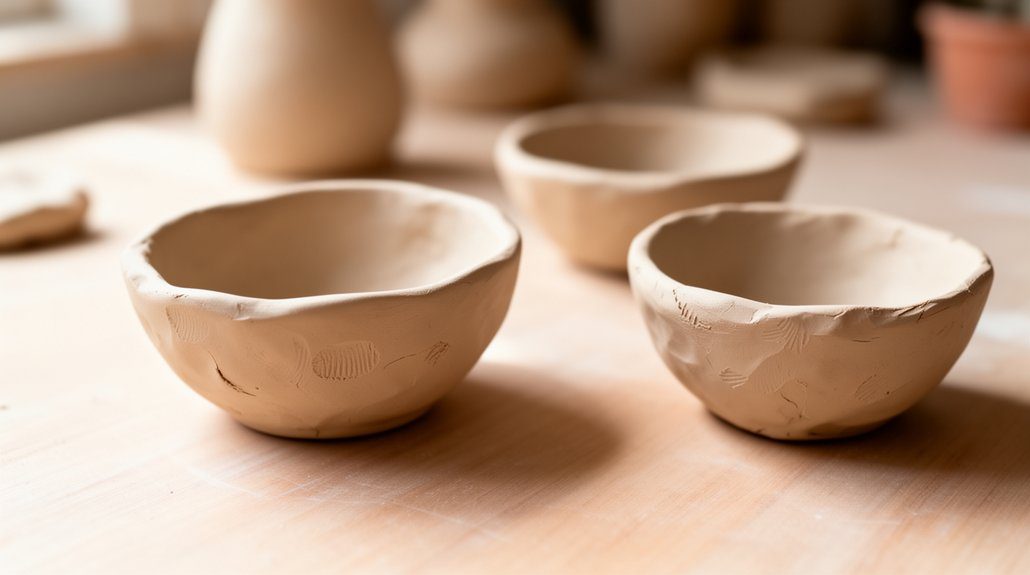
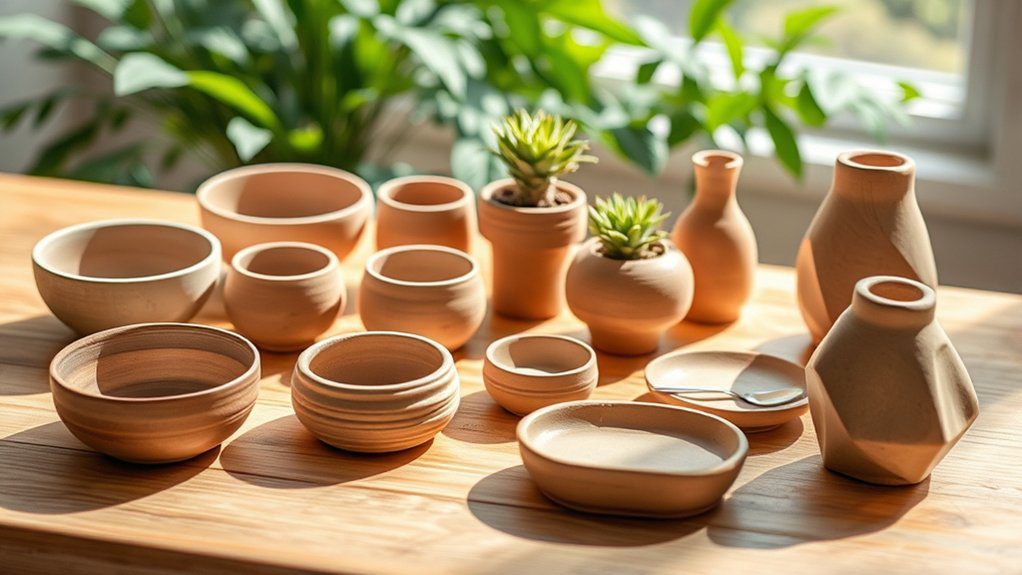
One of the easiest ways to make your first clay bowl feel like a sure win is to start with air-dry clay. I love it for beginners because you don’t need a kiln or special equipment, so you can join in from home and feel like part of the maker crowd right away.
Here are the air dry benefits: it stays soft and bendy while you work, giving you time to fix edges and smooth curves with simple crafting techniques. It may feel dry in hours, but I let it cure 24–72 hours for strength. Afterward, it’s light, non-toxic, and ready to paint.
Gather Tools for Air-Dry Clay Bowls
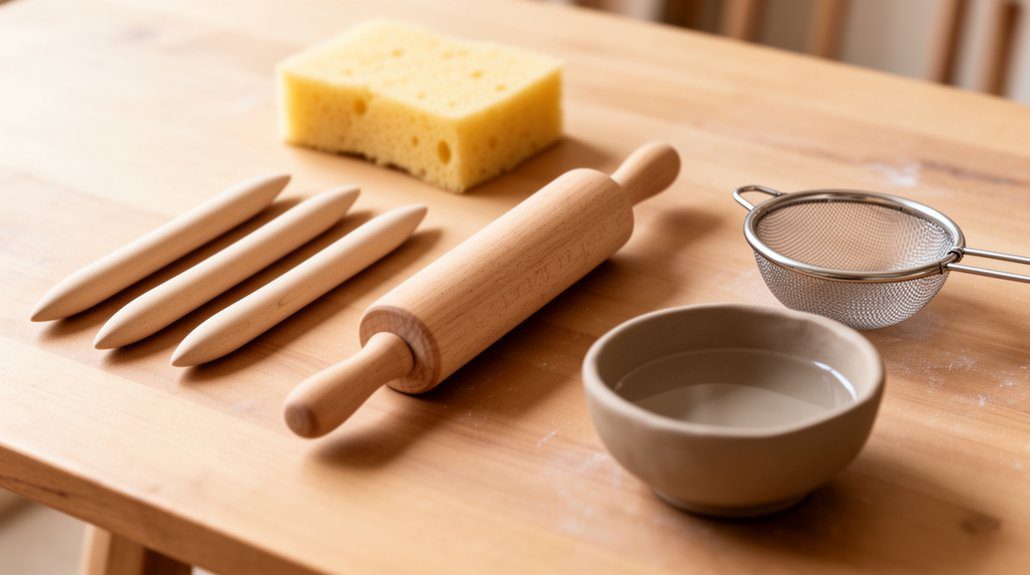
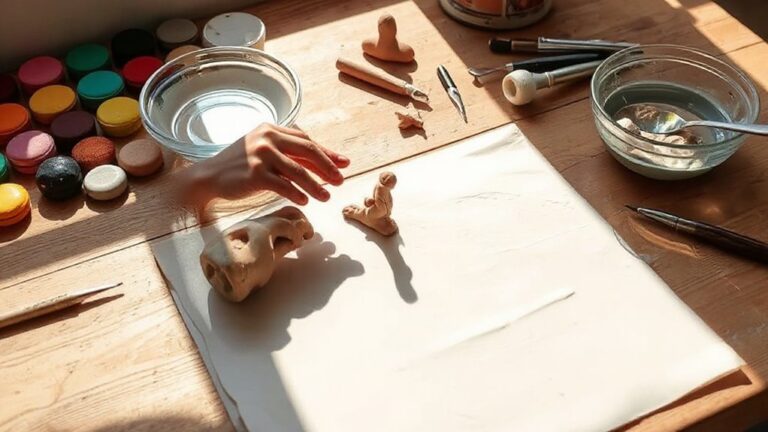
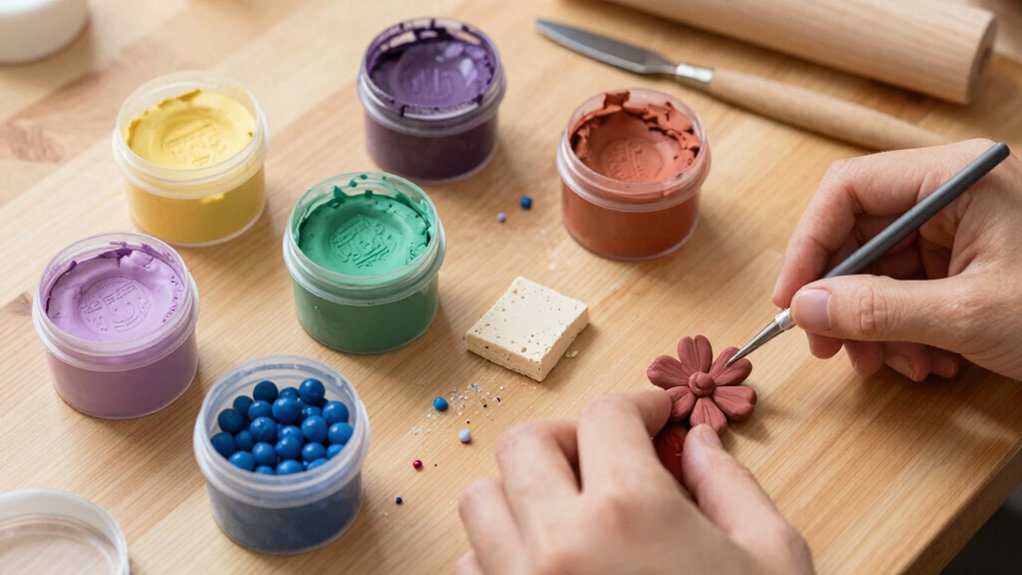
Before you touch the clay, grab a small “starter kit” of tools so shaping your bowl feels smooth and stress-free: air-dry clay, a regular bowl to use as your mold, a rolling pin, and a simple cutter (a craft knife or even a plastic blade works), plus acrylic paint and a few brushes for decorating later. I like keeping extras nearby so you feel part of the clay crew, no matter your clay types or molding techniques.
| Tool | Why I use it |
|---|---|
| Pencil | Adds quick texture |
| Foil | Makes fun crinkles |
| Food-safe varnish | Safe serving finish |
| Water cup | Cleans hands/edges |
Knead Clay to Prevent Cracks
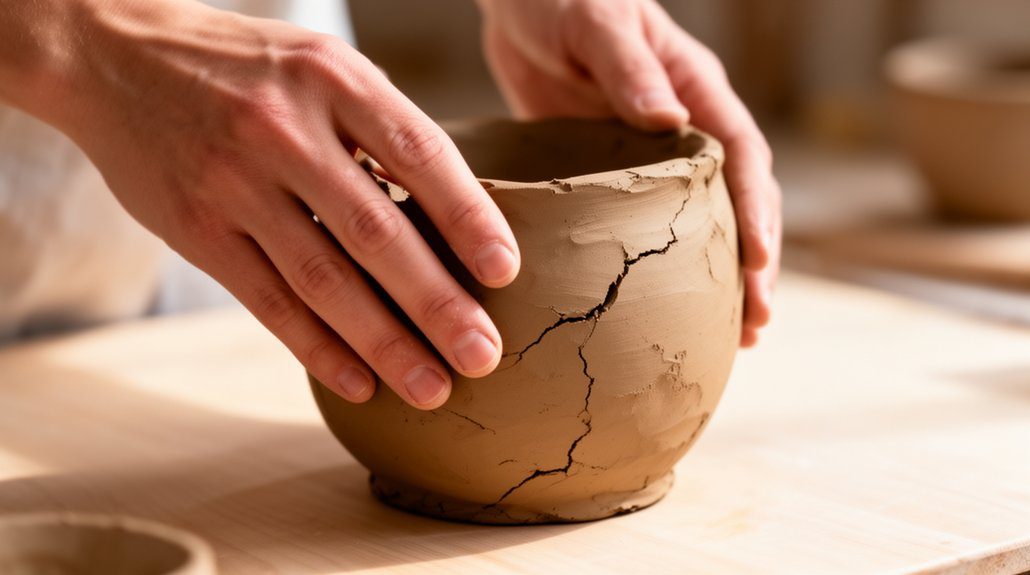
Start by giving your air-dry clay a good knead—it’s the easiest way to stop cracks before they ever show up. I like to think of it as warming up together before the real fun begins. Use steady kneading techniques for 5–10 minutes, folding and pressing until the clay feels soft and pliable. As I work, I keep checking for air bubbles, because trapped air can expand later and split your bowl. If it turns dry or crumbly, I add just a few drops of water. For smart moisture management, keep unused clay under a damp cloth.
Roll an Even 5mm Clay Slab
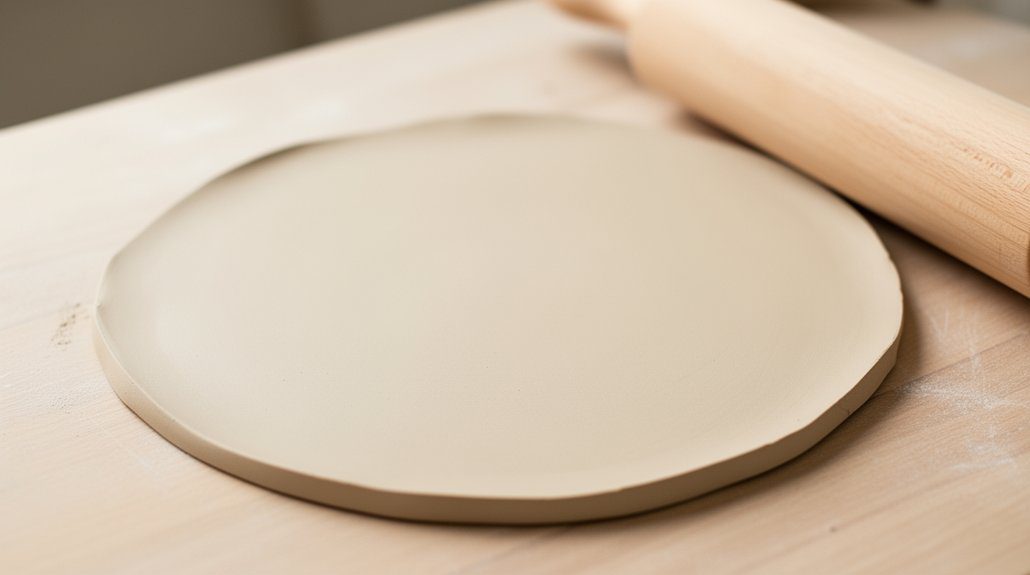
A nice, even 5mm clay slab is the secret to a bowl that dries smoothly and feels sturdy in your hands. After you’ve kneaded, I roll with a pin using steady, gentle pressure, like smoothing dough.
I keep my rolling techniques consistent: roll forward, lift, turn the clay, and roll again. That helps the clay texture stay even and stops thin weak spots. I check thickness with a ruler in a few places, not just the center. If it sticks, I dust a little cornstarch or sandwich it between plastic wrap. Roll slowly to avoid trapping air bubbles.
Cut a Clean Circle With a Bowl Mold
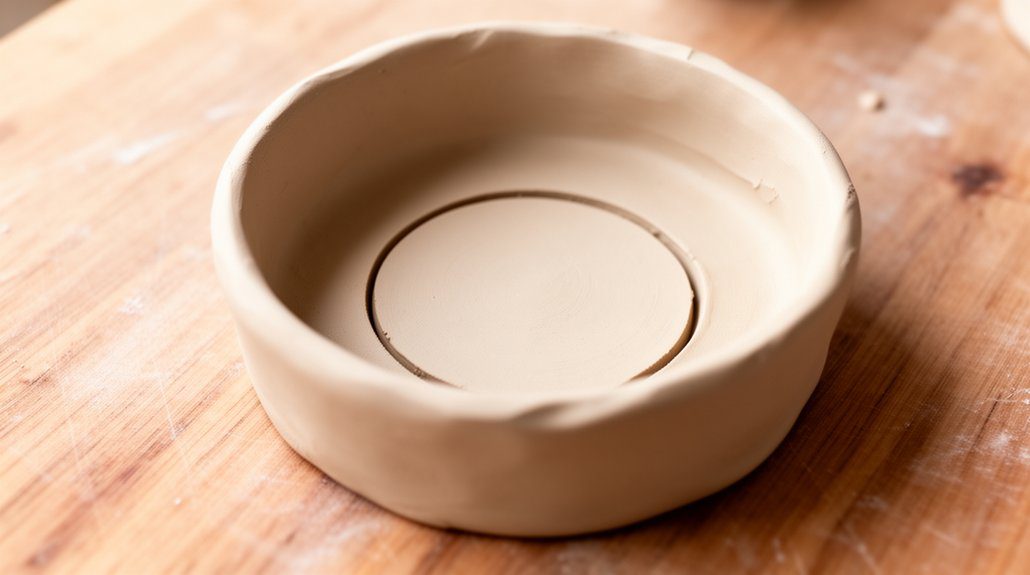
The easiest way I’ve found to get a perfectly round base is to use an upside-down bowl like a simple cookie cutter. We’re in this together, so grab a bowl that matches your dream size and set it upside down on a flat table.
- Knead your air dry clay until it’s soft, smooth, and bubble-free.
- Roll it evenly to about 5mm, like a thick cookie dough sheet.
- For circle cutting, press the bowl’s edge straight down to cut cleanly.
- Lift the circle and lightly press it around the bowl’s edge for bowl shaping height.
Shape the Clay Bowl Over the Mold
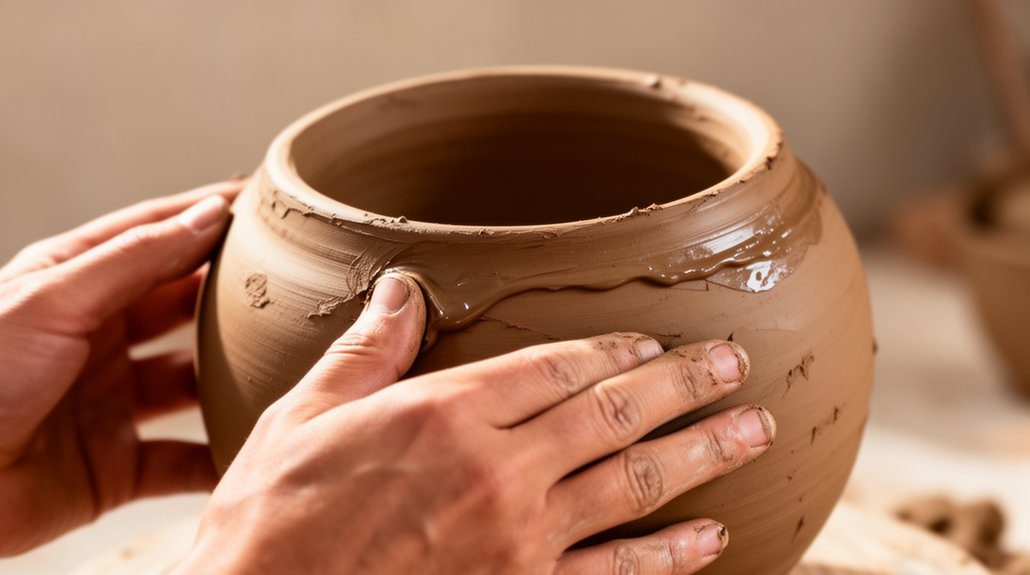
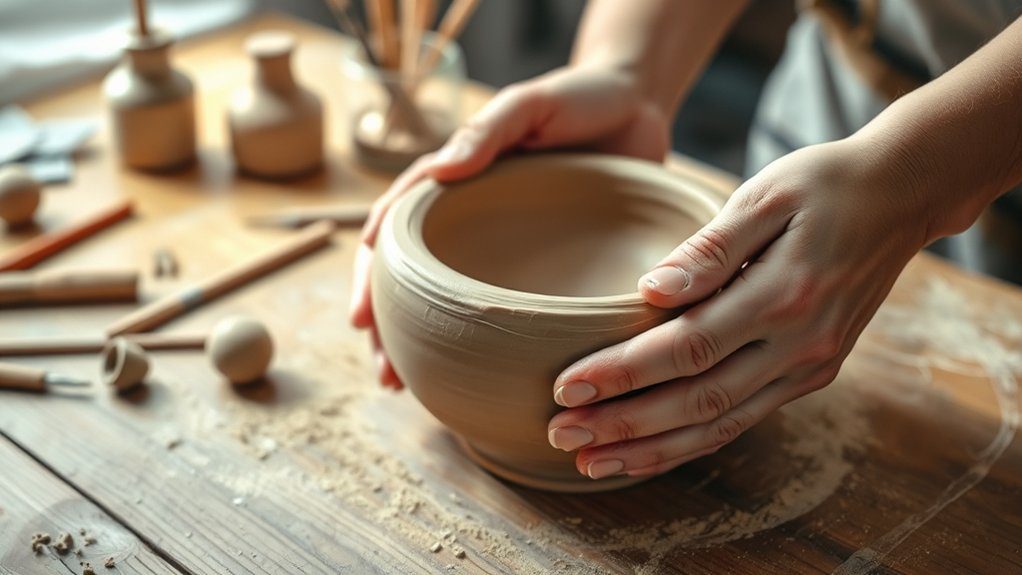
Now that you’ve got that clean clay circle cut out, I’ll shape it into a real bowl by draping it over the outside of your upside-down bowl mold. First, I knead the air dry clay until it’s soft, then roll it to about 5mm so it won’t slump. I press from the center outward, using gentle mold techniques to build height and avoid creases.
| Do this | Why it helps |
|---|---|
| Knead well | Prevents cracking |
| Roll 5mm | Keeps strength |
| Press evenly | Smooth curve |
| Check bubbles | No weak spots |
| Dab water | Blends clay textures |
Use Plastic Wrap to Release the Bowl
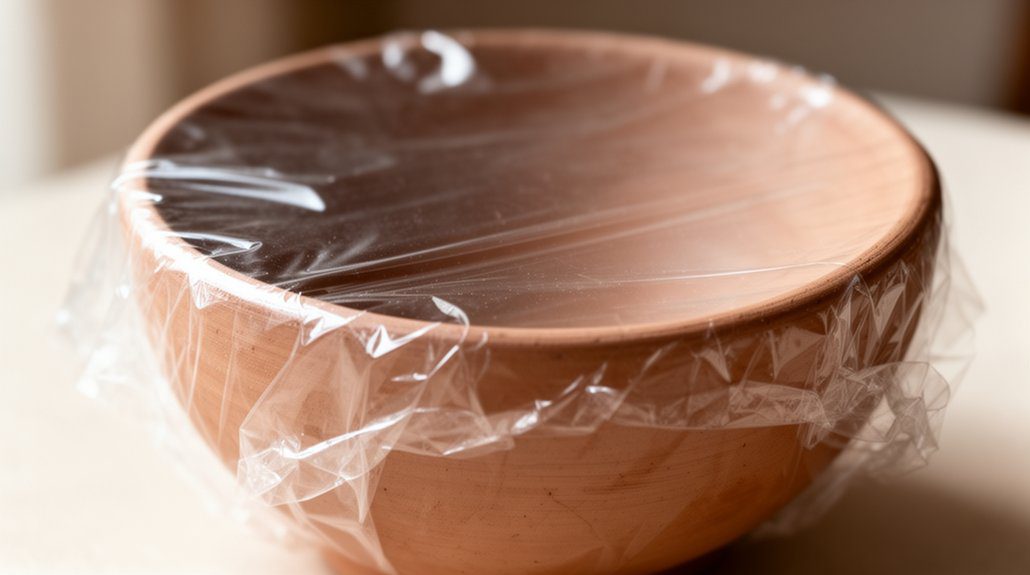
Before I press any clay into a bowl mold, I always line it with plastic wrap, because it makes the release so much easier later. It’s one of my favorite plastic wrap benefits, and it helps you feel like you’re doing it “the right way” with the rest of us.
- Smooth the wrap inside the bowl, pulling it taut.
- Press clay in gently so the barrier prevents sticking.
- Let it dry, keeping the shape steady and clean.
- Lift the wrap edges and peel up slowly—simple bowl release techniques.
If you see wrinkles, redo the wrap so they don’t mark your clay.
Add Dot Texture With a Pencil
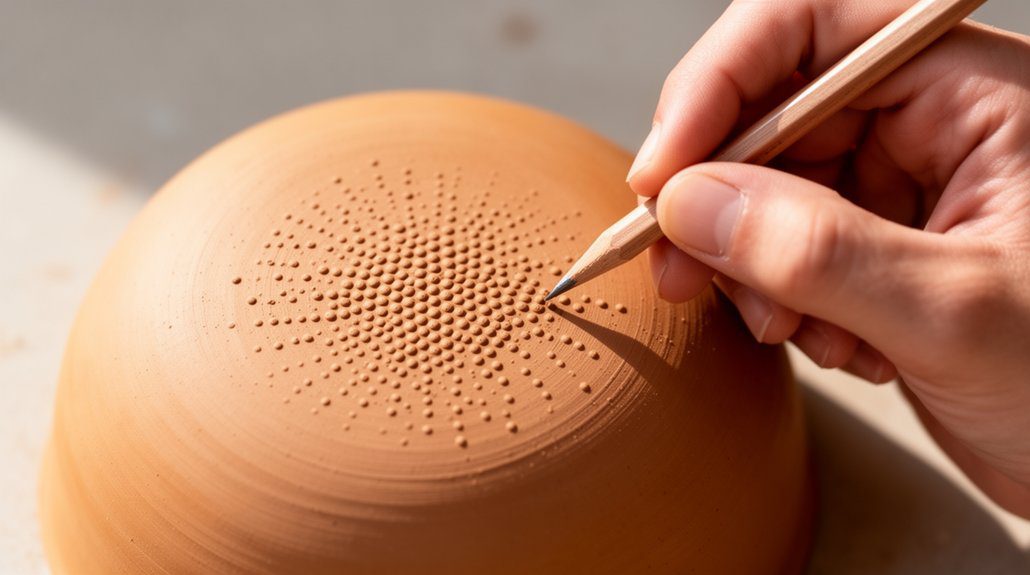
One of my favorite ways to make a simple clay bowl look special is adding dot texture with a plain old pencil. I flip the pencil and use the eraser end to press tiny dots into the clay, one gentle tap at a time.
For dot placement, I start near the rim and work around, so the design feels balanced and welcoming. Then I play with texture variation by changing pressure and spacing: light, close dots look soft, while deeper, wider dots feel bold. When you’re done, scan for air bubbles, smooth bumps with a damp fingertip, and let it dry.
Press Foil for an Easy Pebbled Texture
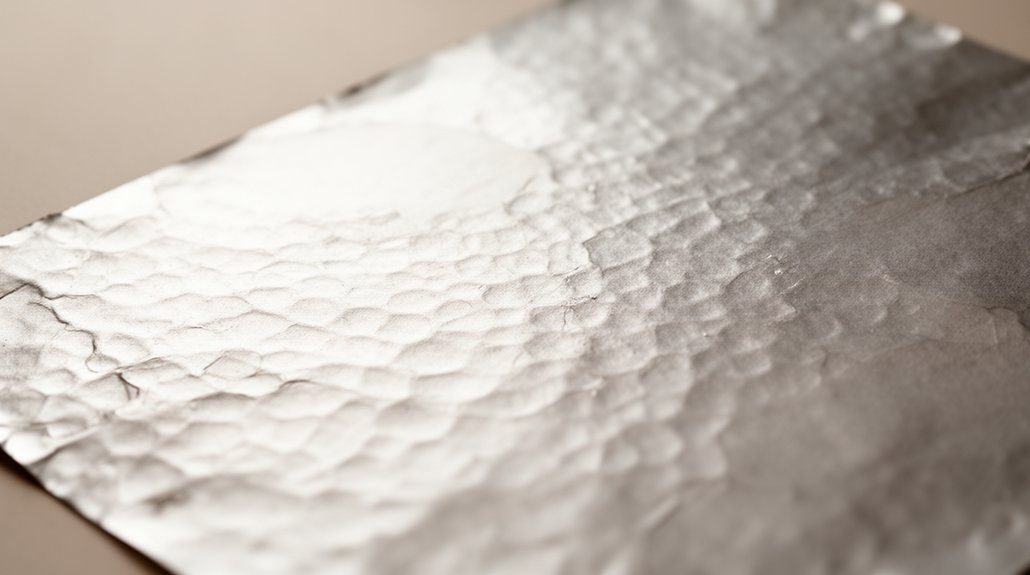
Two quick moves can turn a plain clay bowl into something that looks and feels like smooth river stones: I crumple a piece of aluminum foil into a loose ball, then press it gently across the clay surface. You’ll see a foiled texture appear fast, and it feels great in your hands—like we’re making something special together. I use these clay techniques to keep it even:
- Press lightly, then lift straight up.
- Overlap marks so gaps don’t show.
- Rotate the foil ball for variety.
- Touch up rough edges with water.
After it dries, paint can make those pebbles pop.
Smooth the Clay and Pop Air Bubbles
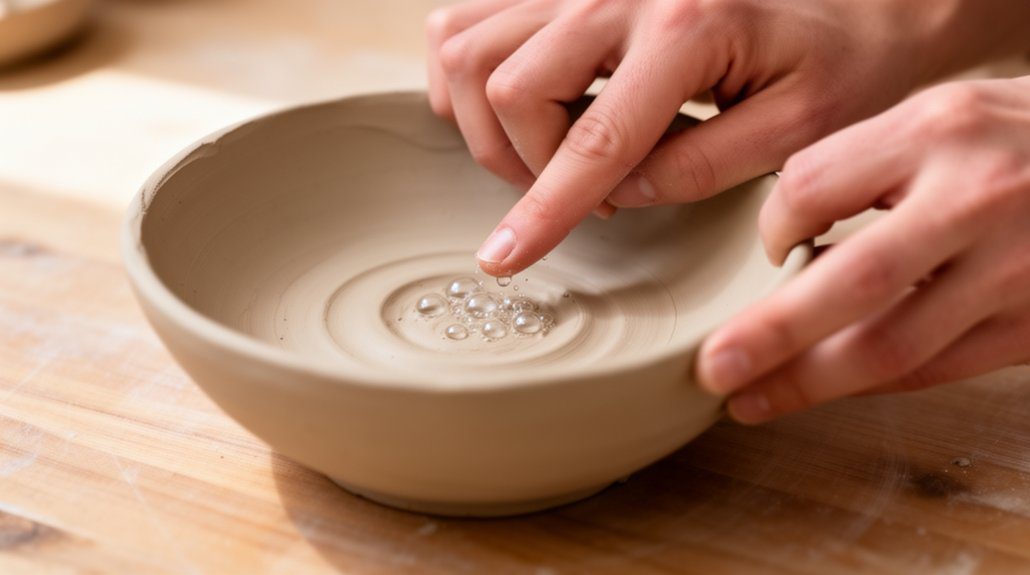
Next comes a quick “surface check” that can save your bowl from cracks later: smoothing the clay and popping any sneaky air bubbles. I like to pause here with you and scan the whole clay surface, because tiny bumps can turn into big problems.
I lightly dampen my fingers or a soft sponge and rub in small circles where things look rough. Use gentle pressure—think “firm handshake,” not “squish.” If I spot a bubble, I do quick bubble removal with a needle or sharp tool, then press and smooth the spot with wet fingers until it blends in.
Dry the Bowl Flat (Time + Warp Prevention)
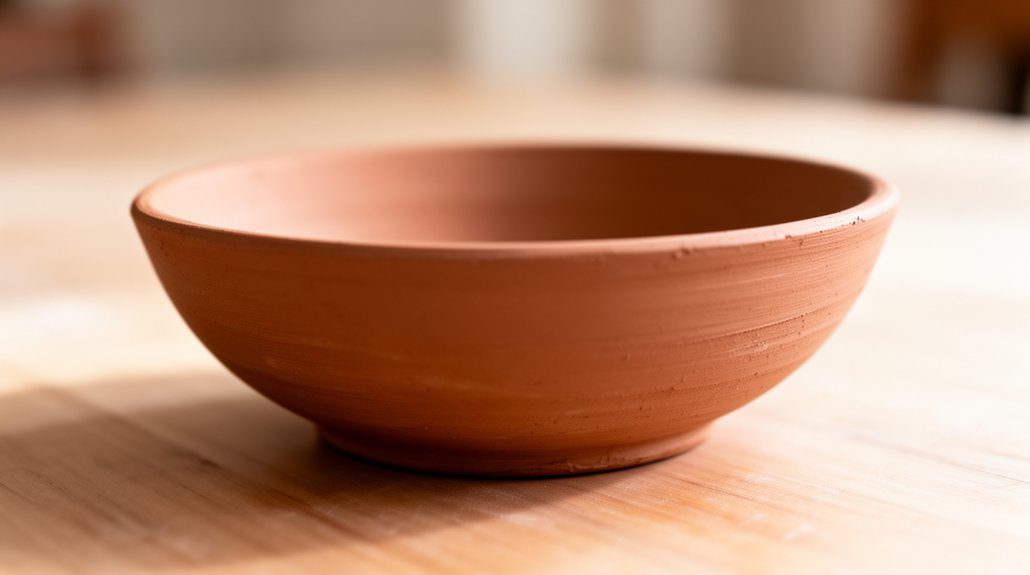
Although it feels tempting to pick your bowl up and admire it right away, this is the part where patience prevents warps and weird wobbles later. I use simple drying techniques that keep us all in the “we made this!” club.
- Set the bowl on a flat, raised surface so air can move underneath.
- Dry it in a cool, shaded spot; sun and heat invite cracks.
- Peek in every few hours and gently nudge the rim back if it shifts—early warping prevention matters.
- If you used a mold, leave it in longer.
Wait at least 24 hours before handling.
Paint an Orange-Slice Air-Dry Bowl
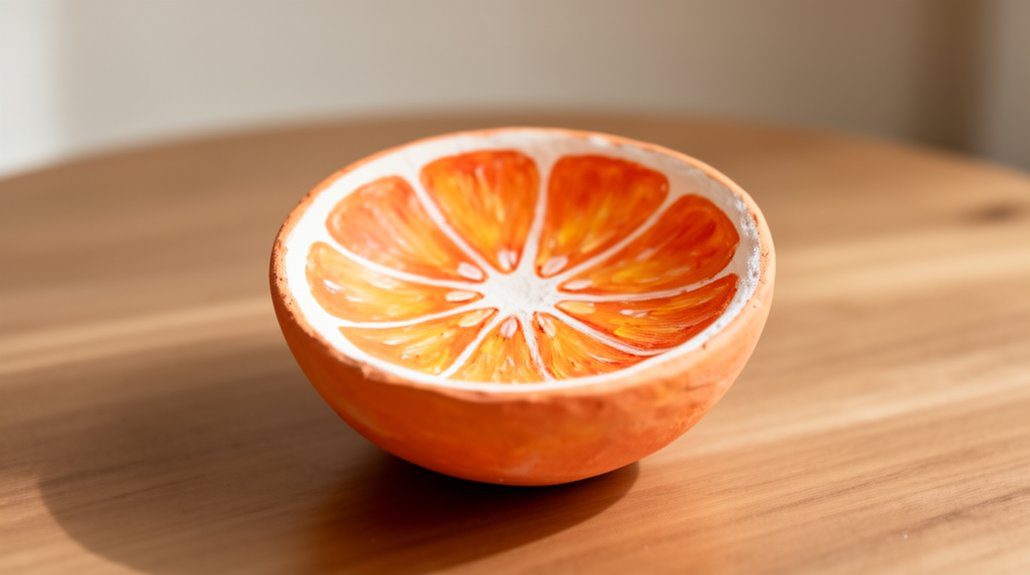
With just a few bright paint steps, you can turn a plain air-dry clay bowl into a juicy-looking orange slice that practically cheers up your desk. I start by kneading the clay, rolling it to 5mm, then cutting a circle with a bowl and pressing it into a mold for height; plastic wrap helps it lift out cleanly.
Next, I add peel texture: tiny pencil dots, then a quick press of crumpled foil. I paint the inside orange color, draw segment lines, and shade with white mixed with yellow. Finally, I paint outside, varnish, and choose food-safe supplies if needed.
Paint a Lime-Slice Air-Dry Bowl
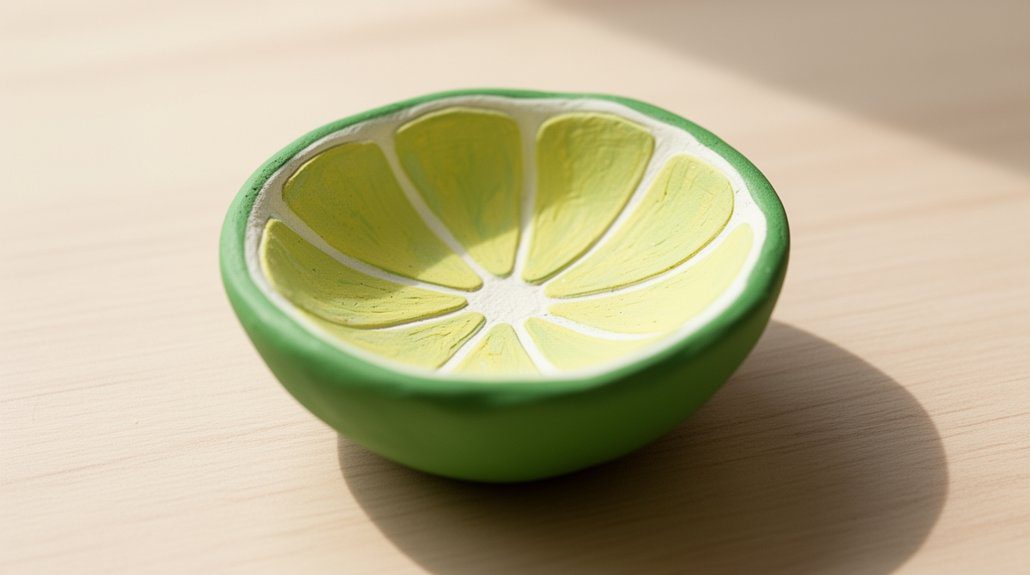
If the orange-slice bowl felt like a burst of sunshine, this lime-slice version brings that fresh, zesty pop—perfect for holding rings, paper clips, or a tiny tea bag on your desk. I knead air-dry clay until it’s soft, roll it to 5mm, then cut a circle with a bowl. I press it over the mold (plastic wrap helps), dot texture with a pencil, and pop any bubbles before drying. Then the fun: color mixing for juicy greens and white-plus-yellow lines.
- Knead + roll
- Shape + texture
- Paint segments
- Varnish outside, too
Paint a Watermelon Bowl (Rind + Seeds)
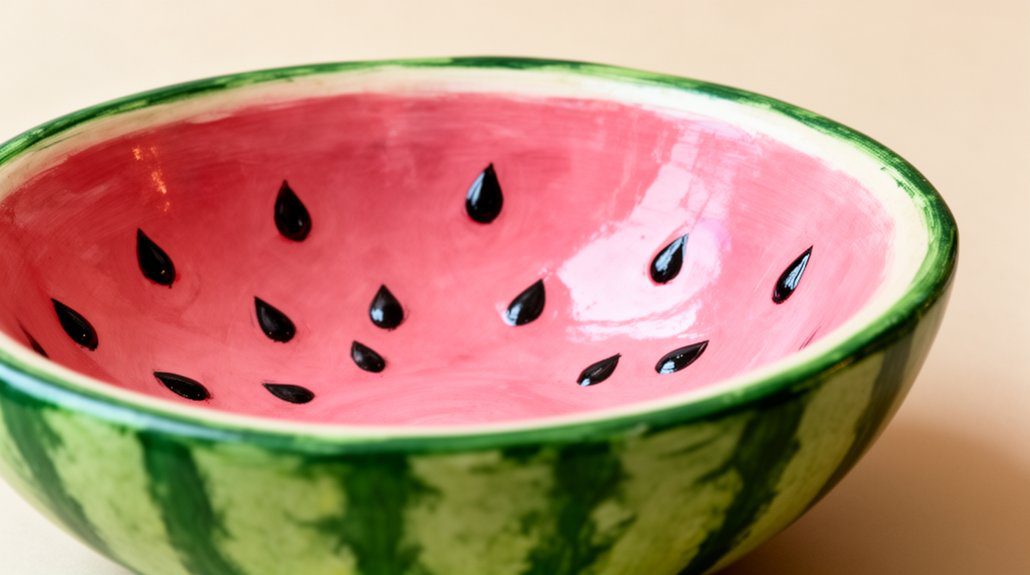
Whenever I want a clay project that looks impressive but still feels totally doable, I make a watermelon bowl—bright red inside, a crisp green rind on the rim, and cute little seeds that pull it all together. I knead air-dry clay, roll it to about 5mm, then press it over a bowl lined with plastic wrap so it lifts off easily—simple clay techniques we can all win at.
| Step | Color | My tip |
|---|---|---|
| Inside | Red | Two thin coats |
| Rim | Dark+light green | Blend like a rind |
| Seeds | Black/yellow | Dot after dry |
This watermelon design always gets smiles.
Seal Air-Dry Clay Bowls (Food-Safety Limits)
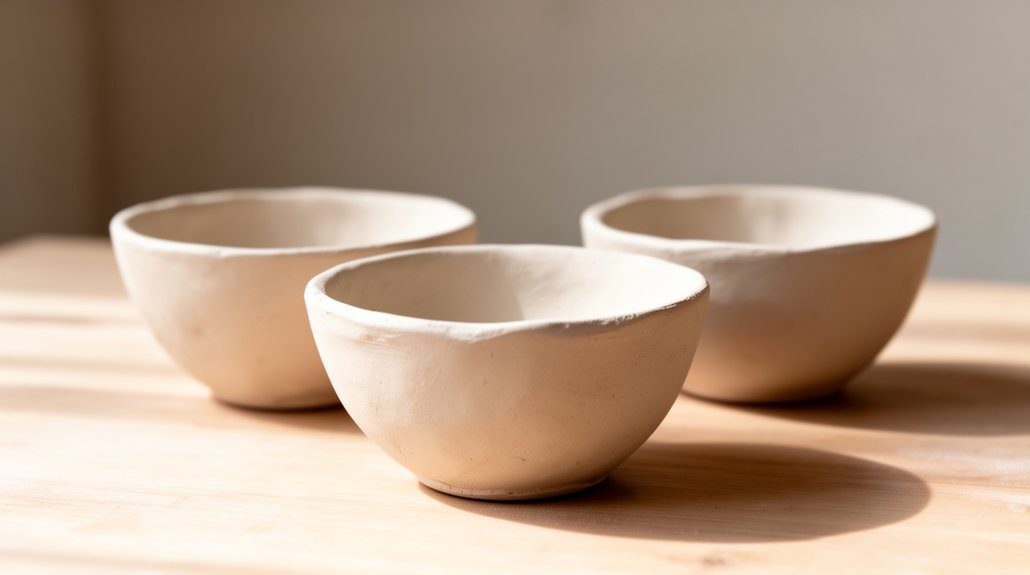
Two quick truths make sealing air-dry clay bowls a lot less confusing: most air-dry clay isn’t truly food-safe on its own, and a shiny topcoat doesn’t automatically fix that. I want you in the “safe maker” club, so follow this simple checklist:
- Choose paints and food safe sealants distinctly labeled for food contact.
- Seal with a non-toxic varnish made for clay to reduce toxic leaching.
- Let every layer dry fully before serving snacks—rushing ruins safety.
- Hand wash only, and recheck for chips or peeling often.
Frequently Asked Questions
How Do I Fix a Bowl That Cracked After Drying?
I’d fix your dried cracked bowl by filling the crack with slip, compressing edges, and smoothing well—these repair techniques work. Let it dry slowly, then bisque fire and finish with clay sealing so you’ll fit right in.
Can I Bake Air-Dry Clay to Make It Dry Faster?
You can, but I don’t recommend baking air dry clay because heat can warp and crack it. I’d use gentle airflow instead. If you try baking techniques, keep it very low, short, and supervised.
What’s the Best Way to Prevent Fingerprints in Wet Clay?
I prevent fingerprints by handling clay minimally, keeping hands damp, and smoothing with soft clay tools or a sponge. You’ll feel right at home as you enhance surface texture, turning small marks into intentional details.
How Can I Make Matching Bowls With the Same Size and Shape?
I’ll test the theory that “identical bowls are impossible”: they’re not. Use matching bowl techniques—make a template, measure diameter/height, and do measuring clay portions by weight. We’ll get uniform sets together, every time.
How Do I Store Leftover Air-Dry Clay so It Doesn’T Harden?
I store leftover clay in airtight plastic wrap, then seal it in a zip bag with a damp paper towel for moisture retention; this air dry storage keeps it workable. You’ve got this—your clay community’s with you.